A warning from abroad for Australian Schools
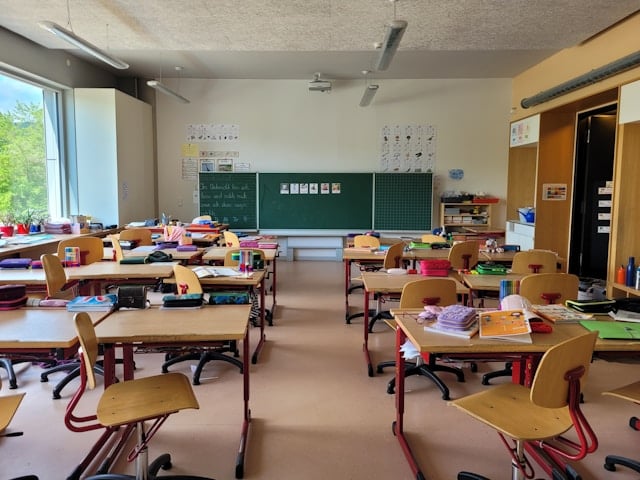
In a few days, as the Australian school year begins, my daughter will be returning to a Jewish school after three years at an independent girls’ school. That school was wonderful. Her teachers and her cohort were thoughtful, kind, and genuinely supportive of her, including of her strong Jewish identity.
She did not have to hide who she was. During her Year 9 year in the country, away at boarding school, she ate kosher meat and celebrated Shabbat rituals with her non-Jewish housemates, lighting candles and sharing challah and grape juice. A large Israeli flag hung beside her bed, and she wore T-shirts with Jewish phrases, not as provocation, but as expression.
As she prepares to return to a Jewish educational environment, I find myself thinking not only about her experience, but about the experiences of Jewish children who do not have that option, those attending public and non-Jewish independent schools, where support often depends on the goodwill of individuals rather than on clear institutional frameworks.
Recently, a post on X described a New York parent whose fifth-grade child was required to watch a video claiming Israel deliberately killed children during the Gaza war. When the parent questioned the material, they were told the school would not be teaching students about the October 7 Hamas massacre.
Disturbed by this, I contacted a friend involved in Jewish education in the United States to ask whether this was unusual. The response was blunt: “This is a daily occurrence here.” That reply reframed the issue entirely. This was not a single rogue teacher or an isolated lapse in judgment. It was a pattern. In Australia, we are fortunate to have a strong Jewish day school system, but it does not encompass every Jewish child. Australians should not be reassured by the “It can’t happen here,” a familiar and comforting notion but historically a dangerous one.
Australian Jewry differs from American Jewry in size, visibility, and timing but not in direction. The Jewish community in the United States is larger, more politically embedded, and further along in confronting the consequences of antizionism becoming institutionalised in schools, unions, and progressive spaces. Australia’s Jewish population is smaller and more concentrated, with a stronger Jewish day-school system that has, until recently, buffered many children from these pressures. But historically, Australia has tended to follow American patterns affecting Jews with a delay rather than a deviation. What is now widely reported in American classrooms should therefore be understood not as a distant anomaly, but as an early warning.
Australian data and international research reinforce this picture. According to the Executive Council of Australian Jewry’s 2025 report, anti-Jewish incidents in Australia remain at “unprecedentedly high levels” roughly three times higher than any year before October 7, 2023. A 2025 IRB-approved study by StandWithUs surveyed 584 Jewish educators in U.S. K–12 public and non-Jewish private schools. More than 60 per cent reported personally experiencing or witnessing antisemitism, nearly half reported exposure through teachers’ unions, and among those required to complete anti-bias training, only one in ten said antisemitism was addressed.
Jewish families in New South Wales have warned that antisemitism in schools is no longer isolated but “deep and widespread,” with Jewish students facing harassment and hostility that is raising serious concerns about their safety and inclusion. A Daily Telegraph article by Suzan Giuliani published this week included these quotes from a concerned mother; “My daughter at secondary school was told she deserves to burn in a gas chamber,” and “When my son was in sixth grade, he was harassed by a classmate and then by three classmates being called ‘genocide jid’ and being followed with cheers for Palestine around the school.”
Antizionism functions as the contemporary vehicle for antisemitism, allowing hostility toward Jews to be normalised, institutionalised, and taught without being recognised as hate. This form of Jew-hatred is increasingly embedded in curricula, teacher training, and classroom discourse.
Addressing antizionism in schools does not mean silencing debate. It means restoring educational integrity. Zionism is the belief that the Jewish people have the right to live as a people in their own country, where they govern themselves and determine their own future. It is not a political party, a government, or a set of policies.
Responsible education provides historical context, avoids manipulative materials, and recognises Jewish identity as a legitimate presence in the classroom.
Educators working in this space emphasise age-appropriate, balanced teaching rather than political activism disguised as pedagogy. When I met with the Zionist Federation of Australia late last year, there was strong interest in Dr Naya Lekht – an educator and researcher specialising in contemporary antisemitism and antizionism in educational and institutional settings – participating in the Australian Jewish Educators Conference in Melbourne, a sign that there is both appetite and openness for serious, informed engagement with these issues.
This is not about shielding students from complexity. It is about whether Jewish children are treated as legitimate participants in the classroom.
Existing programs focus on classic antisemitism, Holocaust education and general tolerance messaging, rather than confronting the modern ideological framework through which Jew-hatred is now most commonly expressed. Holocaust education explains why antisemitism is wrong. It does not equip students or educators to recognise antizionism, the denial of Jewish self-determination, when it is presented as moral virtue or social justice.
A Call to Jewish Leadership
Meetings and goodwill, however, are not enough. A new school year has begun. With it comes a question Jewish communal leadership must now confront honestly: What are Jewish parents of children in public and non-Jewish schools experiencing and who is listening to them?
As a community, we should be asking our state and federal education systems to formally engage with frameworks that recognise antizionism as a contemporary form of Jew-hatred. Organisations such as Stop Anti-Zionism focus on education, strategy, and action by educating, equipping, and mobilising communities with the knowledge, tools, and coalitions needed to name and dismantle antizionism where it appears. This is not about policing opinion, but about ensuring that education systems do not reproduce prejudice under the guise of moral instruction.
But that advocacy must begin at home. Jewish day schools and Jewish organisations in Australia need to be willing to acknowledge and commit to addressing antizionism themselves before expecting the broader Australian community or government departments to follow suit.
Leadership requires clarity and consistency. The American experience offers Australia both a warning and an opportunity. Leadership now will be quiet, preventative, and effective. Leadership later will be reactive, defensive, and too late. Parents are watching. Children are absorbing. And history suggests that what happens in American classrooms rarely stays there.