
Feminist, social activist and CEO of Tsofen-Tashbik
A Whole Classroom killed in a Month: This is Israel 2026
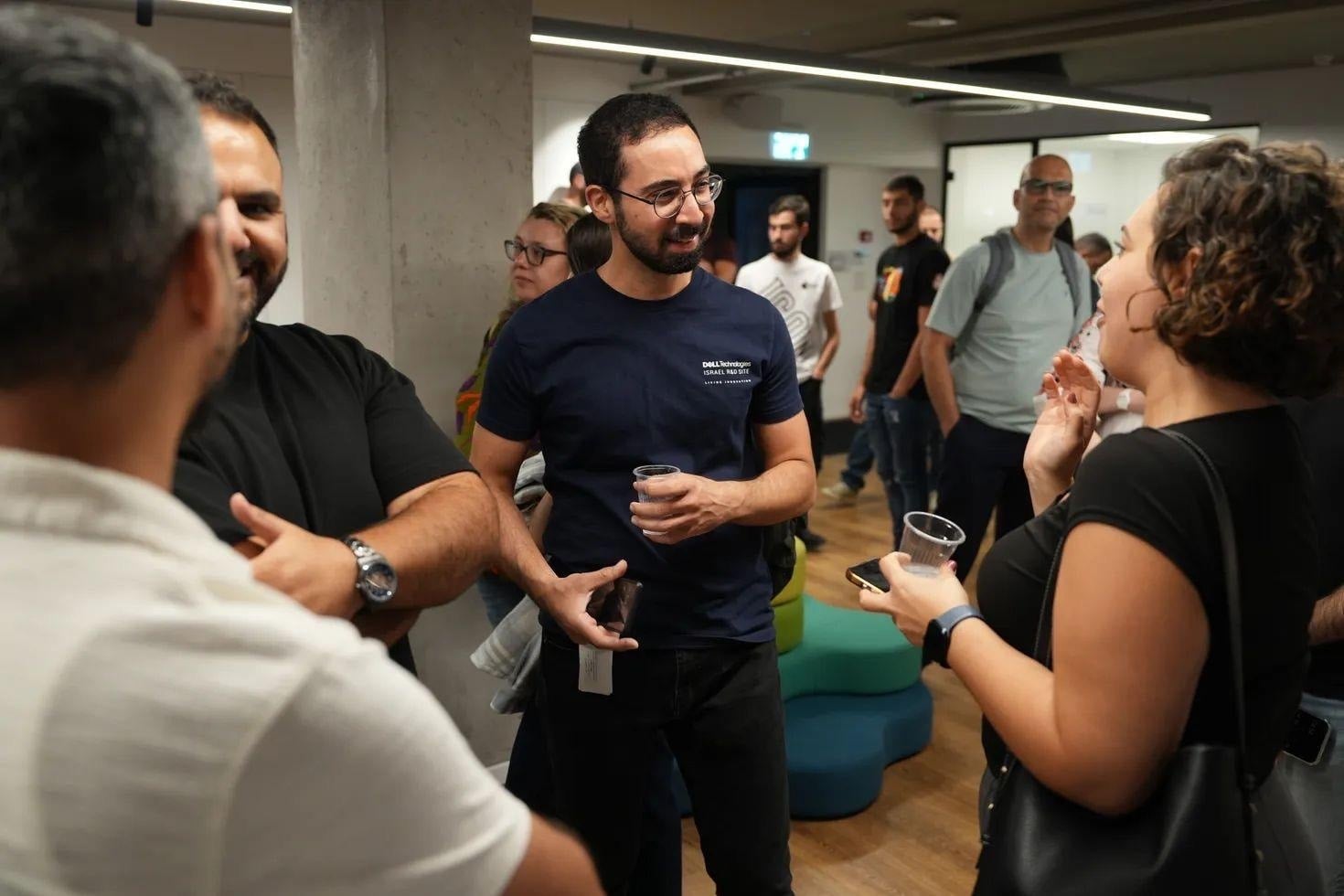
Tsofen-Tashbik meet-up (Tsofen-Tashbik)
One person murdered in a single day. An entire classroom lost in a single month.
These are not statistics from a distant war zone. This is everyday Israel in 2026.
Criminal terror is flooding our streets, taking lives, paralyzing communities, and eroding our society’s most basic sense of security—the right to live without fear. For years, it was convenient for both the political system and much of public discourse to label this violence as an ‘internal problem within the Arab community.’ A problem of ‘others.’
That illusion has collapsed, and along with it, human lives are lost.
Organized crime is not sectarian; it is a symptom of governance vacuums, thriving wherever governance fails. When the state retreats, criminal organizations step in.
The bloody statistics are only the tip of the iceberg. According to economic assessments, organized crime costs the Israeli economy between 5 to 10 billion shekels annually, equating to roughly $1.6 – $3.25 billion each year. The compounding damages include days of lost work, soaring healthcare costs, harm to infrastructure, the collapse of small businesses, and a cycle of decline that stunts economic growth. When a citizen is murdered or seriously injured, the economy loses decades of potential contribution, eroding both the social and economic foundations of long-term prosperity.
But there is also a silent tax that every citizen pays.
Criminal organizations now control significant segments of the construction and infrastructure industries through protection rackets. According to the Israel Builders Association, extortion increases construction costs by 3-5 %. The meaning is simple: every young couple purchasing a home in Rishon LeZion, Haifa, Tel Aviv, or Be’er Sheva pays tens of thousands of shekels directly into criminal networks—ultimately a hidden ‘crime tax’ embedded in housing costs due to a prolonged governance failure.
There is no stop sign at the entrance to Nazareth and no wall that will protect Tel Aviv.
The gravest mistake is to believe that this is an internal problem that can be contained. Criminal organizations do not stop at municipal borders. They do not recognize ethnic, religious, or political lines. They infiltrate public systems, intimidate elected officials, manipulate public tenders, and erode public trust in state institutions. When the state treats violence as a ‘community issue,’ it effectively abandons its citizens—not only Arab citizens, but all of us.
The entrenchment of organized crime is not merely a law-enforcement failure; it is a strategic threat to Israel’s democratic resilience. Organized violence weakens deterrence, undermines social cohesion, distorts markets, and corrodes governance. An effective response must therefore be multidimensional: policing, economic enforcement, civic mobilization, and political accountability.
And yet, within this painful reality, something unexpected is emerging.
More Jewish citizens are refusing to remain indifferent to the deaths of Arab citizens. More Arab citizens are refusing to remain alone in their outcry. A shared civic awakening is beginning to take shape.
This is not about coexistence slogans. It is about shared destiny.
Either we fight together—for security, the rule of law, and our children’s future—or we all lose.
The fight against criminal terror is not only a struggle against violence, but also a struggle over the character of Israel. It is about whether we allow parts of our civic mosaic to be abandoned, or whether we insist that no community faces existential threats alone. We must demand real enforcement, not rhetoric. A comprehensive economic strategy against criminal networks—not only arrests. Full governmental responsibility, not blame shifting.
And above all, broad Jewish-Arab civic cooperation. The solidarity emerging in joint protests against crime is not only a moral statement; it is an economic imperative. When we demand security together, we are demanding the conditions necessary for prosperity. An Arab engineering student cannot build a career in hi-tech if violence defines his reality. A Jewish contractor cannot build housing if extortion governs the construction site. A shared economy requires shared security.
This is a historic moment that may not return. Criminal terrorism is not ‘their problem’, not just a problem for the Arab minority. It is a question of who we are as citizens of this country, and whether we are willing to fight together as one body for a state that functions for all its citizens. The presence of both Arab and Jewish citizens in the growing and spreading protests is the answer. Israeli citizens are ready to fight for the future of all our children, united in this struggle and in the demand from the state: it is your duty to us to act, on all fronts, and now.
Written by Maisam Jaljuli, CEO at Tsofen-Tashbik and Merav (Boozy) Boaz, Deputy CEO
Related Topics