
Abraham Accords after 5 years: UAE’s success, Bahrain’s backslide
In September 2020, the Abraham Accords marked a historic turning point in Middle Eastern diplomacy, normalizing relations between Israel and several Arab states under U.S. auspices. The United Arab Emirates (UAE) and Bahrain were the first to sign on, promising a new era of peace, economic cooperation, and regional integration. Five years later, as of November 2025, the accords have endured global shocks like the Gaza war, but their implementation reveals stark contrasts. While the UAE has embraced the accords “all in,” leveraging them for sweeping reforms and prosperity, Bahrain has taken a more cautious—some say regressive—path, caving to internal pressures and fears. This divergence stems from Bahrain’s unique demographic vulnerabilities, leading to a high-stakes strategy of population engineering that could unravel the kingdom’s stability.
The UAE’s Bold Embrace: Reforms and Resilience
The UAE has transformed the Abraham Accords into a cornerstone of its national vision, going “all in” with aggressive implementation and domestic reforms. By 2025, bilateral trade with Israel has surpassed $3 billion annually (estimates for 2025 are $3.2-3.6 billion), spanning technology, healthcare, tourism, and defense. The accords have integrated Israel into U.S. Central Command (CENTCOM), enhancing UAE’s security amid Iranian threats.
Over 1 million Israelis have visited since 2020, fostering grassroots exchanges and normalizing relations beyond elites. Reforms in schools and media have dramatically improved public perceptions of Israel and Jews. Holocaust education was embedded in curricula by 2021, while state media promotes joint initiatives and shared values. Antisemitism rates plummeted from ~70% pre-2010 to 6–10% in 2024 (per ADL Global 100), the lowest in the Arab world, with a majority of youth under 30 viewing Jews/Israel positively (Arab Barometer 2024).
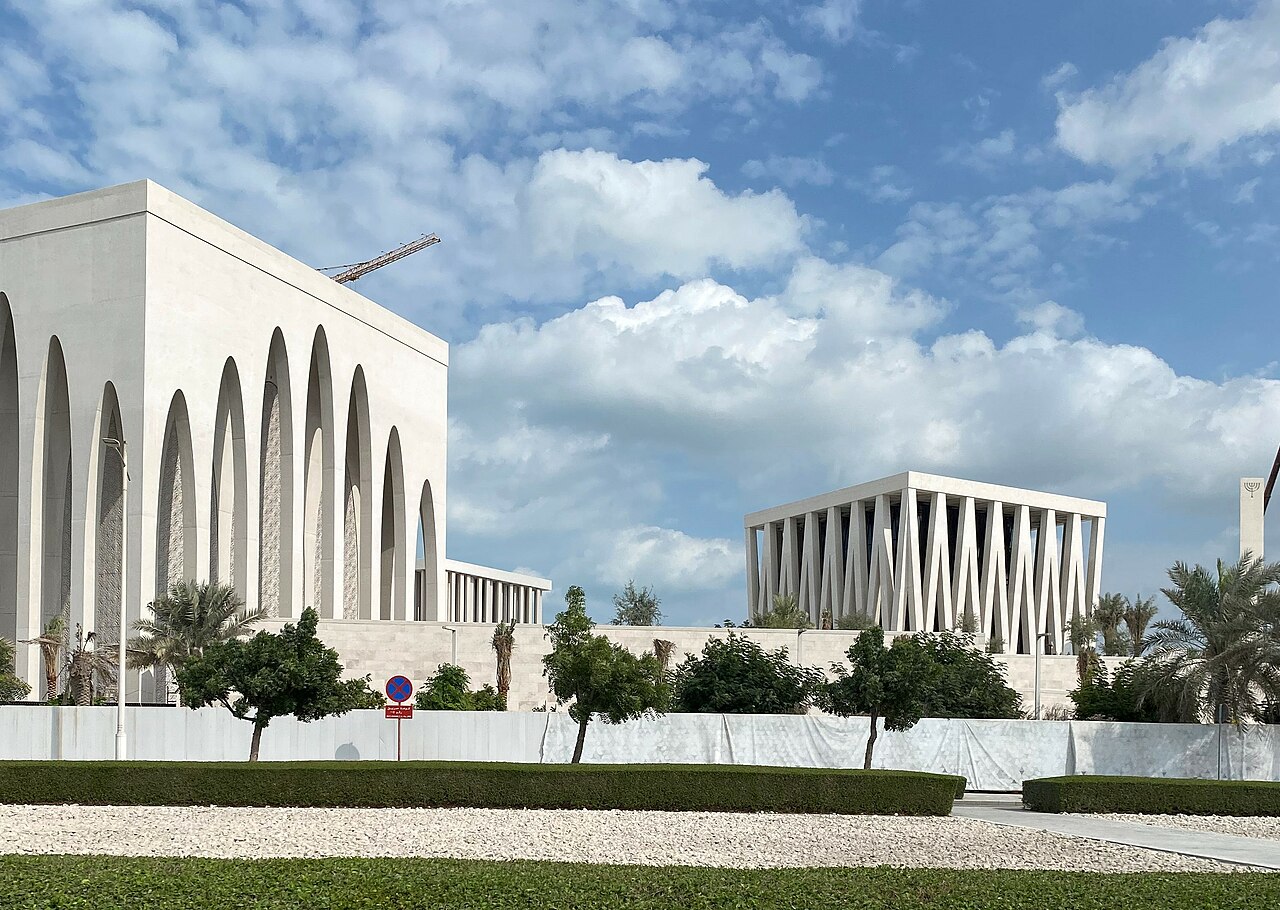
This cultural shift has enabled the Jewish community to enjoy the most religious freedom in the Arab world, within general limits. With ~3000–80000 members (2025 estimates), they have access to three synagogues (including the public Moses Ben Maimon Synagogue at the Abrahamic Family House, featuring clear signage and oriented toward Jerusalem), kosher amenities (four+ restaurants and groceries), and religious education (Hebrew schools like Mini Miracles). Feasts like Shabbat and Hanukkah are celebrated inside synagogues or compounds. While proselytizing is banned and public celebrations require permits, modest symbols like a small Star of David are tolerated if discreet, allowing community members to navigate public spaces safely.
UAE’s “all-in” approach has made the accords a peace not just between governments but between people, with interfaith events and tourism building trust. Economic vulnerabilities exist—oil dependence (~30% GDP), real estate bubbles in Dubai, and exposure to global shocks affecting tourism/air travel—but are mitigated by robust diversification. Non-oil sectors drive 4–4.6% growth in 2025: Tourism booms (record FDI, events like Expo legacy), air travel surges (Emirates/Etihad expansions), and sciences/R&D thrive (e.g., AI/IT, including Masdar City’s renewables and Dubai’s Silicon Oasis hubs). This self-reinforcing cycle (wealth buys stability) makes UAE resilient.
Bahrain’s Cautious Cave: Internal Fears and Backtracking on School Reforms
Bahrain’s post-accords journey tells a different story—one of initial promise eroded by internal dynamics and fear. The kingdom signed the accords alongside the UAE, establishing diplomatic ties with Israel and inking deals on technology and trade. Early wins included a renovated synagogue in Manama and Hanukkah celebrations, signaling tolerance. And it has to be said, despite higher tensions since the Gaza war, the accords have also endured in Bahrain. The Security cooperation is deeper than ever with Israel (Iran threat), and trade quietly has grown in 2024–2025, and diplomatic channels function.
However, by 2023, Bahrain began backtracking, driven by Shia opposition and fears. The turning point came in May 2023, when the government reversed pro-accords content in school curricula—lessons on normalization and Israeli ties were scrubbed amid protests from Shia scholars and civil groups labeling them “brainwashing.” Post-Gaza war (October 2023), parliament suspended economic ties with Israel, and the Israeli ambassador post remained vacant into 2025. Public support for the accords cratered to around 13% in the Gulf overall, with Shia-led demonstrations amplifying anti-Israel sentiment.
At the heart of this cave-in is Bahrain’s precarious internal dynamics: A Shia majority (~55–62% of citizens) resents the Sunni Al Khalifa monarchy, viewing the accords as a betrayal of Palestinian solidarity and Arab values. The 2011 uprising, crushed with Saudi help, lingers as a trauma—Shia communities face ongoing persecution, including the destruction of religious sites and exclusion from security forces. Fear of reigniting this “Shia crescent” dynamic has paralyzed reforms, unlike the UAE’s confident push.
The Demographic Gamble: Gradual Replacement and Hidden Risks
To counter the Shia “threat,” Bahrain’s rulers have pursued a controversial strategy of demographic engineering—gradually diluting the Shia majority through selective naturalization of Sunnis. Since the early 2000s, roughly 65,000 – 100,000 Sunnis (though opposition claims numbers go as high as 120,000) have been granted citizenship, shifting the balance from ~70% Shia in 2001 to ~55–60% today.
This “silent ethnic cleansing,” as Shia activists call it, involves fast-tracking Sunnis into military, police, and government roles while denying Shia expats (from Iran, Iraq) renewal visas and family reunification.
Instead of sourcing from moderate Sunni populations like Indonesia’s tolerant “Islam Nusantara” communities, Bahrain prioritizes migrants from radicalized pools in Pakistan (Deobandi/Wahhabi influences) and Jordan (often Palestinian-origin)—assuming vetting, money, fear, and deportation can contain extremism. These groups bring their own security problems—high extremism rates (70–85% support for Sharia or anti-Israel views)—yet Bahrain favors them for cheap, ostensibly obedient labor.
But this preference could be a self-defeating illusion: Palestinian-Jordanians, for instance, have a concerning pattern of insurrection and betrayal in host countries—from the 1970 Black September coup attempt in Jordan (nearly toppling the monarchy), to siding with Saddam during the 1990 Kuwait invasion (betraying their benefactors), to instigating Lebanon’s 1975–1990 civil war (turning refugee camps into armed enclaves). How long before grievances (low wages, kafala abuses) flip their loyalty in Bahrain, creating a Sunni-Shia radical alliance against the Al Khalifa?
This demographic gamble buys short-term stability but plants seeds for a 2030–2040 explosion. Shia communities, watching friends’ visas expire and jobs go to outsiders, label it already as “replacement” via underground reports and social media
Prospects for Bahrain; A Tinderbox in Waiting
Bahrain’s path risks creating a self-inflicted tinderbox. Short-term, the strategy buys time—Shia protests are contained, and Saudi support ensures survival. U.S. ties (hosting the 5th Fleet) provide a crucial buffer, deterring external threats and ensuring quick intervention. Economic growth (~3% GDP in 2025, driven by oil and finance) offers some moderation, creating jobs and incentives for stability.
However, economic growth alone doesn’t deradicalize: Qatar’s wealth hasn’t quelled its Hamas ties or internal hotspots, and Bahrain’s prosperity hasn’t bridged Shia-Sunni divides. Grievances persist, potentially fueling militancy.
While growth can moderate pragmatists, it’s self-defeating with radicals, who exploit inequalities. Long-term prospects are grim: By 2035–2040, Sunni migrants could reach 40–50% of the population, fostering underground radicalism as “obedient workers” plot amid grievances. Potential alliances between Shia militias and Sunni jihadists could spark a civil war.
The monarchy’s “plan”?
Delay problems via demographics, hoping vetting and tight control keep a lid on internal ethnic and religious tensions. Not offically confirmed but persistently rumored are extraction of wealth (~$40B offshore), and exit abroad to exile if needed, letting others (read Saudi Arabia) “fix” the mess. Crown Prince Salman’s reformist circle offers hope for a pivot, but hardliners dominate. Without course corrections, Bahrain risks becoming a failed state, its accords legacy a footnote in a tale of fear over foresight.
In contrast to the UAE’s thriving model, Bahrain’s caution underscores how internal fractures can derail diplomacy. The Abraham Accords’ promise endures, but for Bahrain, it demands confronting the demographic demons from within.