
The Perma-War Trap: How BiBi Exchanged Israel’s Security for Political Longevity
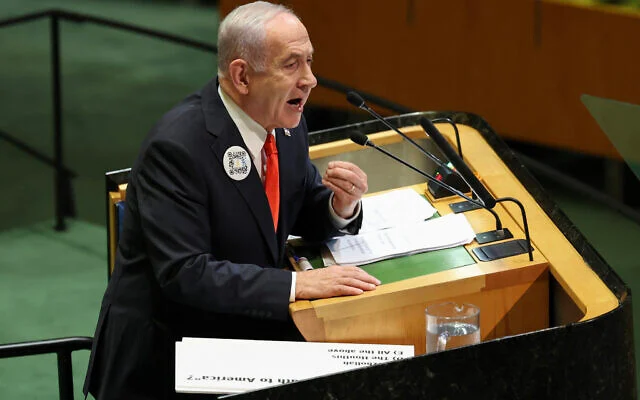
For nearly two decades, Benjamin Netanyahu has cultivated the image of “Mr. Security,” a leader uniquely qualified to navigate the volatile landscape of the Middle East. Yet, as we survey the ruins of our post-October 2023 reality, a chilling paradox emerges. The very strategies intended to ensure Israel’s survival have, in practice, transformed our existential security into a hostage of political survival. We have entered a “Perma-War Trap,” where the continuation of conflict is no longer a failure of policy, but the primary instrument of a premiership that has lost its way.
The Logic of Perpetual Crisis
In the early stages of his political career, Netanyahu’s “fortress Israel” mentality was, for many, a reassuring response to the instability of our region. However, this has morphed into something far more cynical: a reliance on chronic tension to forestall a domestic day of reckoning.
The evidence is in the methodology. By prioritizing “conflict management” over resolution, Netanyahu has successfully avoided the uncomfortable political choices that come with genuine diplomacy—such as defining the future of the West Bank or addressing the status of the Palestinian Authority. Instead, the status quo has been elevated to a supreme value. By maintaining a state of constant, low-to-mid-level friction, the government ensures that national attention remains fixed on external threats, effectively insulating the coalition from the internal fractures of its own making—most notably the simmering anger over judicial reforms, ultra-Orthodox draft exemptions, and the post-October 7 failures.
The Political-Security Loop
The structural crisis of this cabinet is best understood through its composition. To maintain a majority, Netanyahu has tethered the state’s security apparatus to the ideological whims of far-right partners who openly advocate for outcomes—such as the full re-settlement of Gaza or the abandonment of international norms—that directly undermine Israel’s long-term standing.
When security decisions are filtered through the narrow lens of keeping Smotrich or Ben Gvir within the tent, the definition of “victory” becomes fluid. We saw this in the shifting goalposts of the Gaza campaign: from the initial promise of dismantling Hamas to the current state of indefinite military administration. Each extension of the war’s timeline serves as a reprieve for a government whose survival would likely collapse the moment the guns fall silent and the state inquiry commissions begin their work.
The Cost of Stagnation
The price of this “Perma-War” is being paid in the currency of Israel’s future. Internationally, our strategic depth is eroding. By foreclosing any credible diplomatic horizon, the government has moved Israel from a position of proactive statecraft to one of reactive isolation. We are no longer shaping the regional order; we are merely enduring the consequences of our own lack of vision.
Domestically, the toll is even more severe. We are witnessing the fraying of the social contract. The IDF, once the bedrock of our national identity, is being stretched to the breaking point, while the lack of burden-sharing—epitomized by the ongoing struggle to reform military service exemptions—reveals a government that prefers the survival of its coalition to the survival of the collective spirit of the people.
Breaking the Trap
The “Perma-War” is not an inevitable outcome of Israel’s geography; it is a choice. It is the choice to prioritize a career over a country, and a coalition over a consensus.
To break free, we must decouple our security needs from the political requirements of this cabinet. This requires, at minimum, a state committee of inquiry into the failures of October 7, an end to the reliance on extremist factions to dictate military policy, and a return to the realization that true security is not just the absence of an enemy, but the presence of a viable, sustainable political future.
Israel cannot afford another year of “total victory” slogans that serve only to mask a reality of total stagnation. If we continue to allow our national security to be used as a shield for political longevity, we risk losing the very thing we are supposedly fighting to protect: a secure, democratic, and cohesive Jewish state. The time for tactical maneuvering is over; the time for a leadership that puts Israel above the prime minister’s office is long overdue.