Abraham Beyond the Tent: When Kindness Speaks Up
Most people remember Abraham’s tent. But the most extraordinary act of chesed in this week’s parsha comes after the guests have gone.
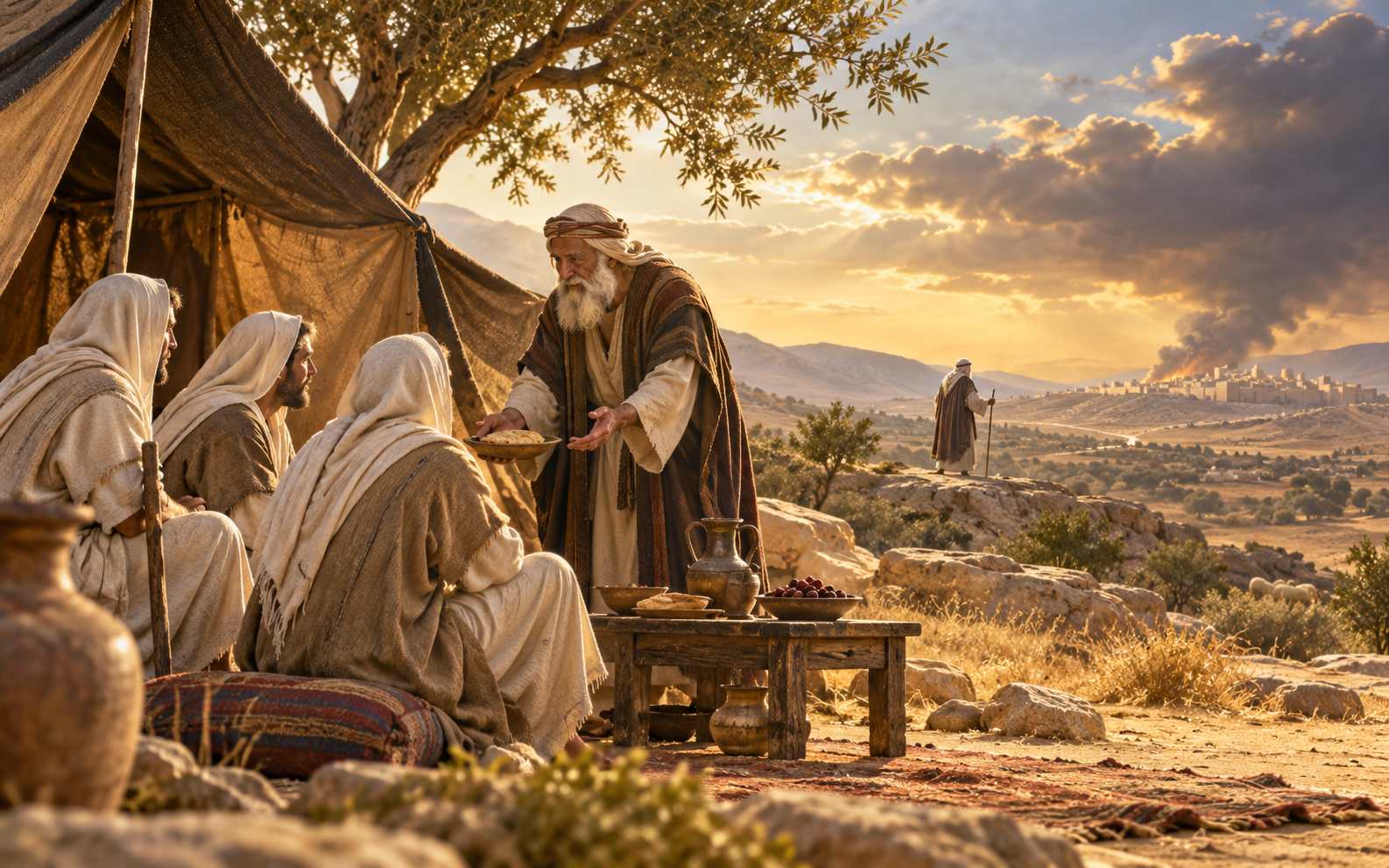
Abraham’s tent – The open flaps on all four sides. The old man running in the midday heat. The water, the bread, the calf. We teach it to children, and rightly so. The Chafetz Chaim’s Ahavat Chesed holds Abraham up as the model of chesed and hospitality.
But the most extraordinary act of chesed in this week’s parsha comes after the guests have gone.
Abraham walks his visitors towards Sodom. G-d then reveals that He is about to pass judgment on Sodom, where Abraham’s nephew Lot lives. And Abraham, a man who has spent his whole life obeying G-d, does something nobody in the Torah has done before: he challenges G-d’s judgment on behalf of other people.
The tent showed us Abraham’s kindness to the people who came to him. Sodom shows us his concern for people he would never meet, who would never thank him, and who, by every account, did not deserve his help.
Abraham understood something we sometimes forget: chesed does not always mean being gentle. Sometimes it means refusing to remain silent.
Why did G-d tell him at all?
Before Abraham says a word, G-d deliberates aloud:
הַמְכַסֶּה אֲנִי מֵאַבְרָהָם אֲשֶׁר אֲנִי עֹשֶׂה
“Shall I hide from Abraham what I am about to do?” (Bereishit 18:17)
The reason follows two verses later. Abraham has been chosen so that he will teach his children to keep the way of G-d, “doing what is just and right” (18:19).
Rabbi Jonathan Sacks argues that G-d was not seeking information. He was issuing an invitation. If his descendants were one day to stand up to Pharaohs and kings, Abraham first had to learn to stand up to G-d.
Rabbi Sacks called this moment “the birth of the world’s first religion of protest.”
The Torah records no protest from Noah when he learns of the coming Flood. Abraham, told that two cities would fall, cannot stay silent.
Abraham drew near
The argument begins with a single word: וַיִּגַּשׁ, “and Abraham drew near” (18:23).
But how does a human being draw near to a G-d who fills the whole world? Rashi, drawing on the Midrash, explains that the word is used in three ways in Tanach: drawing near for battle, drawing near to appease, and drawing near to pray.
Nechama Leibowitz points out that Abraham does all three at once. He argues hard, he pleads gently, and he prays.
Can the good die with the bad?
Abraham’s opening question goes to the heart of the matter:
הַאַף תִּסְפֶּה צַדִּיק עִם רָשָׁע
“Will You sweep away the righteous along with the wicked?” (18:23)
This is the oldest moral question there is. Can it ever be right for innocent people to suffer alongside the guilty?
Abraham’s answer comes two verses later, and he does not hide his displeasure:
חָלִ֨לָה לְּךָ֜ מֵעֲשֹׂ֣ת ׀ כַּדָּבָ֣ר הַזֶּ֗ה לְהָמִ֤ית צַדִּיק֙ עִם־רָשָׁ֔ע וְהָיָ֥ה כַצַּדִּ֖יק כָּרָשָׁ֑ע חָלִ֣לָה לָּ֔ךְ הֲשֹׁפֵט֙ כׇּל־הָאָ֔רֶץ לֹ֥א יַעֲשֶׂ֖ה מִשְׁפָּֽט׃
“Far be it from You to do such a thing, to bring death upon the innocent as well as the guilty, so that innocent and guilty fare alike. Far be it from You! Shall not the Judge of all the earth deal justly?” (18:25)
The language is extraordinary. חָלִלָה לְּךָ, “far be it from You”, is the kind of phrase one uses to reject something as unthinkable. And Abraham says it twice in a single verse. It is Abraham insisting that such an outcome would be unworthy of the Judge of all the earth.
Notice, too, exactly what troubles Abraham. It is not only that good people would die. It is the phrase in the middle: “so that innocent and guilty fare alike.” If the good and the bad meet the same fate, then goodness itself means nothing. A world in which it makes no difference how you live is not a just world, whoever is running it.
Leibowitz calls this the first principle of the passage: righteous judgment. And she ties it back to the verse that opened the conversation. G-d chose Abraham so that his children would do “justice and judgment” (18:19). Isaac has not yet been born. But Abraham is already holding the Judge of the earth to the very standard G-d expects of his descendants.
Two prayers, not one
Leibowitz cites Solomon Dubnow, who noticed that Abraham’s requests contradict each other.
In verse 23 he asks G-d not to kill the righteous along with the wicked. In verse 24 he goes much further and asks G-d to spare the wicked for the sake of the righteous. Then in verse 25 he drops back to asking only for the righteous.
Which is it?
Leibowitz quotes the Divrei David, a commentary on Rashi, which resolves it beautifully. Sparing the innocent should not even require a prayer. It is simply justice. What Abraham is really praying for is mercy for the whole city. And if he cannot have that, then at the very least G-d must not kill the innocent, because that is not a favour. It is a matter of right.
Justice says the good must not suffer for the bad. Abraham, out of love, asks for more: that the bad be saved because of the good.
Leibowitz calls this the second principle: the responsibility of the righteous few towards the rest of society, however corrupt, and their power to save it. In her words, “one spark is sufficient to penetrate the thickest darkness.” A city is like a body. If its heart is healthy, the whole body can live.
Righteous inside the city
The negotiation itself is almost a market-stall haggle. Fifty. Forty-five. Forty. Thirty. Twenty. Ten.
Then Abraham stops. Rashi explains why. Abraham had already effectively asked for nine, with G-d completing the number, and Noah’s family of eight had not been enough to save its generation. There was nowhere lower to go.
But there is a catch hidden in G-d’s very first reply:
וַיֹּ֣אמֶר יְהֹוָ֔ה אִם־אֶמְצָ֥א בִסְדֹ֛ם חֲמִשִּ֥ים צַדִּיקִ֖ם בְּת֣וֹךְ הָעִ֑יר וְנָשָׂ֥אתִי לְכׇל־הַמָּק֖וֹם בַּעֲבוּרָֽם׃
“And G-D answered, ‘If I find within the city of Sodom fifty innocent ones, I will forgive the whole place for their sake.’” (18:26)
The Hebrew is more emphatic than the translation. It names the place twice: בִסְדֹם, “in Sodom”, and בְּתוֹךְ הָעִיר, “within the city”. Why both? Ibn Ezra explains that the righteous must fear G-d in public.
For Leibowitz, the few can indeed save the many, but only if they are part of public life, exerting influence and taking a stand. Good people who live in quiet retirement, keeping their piety behind closed doors, may well save themselves. They will not save the city.
She then makes the sharpest point of all. A city that drives its good people into hiding, so that their standards do not get in the way of its injustice, cannot then claim to be saved by them.
Jeremiah makes the same point about Jerusalem: if a single just person can be found in its streets and squares, G-d will pardon the city (Jeremiah 5:1). Leibowitz cites the Radak, quoting his father: there were righteous people in Jerusalem, but they hid inside their houses, afraid to show themselves in public because of the wicked.
So the moral argument cuts both ways. Abraham insists that G-d must not let the good die with the bad. But the Torah insists, just as firmly, that the good must not hide from the bad.
Private goodness may save the individual. Only public courage can help save the city.
Dust and ashes
In the middle of the boldest argument in Bereishit, Abraham says:
וַיַּ֥עַן אַבְרָהָ֖ם וַיֹּאמַ֑ר הִנֵּה־נָ֤א הוֹאַ֙לְתִּי֙ לְדַבֵּ֣ר אֶל־אֲדֹנָ֔י וְאָנֹכִ֖י עָפָ֥ר וָאֵֽפֶר׃
“Abraham spoke up, saying, ‘Here I venture to speak to my Sovereign, I who am but dust and ashes.’” (18:27)
Twice more he pleads, “Let not my Lord be angry” (18:30, 32).
This is not arrogance. It is the rare combination of complete humility about himself and complete conviction about justice.
Most of us manage one half of that combination. We are humble and therefore silent, or we are outspoken and therefore insufferable. Abraham shows that the two can live in the same person.
He lost the argument
Here is the part we tend to skip. Abraham lost the argument, at least in its largest sense. Sodom was not spared.
There were not ten righteous people in Sodom. The next morning, Abraham gets up early and returns to the very spot where he had stood before G-d. He looks towards the cities of the plain and sees smoke rising from the land like the smoke of a furnace (19:27–28).
Lot and his two daughters escape, and the Torah says pointedly that it was because G-d remembered Abraham (19:29). Of Abraham’s own reaction, the Torah tells us nothing. Perhaps there was nothing left to say.
So was the argument pointless?
Elie Wiesel recounts a parable about a just man who came to Sodom, determined to save it. He protested year after year, and everyone ignored him. Eventually someone asked why he carried on when it was obvious that nothing would change. He replied that at first he had shouted to change them. Now he shouted so that they would not change him.
Abraham’s protest did not save Sodom. But it did define who Abraham was, and who his descendants were meant to become. Moses would argue for Israel after the golden calf. The prophets would argue with kings. Generations of Jews would ask G-d hard questions and keep believing anyway.
Rabbi Sacks famously wrote: “Judaism begins not in wonder that the world is, but in protest that the world is not as it ought to be.” That protest began here, on a hillside overlooking Sodom.
Not every argument for justice is won. Every one of them still matters.
What about us?
Few of us will ever negotiate with the Almighty over the fate of a city. But we face smaller versions of Sodom all the time.
The colleague treated unfairly while everyone else looks at their shoes. The neighbour nobody likes, who still deserves to be treated decently.
Noah’s way is always available. Keep our own house in order, build our own ark, and leave the rest of the world to G-d.
Abraham’s way is harder and that is why he is one of the all time Role Models. It means caring about people beyond our front door, including people we do not much like. It means being righteous within the city rather than quietly righteous at home. And it means speaking up, with humility, even when we suspect we will lose.
The tent teaches us to welcome the people who come to us.
Sodom teaches us to go out and stand up for the ones who never will.