The views expressed herein are solely mine.
Abu Suhaib: Hamas’ Last Terror Boss in Gaza
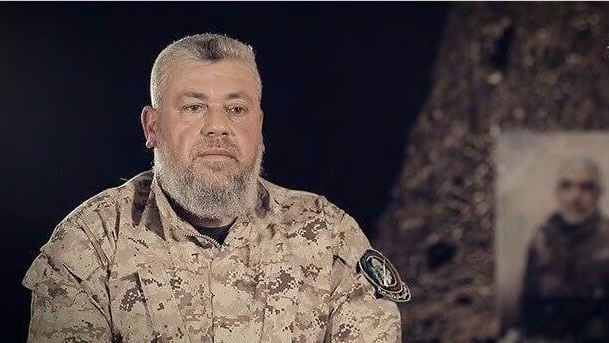
Izz al-Din al-Haddad is the new leader of Hamas' military wing in the Gaza Strip. He is in control of the Israeli hostages. Photo: Hamas/video recording/screenshot used in accordance with Clause 27a of copyright law
For too long, Israel’s intelligence chiefs believed Hamas was not eager for all-out war. That mistake exploded on October 7th, 2023, when Hamas launched its barbaric massacre—raping, murdering, and kidnapping civilians in the single worst day of slaughter against Jews since the Holocaust. The Jewish state answered with fire and steel, and nearly two years later, Hamas lies in ruins. Twenty-three out of twenty-four battalions obliterated. Commanders hunted down one by one. More than a third of their terror tunnels—once the pride of Hamas—turned into dust and flooded rubble.
The kill list tells the story of Israeli determination: Yahya Sinwar—gone. Mohammed Sinwar—gone. Mohammed Deif—the so-called “phantom”—gone. Marwan Issa—gone. Ahmed al-Ghandour—gone. Ayman Nofal—gone. Abu Oneida—gone.
Abroad, their masters were not spared either. Saleh al-Arouri was blown up in Beirut, while Ismail Haniyeh was eliminated inside an IRGC building in Tehran. Hamas leaders once swaggering on satellite TV, are now reduced to body bags and obituaries. Israel promised justice and delivered it, proving once again that Jewish blood is never spilled without consequence.
And yet, amid this pile of corpses and collapsed tunnels, one figure remains: Abu Suhaib, born Izz al-Din al-Haddad. He is not a household name in the West, but inside Gaza City, he has become Hamas’s last commander of consequence. When the Sinwars and Deif were wiped out, Abu Suhaib quietly rose through the ranks, holding what is left of the Qassam Brigades together. He directs the last ambushes, orders the last kidnappings, and tries to stitch together the shattered remnants of Hamas’s military machine.
His very survival is the only propaganda Hamas has left. To demoralized fighters scavenging for ammo in Gaza’s ruins, Abu Suhaib is proof that “resistance” still breathes. But make no mistake—his days are numbered. Israel knows exactly who he is, where he is hiding in Gaza City, and what his elimination would mean: the final shattering of Hamas’s chain of command, the end of any illusion that Gaza’s terror gangs remain an organized army, and a powerful signal to Iran and Hezbollah that the Jewish state never leaves the job half-done.
Of course, some warn that killing Abu Suhaib could scatter Hamas into smaller, harder-to-track terror cells, it may complicate the hostages’ situation, and could potentially slow down the implementation of Trump’s peace plan for Gaza (if Hamas fully accepts it and implements it). That may be true. But that is not a strategic force—it is a rabble. And Israel would rather face a handful of leaderless fanatics than a centralized army with foreign sponsors and political clout.
Abu Suhaib is not a freedom fighter. He is not a symbol of resistance. He is the last scoundrel in a collapsing tunnel, clinging to scraps of relevance while his comrades rot in shallow graves. When he falls—and he will fall—it will not just mark the end of a man. It will mark the end of Hamas as a military power in Gaza, and another victory for Israel’s unbreakable will to defend its people.
Related Topics
Related Posts