Accept that another voice can exist beside our own
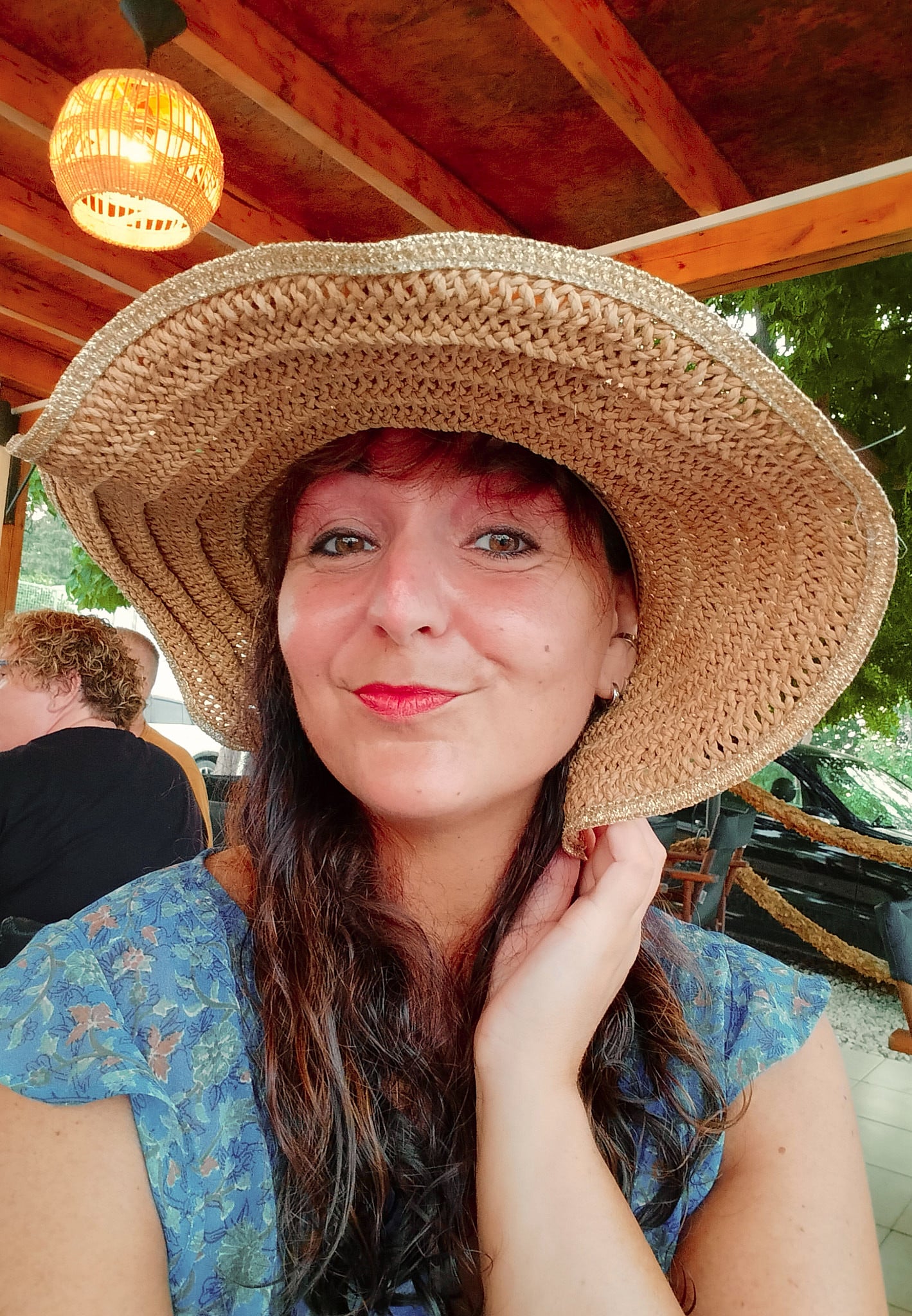
For those who have missed it: I exchanged the Netherlands for Cyprus permanently. Truly, the best decision of my life. I’m full of life again. But the start here was insanely difficult for many reasons.
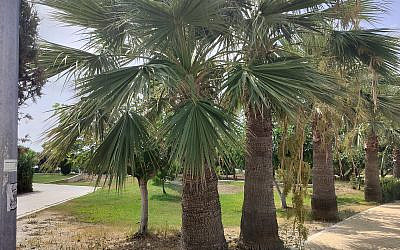
After a difficult period, I began to move through Cyprus by car, taking road trips without any grand plan, except to see what was there. The landscape kept interrupting me. Green opening into blue, beaches changing their character from one coast to the next, mountains appearing in different temperaments, and villages gathered into themselves with the modesty of an island.
I would stop with my friends (it’s their car as I don’t have one yet) and feel gratitude before thought. I’m now living here! I’m remaining here. How lucky am I to have followed my inner knowing and my happiness? How have I managed to live in the Netherlands and its cold and toxic climate for forty one years?!? The astonishment is of a person who has spent too long believing that life must first be sacrificed instead of lived.
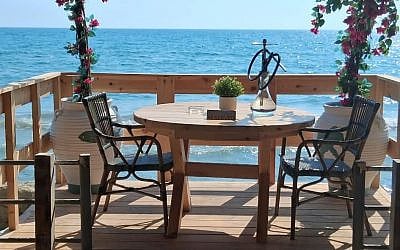
Cyprus isn’t perfect. Well, that’s an understatement… In this context, I’m referring to its appearances. But that’s part of its tenderness as well. Its houses often repeat a limited architectural vocabulary, especially when compared with Amsterdam, the Netherlands, the city I came from. Yet this uniformity has the charm of a place that hasn’t entirely surrendered to the demand to impress. The island has an almost domestic quality. It doesn’t ‘perform’ its beauty. It leaves it lying in the sun.
There’s one absence I keep noticing, though, and one of my friends who traveled the world quite a bit has the same. I miss the generous presence of fruit and vegetable trees along public roads. In other warm regions, and on other islands, the landscape sometimes offers itself directly. In Tuscany, around 2014, I could stop beside the road and pick fresh apricots. I’d love to see Cyprus planting more. The conditons are ideal, so why not?
I mention this not as a complaint about supermarkets or greengrocers. A purchased apricot is still an apricot. But it is not the same encounter. To eat something directly from the earth is to experience food before it has become a commodity, a transaction, or a sealed object under artificial light. It’s a significant form of medicine because it restores a relationship rather than merely satisfying an appetite. The physiological impact on me is nothing less than out of this world.
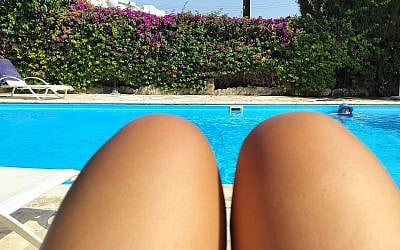
Perhaps I will eventually plant a vegetable garden in my front yard. That thought has begun to feel like a declaration. My roots are now in another pot of soil, namely Cyprus instead of the Netherlands. The difference between this soil and the one I occupied for forty one years in the Netherlands is difficult to explain without sounding excessive. Yet the body is often more accurate than language. Like I said, I cannot understand how I lived for so long in such a cold and toxic climate. I should have made this move much earlier. The message is to not postpone your happiness, if you can.
In the coming year, health and vitality will become central. I’ve arranged a yearly membership at the gym opposite my home. Much has to be rebuilt if I’m to return to the condition I had between 2013 and 2020. But something has changed. It’s no longer an abstract intention while I go out for diners as I’ve done this summer, which has felt very problematic for my body.
Now, I want strength to become a daily fact, and I cannot ignore how sick I get when I eat at restaurants. I cannot ignore that I’m worth so much more, even if I have to start insulting people’s feelings who expect me to join them and eat out. I want my body to stop being treated as an unfortunate house in which the mind is obliged to reside. Besides, the amount of money I usually have to spend on one restaurant meal is worth at least four days of regular groceries. So I simply won’t.
This conviction was sharpened at my friend’s communal swimming pool. A Muslim family, presumably on holiday, lived in a house beside that of the friend. The boy entered the pool in ordinary shorts. The two young women entered slowly, fully covered in burkinis and wearing headscarves, in thirty five degree Celsius…
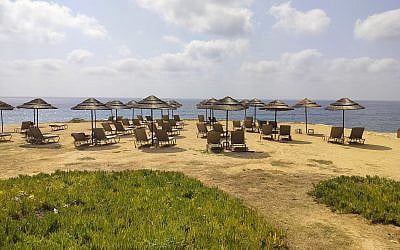
I was lying in a bikini so minimal that it seemed designed to collect every available ray of sunlight. With endometriosis, I’ve found nothing as restorative than sleeping in the sun and allowing my hormonal life to settle into a different rhythm. I also enjoy being tanned for the rest of the year. Because of my difficult start with my house in Cyprus (I got ripped off and got a house full of hidden defects) which continued for three months, I couldn’t enjoy the sun until now. Anyways, the contrast between the covered young ladies and my uncovered tanning outfit couldn’t have been more pronounced.
The young ladies smiled at me with friendliness and embarrassment. They looked at me for a long time, as if they were apologising. My friend found their clothes entering the swimming pool unhygienic and terrible. I was more flexible about the water, but I felt something more difficult than disgust. I felt grief for many generations of women, and for the collective consciousness of this world. I was grieving the world that had made the boy’s body unremarkable and the girls’ bodies suspect, regulated, covered, and symbolically removed from the sun in the name of God. In other words, in the name of taking scriptures literally and believing in fierce punishments of God when not complying with those scriptures.
However, the beauty of those young ladies wasn’t erased by the burkinis or the headscarves. It appeared through them in the form of fine faces, delicate expressions, and striking blue eyes. Yet their appearance also exposed the cruelty of a system that can call itself sacred while distributing freedom according to gender.
The point isn’t that every woman who covers herself is coerced, nor that every uncovered woman is free. Human beings are more complicated than the garments they wear. The point is that consent loses its meaning wherever a woman cannot safely choose otherwise. The young women didn’t know that I saw myself in them, because I too had no freedom of choice when I was living at home.
And because the same question arises in ultraorthodox Jewish communities, where women may enter the sea or a swimming pool according to similar strict rules concerning modesty and hair. The details differ. Some orthodox Jewish women cover their hair with wigs or extensions. In Islam, other forms of covering are prescribed or prohibited according to different readings.
Thus, these traditions aren’t identical, and to collapse them into one category would be intellectually lazy. But they can resemble one another in a deeper structure. The female body becomes the site on which a community and family system displays its obedience to God.
Back in my teenage era, I could have been one of those young women in the pool, enclosed in a portable architecture of cloth. I take that back only because I know I would have rebelled. I would have exchanged everything necessary not to live that way. Under no circumstances would I have accepted it, with all the dangers that entails.
This isn’t an attack on Muslims or Jews. It’s an objection to every orthodoxy that turns a human being into an instrument of collective purity. When it has nothing to do with Godliness. Besides, when men who rape will also rape when a woman is fully covered, for example in a loose blouse and pants, not just when she showes cleavage.
There are gradations within every religion. There are generous believers, frightened believers, contemplative believers, political believers, and people who use religion to give their own hunger for control a respectable name. Because the world is corrupted, so women can be influenced badly and should be held closely to their partners and/or father and brothers. As if women don’t live purely and cannot think for themselves. Mostly, as if they cannot listen to their inner compass, which is directly connected to God. The still small voice inside…
A faith should not be judged by its most rigid representatives, but neither should rigidity be protected from criticism merely because it speaks in the vocabulary of God. And so, in the last week, I’ve been studying the Qur’an from beginning to end (I’m not finished yet as I take my time to connect with the Divine instead of reading it as if reading a civil book), rather than selecting isolated passages as I did in the past. One verse has stayed with me, from chapter 2, verse 213:
Humanity was one community, then Allah sent the prophets as bringers of good tidings and warners, and sent down with them the Scripture in truth to judge between people concerning that in which they differed. And none differed over the Scripture except those who had been given it, after clear proofs had come to them, out of jealous animosity among themselves. And Allah guided those who believed to the truth concerning that over which they had differed, by His permission. And Allah guides whom He wills to a straight path.
The sentence that moves me most is this: Allah guided those who believed to the truth concerning that over which they had differed, by His permission. I read in it an unexpected humility. Difference is not presented merely as a failure to be eliminated. Guidance occurs in relation to disagreement. The human being doesn’t become wise by possessing a monopoly on interpretation, but by discovering what disagreement reveals about the limits of possession itself.
A Syrian friend in my new circle told me that it was wonderful that I had shared a Qur’anic verse via TikTok, but that I shouldn’t have placed instrumental music beneath that post. I don’t wear a hijab either, which was another problem. Two days later, I saw an Egyptian acquaintance in my new circle share a Qur’anic verse with instrumental music on social media. When I search online, I find examples both with music and without it. The issue isn’t merely which position is correct. The issue is how quickly religious intensity transforms interpretation into surveillance, and how often the strictest guardians of rules apply them asymmetrically.
The more religious people become, the more rules can multiply. The more rules multiply, the more opportunities arise for double standards. A woman becomes a visible test of a man’s virtue. Not to forget that she is owned instead of being her own person. A piece of music becomes a boundary marker. A headscarf becomes evidence of obedience. A body becomes a public document that others believe they have the right to inspect.
This is why I see no essential difference between the machinery of Jewish orthodoxy, Islamic orthodoxy, Christian fundamentalism, or any other system that confuses the protection of a tradition with the possession of truth. The differences between religions matter historically, theologically, and culturally. But the temptation toward absolutism isn’t owned by one religion, and it continues to destroy our world. It’s a human temptation. The particular scripture changes. The psychological structure often does not.
The philosopher Abdolkarim Soroush is valuable here because he distinguishes between religion and human knowledge of religion. Religious understanding is shaped by history, language, culture, and changing questions. This doesn’t make faith meaningless. It makes interpretation accountable! Once we acknowledge that every reading passes through a human mind, the interpreter can no longer pretend to be identical with God. The authority to interpret becomes a responsibility rather than a weapon.
Raimon Panikkar, who lived between Hindu and Christian worlds, treated interreligious dialogue not as polite diplomacy but as a way of becoming more fully human, which is what I do as well. His cosmotheandric vision refuses to separate the divine, the human, and the world into sealed compartments. One need not accept all of Panikkar’s metaphysics to recognise the force of his question: what if reality isn’t a collection of competing territories but a relationship in which each dimension becomes intelligible through the others?
I have received an answer to that question in Cyprus, and it came from Muslims. This is the great surprise of my life here! Several Muslims I’ve met have returned to me something that was lost in my North African family. My grandparents spoke fluent Arabic and lived peacefully with everyone, including the Arab community. My grandmother became an example through the seriousness of her efforts.
Then the world became violently irrational. Decolonisation forced the family to flee to France, and the possibility of returning to places such as Algeria disappeared. The same historical wound touched family acquaintance Enrico Macias, the well known singer of an oriental musical tradition.
I didn’t come to Cyprus in search of this inheritance. Yet I found Muslims who carried the warmth and culture my grandparents had once known. They fed a melancholy I had not realised I was carrying. They gave me, unexpectedly, a form of cultural memory. It was a gift, and also a correction. It made me ask where my analyses of recent years had been right, where they had been wrong, and how easily historical fear can harden into intellectual certainty.
The Qur’an has entered my life not as a surrender of judgment but as an encounter. I’m studying it because I want to understand what people have loved, obeyed, feared, and fought over. I’m studying it because God is everywhere, also in the Qur’an, which goes against the beliefs of those who talk about Yeshua’s only truth and him rising from the dead again. Or those who solely live by the Tenach.
The most painful fact is that human beings take sacred works literally and then use their literalism to justify the destruction of other human beings. Religious wars aren’t made divine by religious vocabulary. Nuclear weapons aren’t made moral by the story attached to them of how other countries have them as well, so so should we. Men who destroy the world while acting out narratives about enemies, antichrists, chosen peoples, final battles, end times, or civilisational purity aren’t defending heaven. They are importing hell into life, which is Godly and therefore valuable.
What would change if sacred works were approached primarily through mysticism, without dogma, coercive corsets, imposed rules, or the demand that every soul become legible to an institution? Interreligious friendships and intercultural love affairs like Nuseir Yassin (Muslim), the owner of Nas Daily, has with Aija Maurick (Jewish), would have a better chance of surviving the families and systems that currently punish them. The inner dimension of religion might once again become more important than its policing function.
This isn’t a plea for a vague spirituality in which nothing matters. But boundaries matter. Human rights matter. Bodily autonomy matters. Freedom of conscience matters. Without these boundaries, my philosophy of humanecy has no chance. Humanecy cannot mean that every belief deserves equal protection from criticism. It means that every person deserves protection from domination, and that our capacity to become humane must be developed across difference rather than behind uniformity.
My Dutch friend Ray expressed this in one of my TikTok Lives recently, with greater clarity than many official declarations of peace. Harmony, he said, comes from difference, from two distinct voices relating to each other in a way that gives both more colour, tension, and strength. The most beautiful harmony doesn’t occur when two voices sing the same thing. That produces more volume. Unity shouldn’t be the erasure of distinction. Peace doesn’t require everyone to believe the same thing. It requires us to accept that another voice can exist beside our own without diminishing it.
A world in unison might sound powerful for a moment, Ray continued. A world capable of harmony would be richer because it wouldn’t need to silence the note it cannot reproduce. W.o.w…
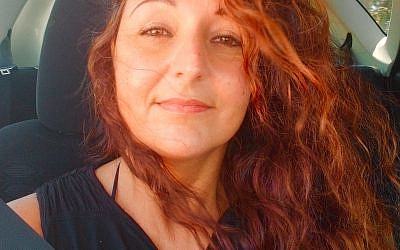
Perhaps this is why this article feels pathetic to me while I’m writing, before it’s even finished. I know that no politician at the global level is waiting for the private cries of a forty one year old woman from Amsterdam who has moved to Cyprus, who has lived through religion, who has a baby face and a soul that feels eighty nine years old.
I know that public institutions rarely respond to an appeal unless it arrives with power, money, votes, or the threat of disorder. I’ve contacted politicians before, in the Netherlands and elsewhere. I sometimes still reach outward at the level of the world, although I am not certain what that means when the world barely answers through visible actions.
Who am I, then, and what can I do? I’m a woman with standards that cannot be traded away, and with forms of wisdom that few people know how to see. I’m a woman who can lie in the full sun beside a communal pool and feel, in the same moment, healing in her own body and anguish at the bodies of two girls who may never be given the same permission. I’m a woman who can criticise religious orthodoxy and still receive tenderness from Muslims. I’m a woman who can question scripture and find, in one of its verses, a sentence that opens rather than closes the world into a Godly arena.
So I move my towel a little, smoothing its edges against the chair. I close my eyes toward the mighty sun. I pray, although I no longer know whether prayer travels upward, inward, or through the living world between people. I pray toward myself, toward nature, toward the world, and toward the only God I can recognise: uncomplicated, loving, intelligent, encompassing, impartial, and mostly beyond religion. Then, for a few seconds, the sun doesn’t ask me what I believe, and the answer isn’t silence but room. The intense gratitude of being able to value life.