
Accountability After 1,000 Days: Ending the Government’s Denial
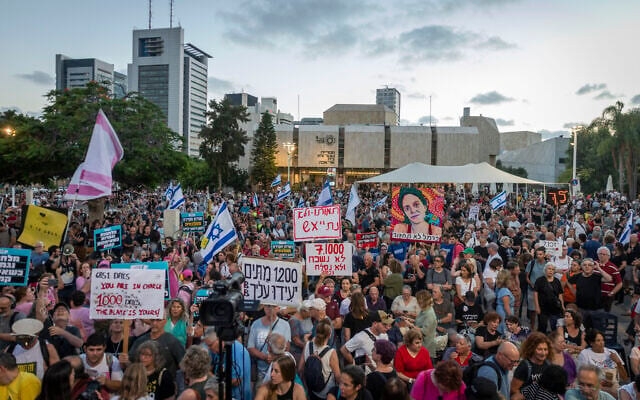
One thousand days have passed since October 7, 2023—a date that fundamentally fractured the Israeli social contract. While the nation marked this milestone this week, the rhetoric from the current coalition remains detached from the profound systemic failures that precipitated the collapse of security and governance. For a society grappling with the long-term impacts of national trauma, the absence of a formal State Commission of Inquiry is no longer just a political stalemate; it is an active barrier to national recovery and the restoration of public trust.
The push for a state commission of inquiry, as voiced by the October Council and thousands of protesters at Hostages Square, centers on the necessity of accountability in a democratic system. Unlike the parliamentary or politically appointed inquiries proposed by Prime Minister Benjamin Netanyahu’s government, a State Commission of Inquiry—headed by a sitting or retired Supreme Court justice—possesses the independence and the investigative teeth to compel testimony, access classified records, and issue binding recommendations.
The Prime Minister’s steadfast opposition to such a body is rooted in a fundamental conflict of interest. By framing the judiciary as inherently biased, the government seeks to preemptively delegitimize any potential findings that would expose the failure of political leadership alongside the military and intelligence establishment. This is not merely a procedural preference; it is a tactical effort to insulate the current cabinet from the legal and moral ramifications of their tenure. As we have seen in recent weeks, the disconnect is widening: while cabinet ministers invoke narratives of a “miracle period” or focus on peripheral political victories, the survivors and the families of the bereaved are left to advocate for a rigorous, non-partisan audit of the events that led to the death of 1,200 people and the prolonged captivity of hundreds.
The case for an independent inquiry extends far beyond political score-settling. It is a matter of administrative hygiene and future deterrence. In the eyes of the public, the current government’s tendency to downplay the severity of the institutional debacle—highlighted by recent comments from ministers such as Bezalel Smotrich and Orit Strock—suggests an unwillingness to engage in the necessary soul-searching required for policy correction. When public officials attempt to co-opt the narrative of the hostages’ release or use dismissive humor regarding the toll of the conflict, they erode the legitimacy of the state’s duty to protect its citizens.
From a journalistic and analytical perspective, the 1,000-day mark exposes a deeper issue: the degradation of democratic norms within the government’s approach to crisis management. The “failure government” moniker, adopted by many of the activists, is more than a slogan; it reflects a widespread perception that the executive branch has prioritized coalition stability over the transparency expected in a mature democracy. For marginalized groups—including women, the LGBT community, and youth-focused sectors whose institutional supports have been deprioritized or restructured during the current administration—the lack of accountability for October 7 serves as a bellwether for the government’s broader dismissal of civil oversight.
The testimony of former hostage Rom Braslavski and the advocacy of Einav Zangauker serve as critical lenses through which to view these failings. When survivors speak of “1,000 lifetimes” passed in captivity, they are highlighting the gap between the lived experience of the Israeli public and the insulated environment of political leadership. A State Commission of Inquiry would force that leadership to confront the dissonance between their political messaging and the reality on the ground.
Without an independent, empowered inquiry, Israel risks embedding these failures into its historical record, effectively shielding those responsible from both moral and historical culpability. As the protest movement continues to mobilize nationwide, the demand for an inquiry remains the most vital instrument available to civil society. It is the only mechanism that can ensure the accountability required to rebuild a fractured state, honor the victims, and ensure that the failures of the past three years are not merely swept into the shadows of political expediency.
True resilience in a democracy requires the courage to document the truth—no matter who it implicates. Anything less than a full, state-sanctioned commission is an abdication of that responsibility.