
Netanyahu’s Tactical Victory, Strategic Defeat?
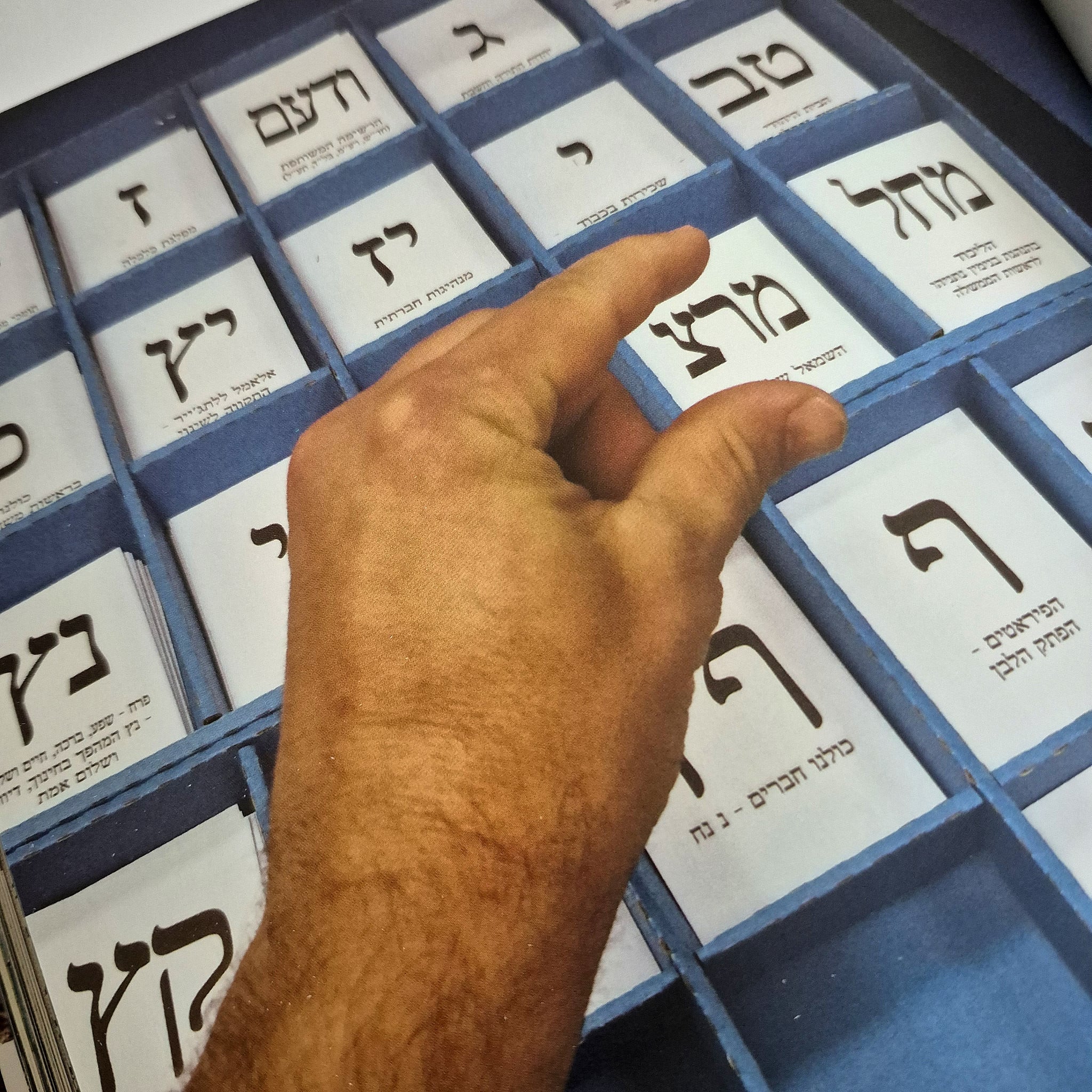
The opinion polls, which have remained relatively stable for months—at least on the choice between the pro-Bibi and the anti-Bibi Zionist bloc—have recently become wildly erratic, with sharp swings and idiosyncratic shifts in the past week or so.
The anti-Bibi Zionist bloc, hovering near 60 seats for almost a year, fell to 53 in a Channel 13 poll on Wednesday. Bennett and Lapid’s Together rebounded to 18 in a Channel 16 poll, one short of Likud. In yet another poll, Zionist Home (Yoaz Hendel, Chili Tropper) crossed the electoral threshold – its first time to do so in more than 20 consecutive polls.
But it is the political merger of Bezalel Smotrich’s National Religious Party and Moshe Feiglin’s Zehut that may have tipped the electoral balance. Whether through backroom machinations, carrot-and-stick tactics, threats, or enticements, Netanyahu’s fingerprints are all over the deal.
Admittedly, we have only a handful of post-merger polls. But the early signs are striking: the arrival of Ofer Winters’ Amcha Yisrael, alongside the NRP-Feiglin merger, appears to have shifted two or three seats and dramatically narrowed the Zionist opposition bloc’s lead. The new merged party is averaging five and a half seats in the latest polls, having failed to cross the threshold in half of the ten polls conducted before the merger.
For a year, Israeli politics has revolved around whether the Zionist opposition can reach 61 seats. That 61-seat target now looks out of reach. Of course, the opposition is broader than the Zionist bloc: it also includes Ra’am and the Joint List. Together, the full opposition reaches 67 seats in that Channel 13 poll.
But might Netanyahu’s tactical genius have led him, unwittingly, into a far greater strategic blunder?
Eisenkot, Bennett, and Lapid now have little to lose and everything to gain by uniting under a single banner before next week’s election filing deadline.
Until now, the case against a merger was straightforward. Why sacrifice seats by merging parties that, according to the polls, could perform better separately? Bennett and Lapid know that lesson well. But the arrival of Amcha Yisrael and the NRP-Feiglin merger change that calculation. If 61 is now effectively out of reach, the opposition has little reason to maintain its current strategy. Its leaders have every reason to abandon it.
The other mergers are now a sideshow. It barely matters if Yoaz Hendel, Chili Tropper, Gilad Erdan, Benny Gantz and the other big-ego micro-parties unite and win four or five seats between them. In the context of a Big-Bang merger of Eisenkot, Bennett and Lapid, they become almost irrelevant.
What matters is whether Eisenkot, Bennett and Lapid are willing to create a political force that the polls suggest could decisively beat Likud in a head-to-head race.
Nobody can predict the final result. It could be 38 to 20 or 35 to 25; the precise numbers are beside the point.
The headline writes itself.
Netanyahu has lost.
For years, Netanyahu’s greatest political asset has been the perception that he is the only politician capable of winning. He has survived election after election by positioning himself as the indispensable center of Israeli politics — the man who can hold the right together and defeat the opposition. For much of his career, that perception has been central to Netanyahu’s power.
There is a precedent for Likud forming a government after finishing second. In 2009, Kadima won 28 seats and Likud 27. Yet Netanyahu went on to form the government.
A one-seat loss is one thing. A crushing defeat is another.
The result — and the election campaign, for that matter — would no longer be framed primarily in terms of coalition arithmetic, but as a defeat for Netanyahu.
The irony is that Netanyahu may have unwittingly created that very narrative. He may have brought smaller parties on the right together — only to give his opponents the final reason to unite. In solving one electoral arithmetic problem — he may have created another, far bigger one.
But the clock is ticking. The deadline for submitting electoral lists is less than a week away. The only question now is whether Eisenkot, Bennett and Lapid can recognize the opportunity and seize it in time. If they do, this election may not ultimately be decided by whether they can reach the magical 61.
It may be decided by something much simpler:
How badly does Likud lose?
International news editors will likely relegate the interminable Israeli coalition-building arithmetic to another day and simply lead with Likud’s defeat by a centrist alliance. That may or may not dominate Israeli coverage of the result on election night, but it won’t be ignored.
If an Eisenkot-led alliance emerges as the country’s largest political force by a substantial margin, the political center of gravity will have shifted before coalition negotiations even begin. Other parties will become satellites, and many — perhaps a few unexpected ones — will suddenly be potential coalition partners.
The gravitational pull of the largest party within touching distance of 40 seats may simply be an electoral force too great for others — including erstwhile Likud allies — to resist.
This may be Netanyahu’s greatest electoral danger.
It is the moment Israelis stop asking whether Eisenkot can replace Netanyahu — and start asking what Eisenkot will do once he does.