
Advancing a US-Israel Partnership in Central Asia
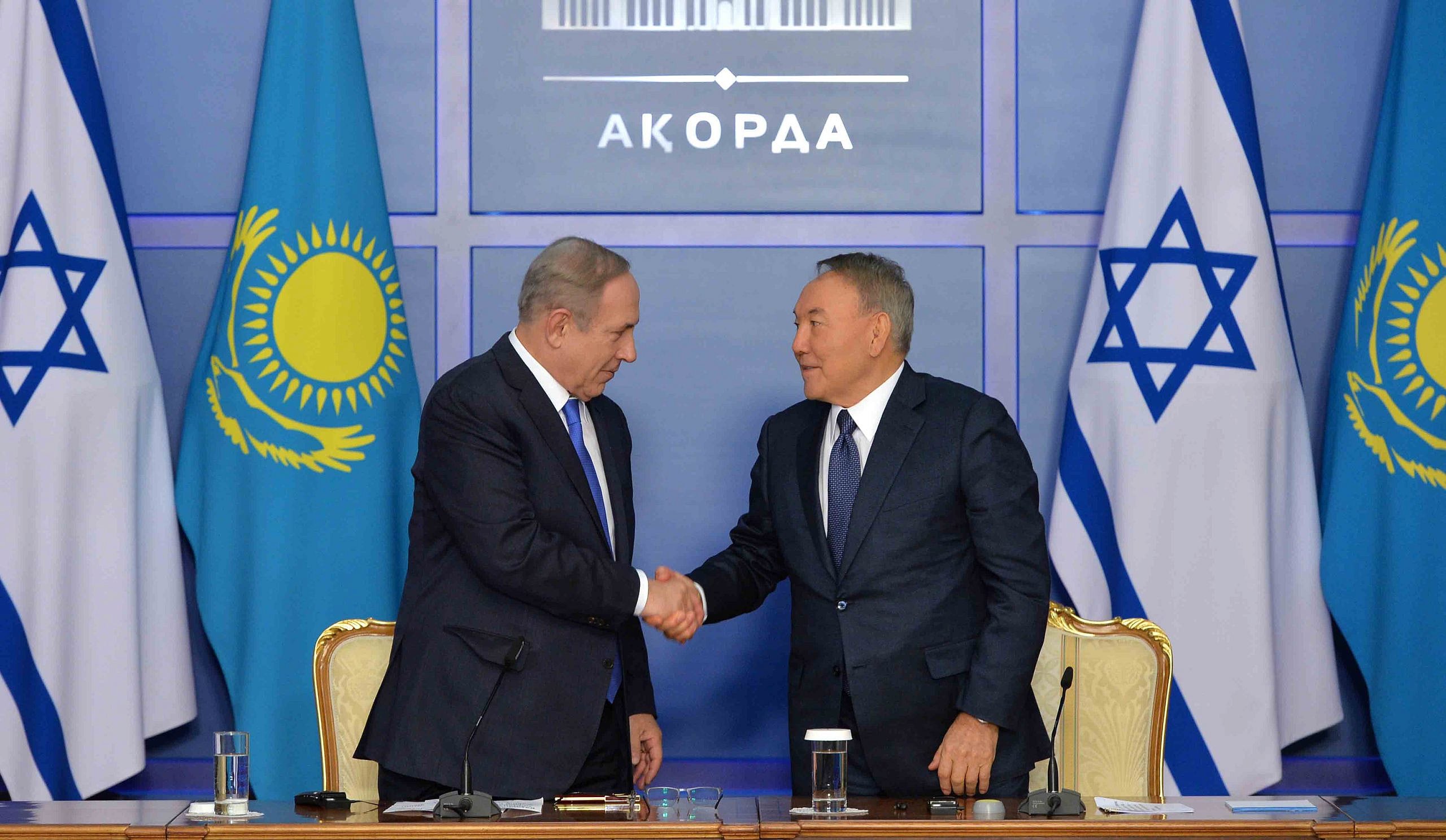
Israel’s diplomatic and at times discreet ties with several Central Asian nations- Kazakhstan, Kyrgyzstan, Tajikistan, Turkmenistan, and Uzbekistan- hold renewed strategic importance in its efforts to contain Iran in the aftermath of its recent 12-Day War. Following the Soviet Union’s dissolution, Israel established diplomatic relations across Central Asia. However, the region is often overlooked regarding Israel’s foreign policy. In collaboration with existing U.S. initiatives across the region, Israel will be better positioned to contain Iranian influence, enhance its regional standing, and strengthen its positioning amid Great Power competition with Russia and China.
For 30 years the United States invested billions of dollars in Central Asia to enhance regional security, economic development, and Afghanistan’s stability. Similar to Israel’s foreign policy outlook, Central Asia remains on the periphery of U.S. priorities. An expanded Israeli-American partnership in Central Asia can therefore be mutually beneficial for both nations as each looks to enhance its geopolitical presence and counter Iranian influence.
Recent developments in President Trump’s economic agenda signal that regional engagement will shift away from foreign assistance and towards a renewed focus on trade and countering Chinese and Russian influence. A U.S. strategy in Central Asia that prioritizes business cooperation and investment puts Israel in a unique position as it seeks to advance its own national security and economic interests.

This approach not only offers Israel an efficient pathway to quickly scale up regional engagement as it focuses on containing more immediate threats along its borders, but it also allows Israel to deepen strategic alignment with the United States when developing its long-term strategy to counter Iran and navigate global competition. For the United States, partnering with leading Israeli innovation and technology industries offers value in providing competitive alternatives to Russian and Chinese capabilities.
A key implication of greater Israeli alignment with U.S. diplomacy in Central Asia is the advancement of Israeli efforts to isolate Iran economically and militarily. Tajikistan is a unique example of how Iran capitalizes on its shared language and Persian culture to expand its regional standing. In January, Tajikistan and Iran signed 23 memoranda of understanding to promote energy, infrastructure, and trade. As Tajikistan increases its cooperation with Iran, Israel should leverage America’s visible presence and established footprint in Tajikistan and the broader region to diversify supply chains away from Iranian sources.
Partnering with the United States to promote shared economic goals enables Israel to introduce technology and innovation to Central Asia as competitive alternatives to Iranian offerings. Furthermore, a strengthened trilateral partnership among the United States, regional partners like Tajikistan, and Israel has the potential to reinforce efforts to prevent Iran from evading international sanctions. For instance, this type of regional collaboration can help disrupt the flow of illicit funds and arms to Iran through neighboring countries like Afghanistan.
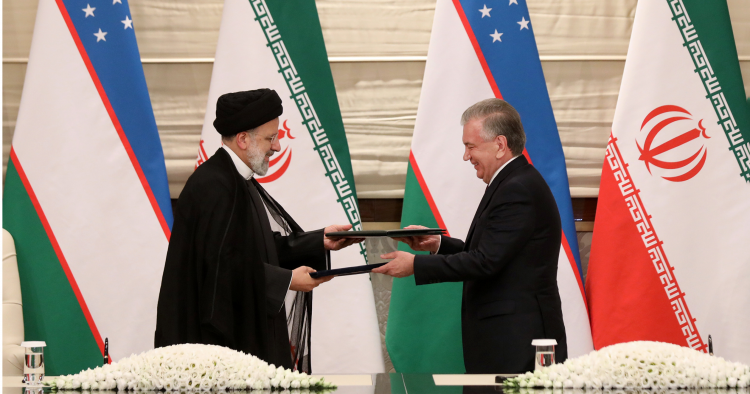
Beyond the economic role that Israel can play in diminishing Iranian influence across Central Asia, Israel can leverage the U.S.-mediated Abraham Accords to enhance its regional posture. Building on President Trump’s recent brokerage of a peace plan between Armenia and Azerbaijan, reports are circulating about a possible expansion of the Abraham Accords to include Central Asian nations. Among them, Israel already established notably close ties with Uzbekistan which preserves its historic Jewish presence. Although Israel maintains diplomatic relations with several Central Asia countries already, bringing them into the Abraham Accords would be more than symbolic.
It would represent a strategic opening for Israel to strengthen its public diplomacy efforts and shift public opinion in a Muslim-majority region that is growing increasingly sympathetic to pro-Palestinian causes. Its expansion could facilitate ongoing coexistence between Jews and Muslims while aligning Central Asia with Sunni Gulf Arab states that are already committed to normalization with Israel. Thus, a unified alliance that extends from the Gulf to Central Asia would position the United States as a peacemaker while strengthening both Israel’s economic interests and strategy to contain Iran’s geopolitical influence.

Finally, Great Power competition between the United States, China, and Russia is shaping regional alliances across Central Asia- a trend that warrants Israel’s strategic attention. As Israel continues to partner with the United States, America’s emerging B5+1 forum for advancing public-private sector dialogue between the United States and 5 Central Asian nations, offers Israel a platform to support economic engagement across the region and navigate Great Power politics. In April, the United States and Uzbekistan signed a series of formalized agreements around bilateral cooperation in the critical minerals sector and other related industries. In parallel, the United States reached out to Kazakhstan to kickstart dialogues around similar areas of interest.
As the United States looks to counter China’s dominance in global mineral supply chains, Israel is positioned to benefit from this realignment in terms of partnering with American companies to enter new Central Asian markets and contribute its technological and commercial capabilities to the region on a greater scale.
The United States remains Israel’s closest ally. As America seeks to increase its economic ties with Central Asia, Israel has a unique opportunity to align with these efforts while devoting minimal resources in ways that can advance its own interests in existing diplomatic channels and business development spaces. Central Asian nations tend to operate under centralized governments, and many already draw on their predominantly secular and Sunni orientations to crack down on Tehran’s efforts to spread Iranian propaganda and Shia ideology.
The region’s willingness to limit Iranian influence but also pursue new drivers of economic growth leaves the United States and Israel a mutually-beneficial opening to partner together. In joining existing U.S.-led initiatives in the energy, minerals, and trade sectors, Israel can rapidly expand its regional footprint and its long-term strategy to contain Iran’s reach.