Bahraini Author & European Commission Peace Ambassador
Qur’an Politicization in Iranian Propaganda
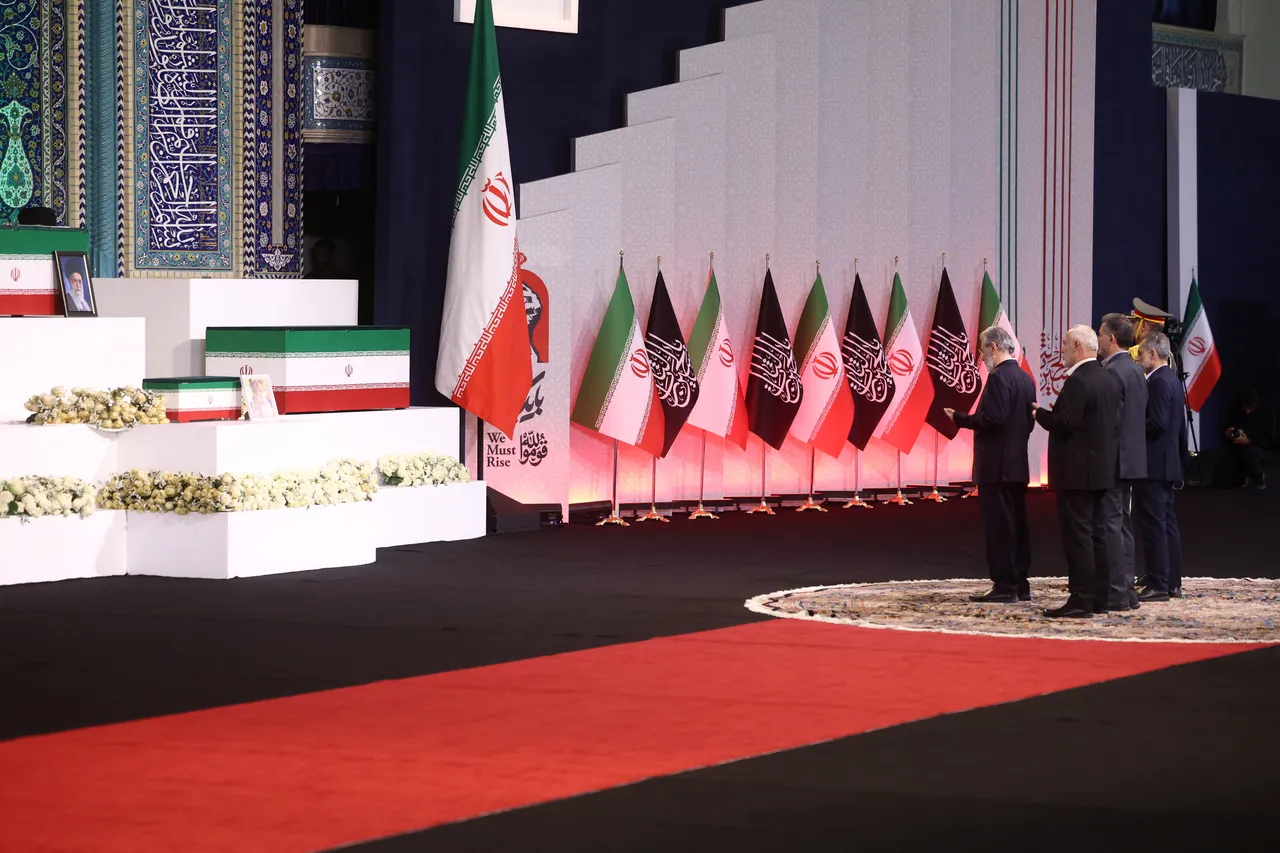
The coffin of Ali Khamenei during the funeral in Tehran. / Reuters
One of the most dangerous practices adopted by ideological regimes and movements is the transformation of the Holy Qur’an (the Book of guidance and mercy) into a tool of political propaganda and military messaging. When Qur’anic verses are used to portray militias and terrorist organizations as divinely legitimized actors, granting them religious legitimacy and symbolic status before their followers, the sanctity of the sacred text is pushed aside and stripped from its intended context in favor of political objectives.
The Iranian regime’s use of religion to advance its political, social, and economic agenda is nothing new. For decades, it has been a defining feature of its official discourse. What is particularly striking in this instance, however, is the shift toward a more deliberate exploitation of the Qur’an itself by selecting specific verses to deliver political and symbolic messages to the delegations attending the funeral, a scene that illustrates the extent to which political propaganda has become embedded within religious discourse.
It was widely expected that the Iranian regime would exploit this event for both religious and political purposes, especially given that the funeral ceremony was postponed for an extended period, allowing sufficient time to carefully plan every detail and construct the messages intended to the Iranian public, its regional allies, and its international adversaries. In this context, the selection of specific Qur’anic verses for each delegation appears far from accidental. Rather, it formed part of a carefully designed symbolic narrative carrying political meanings that extended well beyond the funeral itself.
This became evident during Khamenei’s funeral ceremony, where the Qur’anic verses accompanying the reception of each delegation were far more than ceremonial recitations. They appeared to constitute carefully crafted political messages tailored to each guest.
The Hezbollah delegation was welcomed with a verse concluding with the words: “And whosoever takes Allah, His Messenger, and those who have believed, as Protectors, then the party of Allah (Hizb Allah) will be the victorious.” (Qur’an 5:56). The choice appeared intended to create a direct association between Hezbollah’s name and the Qur’anic expression “Party of Allah (Hizb Allah),” thereby elevating the organization beyond a political or military actor and presenting it to its supporters and to the wider world, as being divinely legitimized and religious symbolism.
Hamas delegation, meanwhile, was welcomed with the verse: “Among the believers are men who have proven true to what they pledged to Allah.1 Some of them have fulfilled their pledge ˹with their lives˺, others are waiting ˹their turn˺. They have never changed ˹their commitment˺ in the least.” (Qur’an 33:23). The selection projected Hamas as a model of faithfulness and steadfast commitment, reinforcing a religious image that strengthens its symbolic standing.
As for the Houthi delegation, the verse recited was: “Muhammad is the Messenger of Allah, and those who are with him are firm against the disbelievers and merciful among themselves.”(Qur’an 48:29). Here again, the apparent objective was to confer religious symbolism upon the movement by implicitly associating it with the Qur’anic description of the Prophet Muhammad’s companions. Such symbolism does not arise from the verse itself, but from the political context in which it was deliberately employed.
The message conveyed was therefore less religious than political. Each verse appeared to have been carefully selected either to confer religious symbolism on a particular organization or to communicate subtle political messages to the other official delegations present. This represents another dimension of Iranian propaganda: the instrumentalization of the Holy Qur’an in pursuit of political agendas. It is an approach that has appeared repeatedly over the years. Exploiting sacred scripture outside its proper religious and contextual framework not only undermines the sanctity of the Qur’an but also draws religion into the service of political agendas, compromising Islam’s message of justice and truth.
Religious extremism does not begin with the carrying of weapons. It begins when one group interprets them according to its own ideological agenda, monopolizing religion in service of its political project. Those who support that project is portrayed as the people of truth, while those who oppose it are cast outside that circle. Perhaps the greatest danger posed by extremists, regardless of their sectarian or ideological affiliation; is their claim to be the sole legitimate representatives of Islam. Once the Holy Qur’an is reduced to a political instrument, the sanctity of divine revelation becomes hostage to human agendas, and religion is exploited to legitimize conflicts that neither represent Islam nor reflect its principles of justice and mercy. When the Qur’an is transformed into a vehicle for propaganda or a means of granting political legitimacy, religious discourse loses its universal moral purpose and instead becomes a tool of division and polarization, contradicting the fundamental objectives of Islam, which are rooted in guidance, justice, and compassion.
Nor is this approach new. Terrorist organizations such as ISIS, al-Qaeda, and others have long relied on the selective quotation and misinterpretation of Qur’anic verses to advance their extremist narratives, justify violence, recruit followers, and confer religious legitimacy upon their actions, all in direct contradiction to the objectives and authentic interpretation of the Qur’an. This distortion of sacred texts has significantly contributed to the global misrepresentation of Islam, reinforcing false perceptions in some societies outside the Muslim world that associate Islam with extremism and terrorism, despite the fact that such practices fundamentally contradict the religion’s true teachings and values.
This was also evident following the events of October 7, when Hamas used Qur’anic verses in its rhetoric and propaganda materials while the attack resulted in the killing of civilians, including women and children, and the taking of hostages. In doing so, sacred scripture was used to provide a religious veneer for actions that were fundamentally military and political in nature. Likewise, using Qur’anic verses to justify attacks against civilians and the destruction of property and the environment stands in clear contradiction to Islamic principles and teachings. Islamic teachings explicitly prohibit the killing of women, children, and other non-combatants, forbid corruption and destruction on earth without just cause, and establish strict ethical rules governing warfare that do not permit aggression or injustice. Such misuse of religious texts has further reinforced harmful stereotypes linking Islam with violence in the minds of many around the world, even though these actions are entirely inconsistent with the essence of the faith and its teachings.
Respect for the Qur’an begins by keeping it separate from political propaganda. The divine text must remain above political parties, regimes, and regional conflicts, for it is the word of Allah; not a tool to advance any political project, regardless of its slogans or objectives.
Related Topics
Related Posts