Advocacy – International Holocaust Remembrance Day
We are at critical point in world history when International Holocaust Remembrance Day (January 27, 2026) coincides with an unprecedented rise in international anti-semitic hate crimes, anti-Israel, pro-terrorist and neo-fascist radicalization, and attendant security threats. It is imperative that we commemorate the Holocaust ethically and respectfully and learn its most important lessons today.
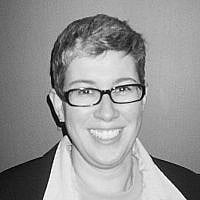
I am a Canadian born daughter of a Holocaust survivor from a small town north of Warsaw, Poland. My father survived the Warsaw Ghetto and Auschwitz and the forced death march before being liberated by US troops in Ebensee, Austria. I am omitting his name and those of my family members to protect our safety and privacy.
After many years of a ‘none is too many’ Canadian government immigration policy barring Jews entry to Canada during World War II, my father immigrated to Canada in 1948, along with other young adult orphans of the Holocaust sponsored by the Canadian Jewish Congress and our local Jewish community. One other surviving cousin from his town in Poland moved to New York and built her family there after being in a Displaced Persons camp in Germany.
As it happened, Dad reunited with another cousin from his hometown at our synagogue in Hamilton. She and her husband later escorted my father down the aisle at Dad’s wedding to my mother, and served as surrogate paternal grandparents to us as children.
My family and I are active supporters of Holocaust Remembrance and related advocacy, especially Yad Vashem in Israel as well as Canadian Holocaust memorials. My father’s testimony is in the Steven Spielberg USC Shoah Foundation archives.
Dad was interviewed sensitively by a dear family friend and USC Shoah Foundation volunteer interviewer and video crew in our family home in the mid 1990s, while my sister and I hovered protectively just out of view and earshot upstairs.
At the end of the interview, we as the children of the survivor were brought in as part of the standard trajectory and survivor narrative choreography of these USC Shoah Foundation videos, to demonstrate the ‘triumph over evil’, much like the March of the Living and similar educational initiatives I question today.
I am uncomfortable with the tendency of uptown Jewish organizations to exploit the goodwill of Holocaust survivors and their children or to manipulate our stories. I am especially uncomfortable with films exploiting or trivializing the Holocaust sentimentally or the concept of Auschwitz as a tourism site.
Still worse is the modern phenomenon on Youtube of videos of questionable merit exploiting archival footage of the Holocaust to depict the physical and sexual degradation and torture and suffering of Jewish women and men in an ostensibly ‘historical’ ‘objective’ ‘factual’ voice synthesized artificially in a British academic-sounding accent. I call these Holocaust porn, and worry about their use to radicalize and motivate anti-semitic hate criminals today.
I interviewed my father a few years before he was interviewed by the USC Shoah Foundation and reviewed the related scholarly literature for an academic course in Sociology. Perhaps it may have prepared him to tell his story more widely.
When I interviewed my father in the early 1990s on a snowy February weekend over cups of tea at the kitchen table at home, I had a tape recorder running. I still have hours of tape and extensive notes from those interviews, which I could hardly bear to transcribe, and still find difficult to listen to.
It wasn’t that the stories he told were so horrific. We all knew about the Holocaust and had learned about it and commemorated it at school, but until then, I had never really known my father’s story in detail. Perhaps I never will, and none of us ever really do.
What was most disturbing to me was that my father could tell me about the most traumatic losses and events in a calm, everyday unemotional voice, the way most of us would describe where we grew up or went to school, or what we did yesterday. This is buried trauma, and true of many survivors. They were taught to hold in their natural emotions in the concentration camps.
But his audible fidgeting with a paper clip on the kitchen table conveyed his discomfort. The clicking of the paper clip increased in volume and frequency on the tapes when I asked hard questions, or when he struggled to access difficult memories. He was frustrated and upset too.
Sometimes when I asked my father questions, he would reply agitatedly, “How can I explain to you what it was like?” At first I thought perhaps I wasn’t being clear in my repeated questions. Then I thought it might be because English was not my father’s first language, or because these were traumatic memories he was trying to recall and express.
I learned later in reading academic analyses of Holocaust survivor video testimonies at the Yale University archive that this was a common theme expressed by survivors in their testimonies.
The issue is not language – many survivors in these videos are well educated professionals and highly fluent in English. The issue is that this traumatic experience of total, organized and profound existential and all-encompassing legal and government sanctioned civic and social betrayal and rationalized and mechanized trauma and mass murder and dehumanization and institutional cruelty remains unique in human history, so words often cannot suffice. My father was not alone in his struggles to describe his experiences to me, and it wasn’t his fault or mine.
When I interviewed my father, I was perplexed by his responses to my questions. Like many trauma victims, so many years removed from the events, his memories often seemed fragmented and episodic. I had difficulty piecing together the chronology of his life in sequence. It was confusing and distressing to both of us.
Like many Shoah survivors of his generation, my father had faith in life and the future. He showed tremendous strength and generosity by fostering the most healthy, normal and prosperous lives possible for his wife and children, to build a family and business, to contribute generously to his community, to move on and not burden us with his own pain.
This is like the divine humble strength of ‘tsimtsum’ or restraint that God is alleged to have shown in creating the universe, according to Jewish mysticism and metaphysics, and is remarkable in our current narcissistic age. My father was renowned for his generosity of spirit and kindness and compassion to all.
This pattern was true for many of our family friends and children of Shoah survivors in our local Jewish community, who were committed to the continuity of their families and Jewish life and culture and sought to foster our survival and success. We were often spoiled but also hyper-vigilant, sensitized to injustice and intolerance, grateful for our lives and opportunities, and often more serious and studious than our privileged suburban peers. Many of us joined the helping professions, or became scholars, fighters, legal advocates, and fervent Zionists.
When I began to review the literature on children of Holocaust survivors, especially Helen Epstein’s Children of the Holocaust and Israeli psychotherapist Dina Wardi’s Memorial Candles: Children of the Holocaust, which I recommend highly, I began to identify my own existential fears and rightful pain and anger. These were outlined in ways I could understand, by people who shared similar experiences, and who did not seek to pathologize or manipulate us or exploit us for their own institutional ends and careers. It was a relief.
It was the first time I could grieve my own losses as the child of a Holocaust survivor. I cried for weeks when I began my interviews with my father. My friends supported me. Why were our relatives murdered? How does this affect how we see the world? How is it possible that so many around us today seem so deliberately ignorant, distracted, depoliticized, and so oblivious and contented in their trivial amusements while hate crimes against us are soaring?
Children of Holocaust survivors know uncomfortable truths about life and human nature and the ‘banality of evil’ (in Hannah Arendt’s terms, from her interviews with Eichmann in Jerusalem) that no one should know, but that we must admit and confront, especially today.
I have great respect for scholars of Holocaust history, and recommend Lucy Dawidowicz’s comprehensive study, The War Against The Jews, as well as the Youtube videos and archives of Yad Vashem in Israel and the online archives and resources of the US Holocaust Memorial Museum (USHMM) in Washington, DC.
My father was present at the US Holocaust Memorial Museum in Washington, DC signing the Scroll of Remembrance on the day it opened, along with many other Shoah survivors who had travelled around the world to do the same. Dad’s photograph signing the remembrance document in Washington was proudly displayed in our home. Nobel Laureate and Holocaust literary chronicler Elie Wiesel spoke at the dedication of the USHMM museum.
Living in a city with Canada’s highest national rate of hate crimes per person against all minorities, and in which crimes against Jewish Canadians are at all time highs, I have often recommended Hannah Arendt’s study The Origins of Totalitarianism to help our non Jewish colleagues and civic leaders understand the root causes of the Holocaust in Europe. This includes the history of European anti-semitism, particularly among the under-educated working classes, and the tendency of societies to turn against their Jewish citizens from both the far left and the far right in times of social and economic crisis, as they are doing today — across Canada, in the US and Europe and around the world. But I am not sure they are listening.
I have often recommended Hannah Arendt’s work, especially her essay “On Humanity In Dark Times: Thoughts on Lessing”. This was the speech Hannah Arendt presented on returning briefly to Germany after the war to receive the Lessing Prize in the Humanities.
Arendt observed that while persecuted minorities huddling together in insular segregated groups may generate much ‘warmth’ and sympathy for shared suffering, she suggested that ‘light’ or enlightenment requires that we bridge the differences between ourselves, from our various social positions, through language.
She argued that the world is made up of the differences and distances between us, but also warned against self-hatred and bad faith. This is especially relevant in a contemporary age of ‘multiculturalism’ and ‘diversity’ and competing narratives seeking to challenge Israel’s right to exist and defend itself, or to rewrite or erase the facts of Jewish history, or to deny the Holocaust.
Arendt argued that when one is under attack as a victimized minority, one must speak directly from the identity that is under attack and not through some vague reference to ‘universal human rights’, which is an evasion of reality.
We must speak honestly from our particular situations and social positions and experiences, proudly as educated Jews, while being open to the experiences of others. We must speak truth to power and to those in authority who have often ignored us or who have turned a blind eye to their own incompetence or corruption or their institutionalized complicity with our oppression. These tendencies are not unique in history, and we are not the only oppressed minority suffering from these conditions.
We must hold our leaders accountable, and not allow them to obscure these facts with vague political commitments to ‘countering all forms of hatred, racism, anti-Semitism and Islamophobia’, or to place these concerns in competitive juxtaposition, as is often the case at these commemorative events. Our leaders think of these as ‘balance’ and ‘equitable objectivity’.
There are too many memorial monuments in Europe that have erased the history of Jewish suffering in the Holocaust and local complicity in the mass murders of Jews, and far too many neo-Nazis and Holocaust deniers and hate criminals active today.
Watch for these catch phrases in earnest civic memorial ceremonies in Canada and around the world on International Holocaust Remembrance Day. I will tune into the ceremonies live online from Yad Vashem. Look them up online. Please join me.
It sometimes seems that our Christian neighbors and civic leaders, touting diversity, are oblivious to Canadian history and their own complicity in it, inadvertently or deliberately, through acts of omission or commission, as we say in the confessional prayers on Yom Kippur.
We as Jews have been living for decades with security threats and under the protection of security guards in our synagogues and Hebrew schools and Jewish community centers, as hate crimes and harassment against us escalate, while our non Jewish colleagues do not need such protections in their churches and Sunday schools and social clubs and workplaces. Their own compatriots victimize us, often with impunity. Remind them of this, firmly and repeatedly.
I have suggested that our Jewish advocacy organizations and legal colleagues should develop class action legal strategies in Canada for future reparations to the Jewish community for damages suffered due to the negligence, complicity or incompetence of our leaders. Think Nuremberg.
Such class action legal strategies and similar human rights and employment law complaints for anti-semitic harassment and discrimination have proven more effective recently than earnest community advocacy and Hillel groups on our campuses to address workplace harassment and to remove pro-terrorist antisemitic embedded encampments endangering Jewish students and faculty.
The root conditions of embedded tenured anti-semitic and anti-Israel leftist curricula and faculty remain. For their benefit and ours, our students should keep a low profile and stop making nuisances of themselves in their ‘advocacy’ efforts. Every misstep they make makes conditions worse for other Jews on campus and is echoed in media. This is not self-hatred, but careful strategy.
My honest advice is that Jewish students should focus on their studies, dress secularly, and pursue their religious and pro-Israel activities off campus for their own safety. It’s not that hard to join a JCC or synagogue or wear a baseball cap and stay out of media. Their main job is to master an area of study, graduate, and begin to practice their chosen professions. That is hard enough these days.
The philosopher George Santayana suggested that those who do not remember the past are condemned to repeat it. Sadly, I am beginning to think that if we learn anything from history, it is that, for the most part, people do not learn from history.
They seem reluctant to face their own ignorance and harmful behavior patterns critically and honestly, including their willful blindness and negligence and egotism enabling hate crimes and harassment against us today at unprecedented levels. This is not a happy historical or existential life lesson to learn, but a necessary one for our survival.
While some Canadian provinces are now implementing mandatory Holocaust education as part of the high school curriculum, our students today are less and less literate and informed about the Holocaust, many denying it outright or engaging in anti-Semitic harassment and Nazi salutes and graffiti in our schools and communities with impunity. Complaints to school officials often go unanswered, according to a recent professional survey by Canadian sociologist Robert Brym.
Our diverse Canadian academic and civic communities (particularly those sympathetic to Islamist or Palestinian causes on the far left) are more and more inclined to contest or reject the International Holocaust Remembrance Association (IHRA) definition of anti-semitism as being unduly biased in favor of Israel, which they seek to eliminate and erase historically. So, they prefer to engage us in endless and wasteful and dangerous debates of attrition. Don’t let them. Don’t take the bait. Just walk away. Your safety may depend on it.
We must hold them accountable without being provoked by them or by acting unlawfully. They will convict themselves eventually through their own criminality. This is an urgent matter of the current and future survival of our Jewish community worldwide.
Their objection and volatile disruptive actions seeking to eliminate our lawful Jewish existence and that of Israel is a form of cultural genocide designed to intimidate and marginalize Jewish and Israeli citizens from their lawful pursuits and academic studies and professional and civic participation in our economies. Don’t let them prevail.
Like many pro-Israel Jewish advocates today, I advocate for a proud, ethical, and educated expression of our Jewish identities and communities, but one that is responsible and mindful of the real risks we face. We are not allowed to put ourselves or others at risk, in both Jewish and secular law.
Our Jewish organizations and student groups need to be more aware of due diligence and hostile infiltration in screening participants to their groups, events, and online communities. There are too many ‘unforced errors’ and PR media setbacks and embarrassments that are leading to real damage to the wellbeing and academic careers and future career viability of Jewish students.
As Jean-Paul Sartre advocated in his essay Anti-Semite and Jew, we must develop authentic, proud, and educated Jewish identities equipped to engage realistically and courageously with the conditions around us. Rather than engaging through bad faith and evasion of reality, we must have the courage to examine our mistakes and improve our actions, as we do in our spiritual practices.
The most important lessons I have learned as a Jewish advocate were from the inclusive, diverse and politically and practically strategic and intellectually informed Warsaw Ghetto Resistance, and never from the uptown Judenrate who were sometimes too cooperative and deferential in conditions threatening our survival, and certainly never for those who sold out their fellow Jews to institutional or political expediency.
History will judge us similarly in the future. We must become engaged through a discreet and strategic Jewish ‘resistance mentality’ rather than by trying to appease our leaders, as have our most successful forebears in Jewish history. These resistance strategies ensured our Jewish survival historically, as we must now ensure our long-term Jewish survival and viability.
We are ‘Am Segulah’ – a unique people, with a unique mission. We always have been and always will be. Different is good! We must develop the courage to be ourselves unapologetically and unashamedly.