Africa’s Universal Rule – Until Israel Acts
On 29 and 30 August 2026, the African Union convenes an extraordinary summit in Luanda devoted to conflict prevention.[1]
It arrives with an uncomfortable question hanging over it.
Africa has spent years insisting that self-determination is a universal legal principle. African governments have invoked it before the International Court of Justice. The African Commission has demanded its protection. The African Union has relied upon it repeatedly in support of Palestine and Western Sahara.
Then Israel recognized Somaliland.
Within hours, the language changed.
If Africa says self-determination is universal, the principle must remain universal when Israel acts in a case Africa would prefer not to confront.
The principle Africa invokes against Israel
Article 20 of the African Charter on Human and Peoples’ Rights says that all peoples possess an unquestionable and inalienable right to self-determination and may freely determine their political status.
Africa has treated those words as operative.
In October 2025, the African Commission invoked Article 20(3) in calling on States Parties to assist peoples deprived of self-determination, expressly naming the Palestinian people.[2]
In June 2026, the African Union Commission joined the League of Arab States and the Organisation of Islamic Cooperation in reaffirming Palestinian self-determination and an independent Palestinian state within the 1967 borders with East Jerusalem as its capital.[3]
As of 25 August 2026, fifty-three of the African Union’s fifty-five member states recognize the State of Palestine. Only Cameroon and Eritrea do not.[4]
South Africa has been particularly emphatic.
Before the International Court of Justice, Pretoria invoked Article 20(1) of the African Charter, described self-determination as inalienable, and characterized it as a peremptory norm possessing an erga omnes character – in South Africa’s own words, “the concern of all States.”[5]
Pretoria therefore told the World Court that self-determination reaches beyond domestic convenience: all states possess a legal interest in the realization and protection of the right. The consequence is a legal standard of international concern, requiring principled distinctions when African governments classify competing claims. Territorial integrity remains part of that classification, but it must be reconciled with the right through reasoned analysis.
Then Israel acted in Africa.
Seventy-two hours
On 26 December 2025, Israel became the first United Nations member state formally to recognize Somaliland.
Three days later, Pretoria stated its distinction in one sentence: decolonisation restores sovereignty; secession dismantles it.[6]
That is what legal reasoning should look like.
A government states the principle. It identifies the relevant category. It classifies the facts. It announces the consequence.
South Africa was entitled to disagree with Israel.
When Israel acted, Pretoria immediately stated a rule and applied it.
Mthwakazi has now asked South Africa to apply the same exercise to its own case.
On 20 August 2026, the Mthwakazi Republic Party placed a consolidated submission before the South African Parliament’s Portfolio Committee on International Relations and Cooperation. The filing drew together correspondence served on the Presidency and foreign ministry beginning on 6 August.[7]
It asks South Africa to state the legal test for self-determination under Article 20 and apply that test.
Mthwakazi argues that its territory was conquered rather than voluntarily joined to Zimbabwe, that no treaty of union or cession exists, that its people were never asked to consent, and that mass killings in Matabeleland remain unresolved four decades later.
Pretoria showed within seventy-two hours of Israel’s decision that it knows how to state such a rule.
Somaliland’s history predates Israel’s recognition
The Chairperson of the African Union Commission rejected Israel’s recognition on 26 December.
On 6 January 2026, the Peace and Security Council condemned it and declared that no outside actor may alter the territorial configuration of an African Union member state.
In February, the Assembly reaffirmed Article 4(b) of the Constitutive Act and the 1964 Cairo principle protecting inherited borders, endorsed the earlier positions and characterized Israel’s recognition as null, void and without legal effect.[8]
There is a legitimate territorial-integrity argument there.
But there is also history the AU itself documented.
Somaliland was a separate British protectorate. It became independent on 26 June 1960 and entered union with the former Italian-administered territory days later.
In 2005, an African Union fact-finding mission examined the case.
It recorded that Somaliland’s state-building was anchored in the colonial borders inherited from Britain. It described Somaliland’s claim as “historically unique and self-justified in African political history.”[9]
The mission rejected the suggestion that dealing with Somaliland would open a Pandora’s box.
It recommended that the African Union find a special method for addressing the case.
Yet the December 2025 statement, January 2026 communiqué and February declaration did not publicly engage either the mission’s historical findings or its recommendation for a special AU method.
Israel became the first UN member state willing to recognize the state Somaliland says was restored.
Africa’s disagreement with Israel therefore still requires engagement with the historical and legal record the African Union itself created.
Recognition suddenly becomes powerful
There is another revealing tension.
In its Palestine filing at the International Court of Justice, the African Union explained that recognition is not constitutive of statehood.[10]
It also acknowledged that international law imposes no general obligation on one state to recognize another.
Those are orthodox propositions.
Yet it treated the breadth of international recognition of Palestine as evidence supporting Palestinian statehood.
Recognition can be evidence of statehood without creating it.
The same filing invokes Article 20(3), recalls the Union’s commitment to protect the self-determination of African peoples still under colonial rule, and points to Chagos as evidence of adjudication protecting self-determination. Somaliland and Mthwakazi therefore require stated categories and explained distinctions.[11]
The Somaliland reaction raises the harder question.
So what exactly did Israel’s recognition alter?
The AU said an outside actor could not alter Somalia’s territorial configuration and declared Israel’s recognition null and void.
Recognition alone creates no sovereignty.
Israel expressed its own legal and diplomatic conclusion about Somaliland’s status.
Other African states were free to disagree.
That is why the vehemence of the response matters.
The AU nevertheless treated the recognition as though Israel had redrawn Africa’s map.
That reaction sits uneasily with the AU’s own recognition doctrine and stated legal principles.
Reciprocity from the weaker side
There is an irony here that deserves attention in an Israeli newspaper.
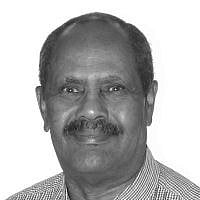
Mqondisi Moyo, President of the Mthwakazi Republic Party, has committed a future Matabeleland to full and resident diplomatic relations with the State of Israel.[12]
More importantly, he has expressly applied to Jews the same principle of national self-determination that Mthwakazi invokes for itself.
That is reciprocity.
His formulation is difficult to improve upon:
A standard that excludes one people alone is not a standard.
That position comes from a movement with no state, treasury, army or seat at the United Nations.
On this question, it is more internally consistent than much of the continental diplomacy directed at Israel.
The Mthwakazi submission also treats Israel with unusual factual discipline. It records that the ICJ’s January 2024 order concerned provisional measures and plausible rights, with the merits still undecided.
A movement seeking sympathy from African governments had every incentive to repeat the accusations made against Israel.
It chose accuracy instead.
That deserves recognition.
Different facts require reasons
Different histories can produce different answers.
Somaliland, Mthwakazi, Palestine, Western Sahara, Katanga, Southern Cameroons (Ambazonia), Biafra and Barotseland arise from different histories. Territorial integrity, inherited borders, colonial history, popular consent, human-rights violations, prior sovereignty and internal self-determination can lead to different outcomes.
That is precisely why reasons matter.
Africa has already produced rules, decisions and institutional treatment for several of these cases through different institutional paths. In Katanga, the African Commission held that self-determination can take forms ranging from independence to federalism, confederalism, local government or another arrangement compatible with the wishes of the people, while rejecting independence on the record before it. In Southern Cameroons, the Commission found that Southern Cameroonians qualify as a “people,” rejected secession in that case and called for constitutional dialogue. Barotseland also reached the Commission in Communication 429/12, which was ultimately declared inadmissible. Biafra supplies a different precedent again: the OAU backed Nigeria’s unity during the civil war, while Biafran separatism remains an active political claim.[13]
Those examples produce different answers, which is why classification matters. Human-rights communications decide admissibility and Charter violations. A standing African political-status process would perform a different task: identify the applicable standard, examine the relevant historical and legal evidence and publish a reasoned classification. That distinction matters because the existing communications process adjudicates Charter complaints; Moyo is asking for a forum that classifies political-status claims before disputes harden into conflict.
Mthwakazi is asking which of those principles governs its own case, and where a peaceful claimant is supposed to obtain that answer.
On 26 August, Moyo transmitted the Luanda statement to the official email address of the Bureau of the African Union Commission Chairperson and to CIDO, the AU’s civil-society engagement channel, while copying other AU addresses. The proposal was therefore put directly to official AU channels before the Luanda summit. CIDO exists to channel civil-society participation into AU processes. Moyo’s transmission therefore puts the central institutional question directly before the Union: where can an African claimant obtain a reasoned political-status classification, with standards, evidence and a published conclusion?[14]
The statement proposes an African mechanism capable of receiving peaceful political-status claims, identifying applicable standards, examining evidence and publishing reasoned findings.
It asks for procedure, standards and reasons.
That is exactly the kind of conflict prevention the African Union says the Luanda summit is supposed to strengthen.
Universal means universal
Israel is accustomed to hearing African governments describe international legal principles as universal when they are invoked against it.
Universal principles carry an obvious price.
A universal principle remains universal when Israel invokes, applies or benefits from it.
Africa may conclude that Palestine qualifies for independence while Somaliland remains within Somalia.
It may conclude that Western Sahara qualifies for self-determination and Mthwakazi must pursue some form of internal autonomy.
Those conclusions may ultimately prove legally defensible.
The distinctions must be explained.
Universality requires the same standard when Israel is scrutinized and when Israel reaches a different conclusion about another people’s political status.
Africa wrote Article 20, produced the 2005 Somaliland report and told the World Court that self-determination concerns all states. Israel is entitled to expect those principles to be applied consistently.
[1] Mqondisi Moyo, Selective Self-Determination Is Not a Principle, Presidential Statement MRP-260826-01a, 26 August 2026. Source
[2] African Commission on Human and Peoples’ Rights, ACHPR/Res.644 (LXXXV) 2025, adopted 30 October 2025, operative para. 4. Source
[3] African Union Commission, League of Arab States and Organisation of Islamic Cooperation, Joint Statement Regarding the Illegal Practices of the Israeli Occupation in the Occupied Palestinian Territory, 24 June 2026. Source
[4] For the derivation as at 25 August 2026, see Moyo, Selective Self-Determination Is Not a Principle, footnote 5. Source
[5] Republic of South Africa, Written Statement, Legal Consequences arising from the Policies and Practices of Israel in the Occupied Palestinian Territory, including East Jerusalem, ICJ document 186-20230725-WRI-14-00-EN, 25 July 2023, paras. 48, 50-51. Source
[6] Department of International Relations and Cooperation, South Africa reaffirms commitment to Somalia’s sovereignty and regional stability, 29 December 2025. Source
[7] Mthwakazi Republic Party, Formal Consolidated Submission: South Africa’s International-Law Standards, the African Charter, and the Mthwakazi Question, Ref. MRP/SA-IL/2026/01, 20 August 2026, with annexes A1-A4. Source
[8] African Union Commission Chairperson, “The Chairperson of the African Union Commission rejects any recognition of Somaliland and reaffirms the African Union’s unwavering commitment to the unity and sovereignty of Somalia,” 26 December 2025; African Union Peace and Security Council, Communiqué of the 1324th meeting, 6 January 2026, paras. 1-5; Assembly/AU/Decl.2(XXXIX), 14-15 February 2026, paras. 3-4. Chairperson | PSC | Assembly
[9] African Union Commission, Report of the Chairperson of the Commission on Conflict Situations in Africa, Doc. EX.CL/191(VII), Executive Council, 7th Ordinary Session, 28 June-2 July 2005, para. 20, p. 6; AU Fact-Finding Mission to Somaliland, “Resume,” 30 April-4 May 2005, paras. 6, 8. Chairperson report | Mission résumé
[10] African Union, Written Statement, Legal Consequences arising from the Policies and Practices of Israel in the Occupied Palestinian Territory, including East Jerusalem, ICJ document 186-20230725-WRI-12-00-EN, 25 July 2023, paras. 109-111. Source
[11] African Union, Written Statement, Legal Consequences arising from the Policies and Practices of Israel in the Occupied Palestinian Territory, including East Jerusalem, ICJ document 186-20230725-WRI-12-00-EN, 25 July 2023, paras. 9(a), 9(b)(iii), pp. 6-8 (invoking African Charter art. 20(3), recalling the commitment to protect the self-determination of African peoples still under colonial rule, and referring to the Chagos proceedings as illustrating the role of advisory proceedings in protecting self-determination). Source
[12] Mqondisi Moyo, Ask What Is Happening to Your Country, Presidential Statement MRP-220826-01a, 22 August 2026. Source
[13] African Commission on Human and Peoples’ Rights, Katangese Peoples’ Congress v. Zaire, Communication 75/92 (1995), paras. 4-6; Kevin Mgwanga Gunme et al. v. Cameroon, Communication 266/03, 27 May 2009, paras. 178-203; 39th Activity Report, Communication 429/12, The Ngambela of Barotseland & Others v. Zambia (inadmissible); Organisation of African Unity, Resolution on Nigeria, AHG/Res.54(V), 16 September 1968; African Commission, “Rebuttal” concerning reported Biafra petition allegations, 8 October 2024. Katanga | Southern Cameroons | Barotseland | Biafra 1968 | Biafra 2024
[14] Mqondisi Moyo, email, “Statement on AU Extra Ordinary Summit,” 26 August 2026, transmitting the attached Presidential Statement MRP-260826-01a to chairperson@africa-union.org and cido@africa-union.org, with other AU addresses copied. The African Union identifies the first as the Bureau of the Chairperson’s official email and describes CIDO’s civil-society function as mainstreaming civil-society engagement into AU processes. Chairperson | CIDO