
After 734 days of war, Israel dares to hope again
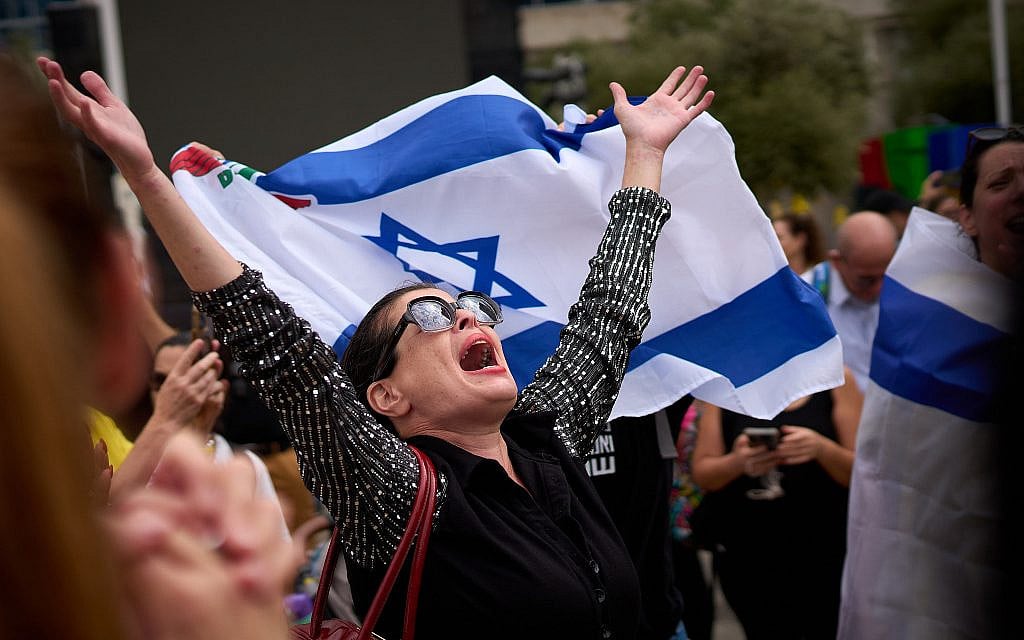
It has been a long time since Israelis have allowed themselves to celebrate anything connected to the war. Families who have spent the last 734 days in despair are now able to believe that, this time, the phone might ring with good news: the family of Segev Kalfon, still held hostage in Gaza, were filmed reciting Tehillim upon hearing that his name could appear on the list of those released in the first phase; Emily Damari, released in January of this year, went live on Instagram to dance with friends.
According to details confirmed by mediators, the proposed ceasefire would involve a phased exchange of Israeli hostages for Palestinian prisoners, accompanied by humanitarian pauses and international supervision. The agreement was brokered jointly by Egypt, Qatar and the United States, who have spent weeks shuttling delegations between Doha, Cairo and Tel Aviv.
If implemented, the deal would see the living hostages released on Sunday and the deceased on Monday. A collaborative task force made up of the brokers of the deal, along with Israel, is to be established to locate the remains of deceased hostages whose locations in Gaza are unknown. A Turkish official has suggested that Ankara will join the task force as well.
Israel will remain in control of 53% of Gaza until the very last hostage is released. Jerusalem has made similar bargains before: with Hezbollah in 2008, trading prisoners for the bodies of Eldad Regev and Ehud Goldwasser; and with Hamas in 2011, exchanging over a thousand prisoners for Gilad Shalit. This is not peace, but more a reprieve that may lead to lasting peace.
There is, too, reason to believe that this ceasefire has a better chance to survive than those before it: Hamas’ leadership in Gaza has been severely weakened by Israel’s sustained military campaigns; and the families of hostages, now a national movement in and of themselves, have spent the last two years demanding that the government ‘bring them home,’ even at the price of a truce. Officials in Jerusalem have privately acknowledged that any further military operations have limited chances of rescuing captives alive.
Still, the road to any deal remains precarious. Prime Minister Binyamin Netanyahu has made clear that no ceasefire will proceed until approved by the full cabinet. That approval, unfortunately, is not guaranteed: within the War Cabinet, Itamar Ben-Gvir and Bezalel Smotrich, the far-right ministers whose parties prop up the coalition, have been strongly against even the slightest notion of a ceasefire deal in the past. If the cabinet agrees, it will mark the first meaningful concession under a government defined by its vow of ‘total victory.’
In Tel Aviv’s Hostages Square, yellow ribbons have reappeared on the barriers. Some relatives say they won’t believe anything until they see faces at the border. Journalists who visit have described candles, photographs, and families sleeping in tents in protest.
As the cabinet prepares to vote tonight, somewhere in Gaza, in tunnels and makeshift cells, hostages are waiting for word that they are going home. The millions who have prayed for them across Israel and the diaspora wait eagerly.