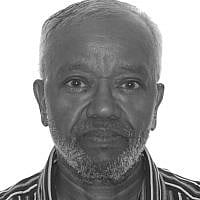
Somaliland Historian, Biographer and Political Commentator
After Israel, Somaliland Tests Whether Washington Will Follow

Abdirahman Abdullahi, December 2024. Photo: Madaxtooyada JSL via Wikimedia Commons.
President Abdirahman Cirro’s first US visit builds on a year of unprecedented ties with Israel, testing whether strategic value can succeed where historical argument has not.
When Somaliland’s president, Abdirahman Mohamed Abdullahi — known across the Horn of Africa by his nickname, Cirro — landed at Washington Dulles International Airport on September 5, it was, on paper, a modest event: the first visit to the United States by the leader of a self-governing territory that no American administration has ever recognized as a state. But the trip lands at a moment when that description no longer captures the full picture. In the ten months since Israel became the first UN member state to recognize Somaliland’s independence, Hargeisa’s pitch to the world has shifted from a request grounded in history to an offer grounded in geography — and Washington is one of the few remaining audiences that could decide whether the offer is worth taking.
Cirro’s delegation, which departed Hargeisa on September 3 with a stopover in Abu Dhabi, is one of the largest Somaliland has ever sent abroad: the first lady, the speaker of parliament, the ministers of defense and civil aviation, and, by some counts, close to twenty officials in total — a scale that has drawn open criticism from at least one prominent Washington-based Africa analyst, who argued a leaner team would have made a sharper impression. According to the Somaliland presidency, the goals are to deepen security and economic cooperation, attract investment, and advance the territory’s decades-old campaign for recognition. No meeting with President Trump has been publicly confirmed as of this writing; officials say meetings with members of Congress are expected during an extended stay reportedly running through at least September 19.
The Somalia Countermove
Cirro is not travelling into a vacuum, and Washington’s attention is not undivided. The visit overlaps with the opening of the UN General Assembly’s 81st session in New York on September 8, where Somalia’s federal president, Hassan Sheikh Mohamud, is also due for the high-level debate later in the month. Mogadishu has separately dispatched an upgraded delegation to Washington, led by Deputy Prime Minister Salah Ahmed Jama — himself a native of Somaliland — after reportedly sidelining its own foreign ministry from the planning. The federal government’s message is unchanged: Somaliland’s claims are void, its ports and minerals belong to the Somali state, and no arrangement involving Berbera, Bosaso or any other Somali facility can proceed without Mogadishu’s consent. The parallel missions capture, in miniature, a dispute that has run for three decades — except this time it is unfolding in the same city, in the same week.
What Hargeisa Is Offering
Somaliland’s case has always rested on a straightforward historical claim: it governed itself briefly at independence from Britain in 1960, entered a union with Italian-administered Somalia days later, and restored that separate existence in 1991 after Somalia’s central government collapsed. It has since run its own currency, army, elections and courts, and in 2024 completed a peaceful transfer of power from Muse Bihi to Cirro — a rarity in a region short of them.
What has changed is what Hargeisa says it can offer in return for recognition. Chief among its assets is Berbera, the deep-water port on the Gulf of Aden that Dubai’s DP World has held under a 30-year concession since 2017, backed by a commitment of up to $442 million to expand the terminal and build an adjoining economic zone modeled on Dubai’s Jebel Ali. The port sits within a few hundred kilometers of the Bab el-Mandeb Strait, through which a significant share of the world’s seaborne trade passes — and which, since Yemen’s Houthi movement joined Iran’s side in the war that began in February 2026, has again become a flashpoint. Somaliland officials have also pointed to undeveloped mineral resources; claims about their scale are the government’s own pitch and have not been independently verified.
Washington’s Cautious Opening
That pitch has found real, if limited, traction in Washington over the past year. In June 2025, Representative Scott Perry of Pennsylvania introduced the Republic of Somaliland Independence Act, which would authorize the president to recognize Somaliland and declare Somalia’s claims over it void; the bill has sat in committee since. Senator Ted Cruz, who chairs the Senate Foreign Relations Subcommittee on Africa, wrote to President Trump in August 2025 urging recognition on national-security grounds, and in July 2026 pressed Secretary of State Marco Rubio to give Somaliland its own travel advisory rather than lumping it in with Somalia’s Level 4 “Do Not Travel” warning. “The current advisory is inaccurate and counterproductive to U.S. national security interests,” Cruz wrote to Rubio.
The clearest signal, though, has come from the U.S. military. In November 2025, the commander of U.S. Africa Command, Gen. Dagvin Anderson, met Cirro and Somaliland’s military and coast-guard leadership in Hargeisa before inspecting Berbera’s port and airfield — the kind of visit that, in a region where Washington has few footholds, tends to be read as more than a courtesy call. But Anderson has since taken pains to lower expectations: pressed on speculation about a possible American base at Berbera, he said there was no such plan, and reaffirmed that U.S. policy continues to back “the sovereignty, unity, and territorial integrity” of federal Somalia. That combination — genuine military interest alongside an unmoved political position — is probably the most accurate summary of where Washington actually stands.
The Israel Dimension
For readers watching from Jerusalem, the most consequential recent development in this story may not be American at all. On December 26, 2025, Israel became the first — and so far only — UN member state to formally recognize Somaliland, a decision Prime Minister Benjamin Netanyahu announced personally. Ambassadors followed within months, and in June 2026 Cirro travelled to Israel for the first state visit any Somaliland leader has made anywhere, visiting Yad Vashem and meeting Netanyahu, President Isaac Herzog, Foreign Minister Gideon Sa’ar and Finance Minister Bezalel Smotrich. Sa’ar later disclosed that the two sides had in fact been meeting secretly since October 2025, two months before the recognition became public. Netanyahu framed the decision as an act of historical sympathy, telling Cirro that Israel’s own experience as a small nation seeking recognition of its rights made the gesture, in his words, “a very natural thing for us to do.”
The trip’s most striking moment, though, was diplomatic rather than personal: Somaliland opened its embassy in Jerusalem rather than Tel Aviv, becoming only the eighth country to place a mission in the city and — after Kosovo — only the second Muslim-majority government to do so. The move drew condemnation from the Palestinian Authority, the Organisation of Islamic Cooperation and the Arab League, and, according to regional media, more than a dozen additional Arab and Muslim-majority states, all of which reaffirmed Somalia’s territorial claims in the same breath.
That is the double edge of Israel’s opening for Somaliland. It has delivered Hargeisa something three decades of American lobbying had not: the formal recognition of a UN member state, and with it a case Washington can no longer dismiss as purely theoretical. But it has also tied Somaliland’s campaign to the politics of Jerusalem’s status, hardened opposition from the Organisation of Islamic Cooperation and the African Union, and handed Mogadishu a ready argument that Hargeisa’s diplomacy serves Israeli and Emirati interests ahead of Somali ones. Reports that Israel has begun training Somaliland’s police and security forces — which Somaliland’s own defense officials have acknowledged while denying any talk of a permanent Israeli base — add a security dimension that will matter more the longer Red Sea tensions with Iran and the Houthis continue.
The Wider Horn
Somaliland’s diplomacy cannot be separated from a Horn of Africa that has grown more contested by the year. China operates its only overseas military base a short distance away in Djibouti; Turkey has built deep security ties with the Somali federal government, training and equipping much of its army; Egypt has expanded its own regional footprint; and Ethiopia, landlocked since Eritrea’s independence, signed its own 2024 memorandum with Hargeisa for access to the coast. Gulf states, led by the UAE, have poured money into ports across the region, of which Berbera is one node among several. Layered onto this is the reopened Iran war, now well into its second year, which has periodically closed the Strait of Hormuz and put the Bab el-Mandeb under renewed threat — the kind of environment in which a stable, cooperative port on the Gulf of Aden acquires a value that has little to do with recognition politics at all.
What Would Count as Success
None of this means Washington is close to recognizing Somaliland, and people close to Cirro have suggested he does not need to return home with that outcome for the trip to count as a success. Analysts who track the relationship point instead to a ladder of lesser outcomes: a dedicated travel advisory, an upgraded U.S. diplomatic presence in Hargeisa, expanded security cooperation, congressional resolutions short of formal legislation, or simply more consistent engagement from federal agencies. The logic is that each of these steps normalizes direct dealing with Hargeisa and makes it progressively harder for U.S. policy to treat Somaliland as a subsidiary question inside Somalia policy — bilateralization in practice ahead of recognition in law.
The obstacles to even that gradual path are real. Somalia retains its own American security relationship built around the fight against al-Shabaab, and its counter-delegation this week is a reminder that Mogadishu will not concede the argument quietly. Washington’s own bandwidth is consumed by the Iran war, the war in Ukraine, competition with China and its approaching midterm elections; Somaliland is competing for attention, not only for votes. And Somaliland’s own capacity to convert diplomatic openings into lasting agreements — rather than photographs and statements — depends on an institutional depth that outside analysts, including some sympathetic to its cause, have publicly questioned in the days around this very trip.
Conclusion
The honest measure of Cirro’s visit, then, is unlikely to be visible this week. It will show up later, in whether American officials keep meeting Somaliland’s ministers without asking Mogadishu’s permission first, whether Congress’s interest hardens into legislation that actually moves, and whether the security relationship Gen. Anderson began cultivating in Berbera continues regardless of who occupies the White House next. Somaliland’s argument, sharpened by a year of dealing with Israel, is no longer only that history entitles it to recognition. It is that ignoring Somaliland carries a cost — in security, in the Red Sea, and in the emerging map of who is actually present in one of the world’s most contested waterways. Washington has not yet said whether it agrees. But for the first time, it is being asked the question directly, by a president standing in its own capital.
Sources and References
- The Times of Israel, “Visiting Somaliland president opens embassy in Jerusalem,” June 15, 2026
- Al Jazeera, “Israel fetes Somaliland’s leader as it seeks to expand Red Sea influence,” June 20, 2026
- Geeska, “Somaliland, Cirro and Israel,” June 24, 2026
- S. Congress, H.R. 3992 — Republic of Somaliland Independence Act, introduced June 12, 2025 (Congress.gov)
- Office of Sen. Ted Cruz, press release on letter to Secretary of State Marco Rubio urging a Somaliland-specific travel advisory, July 29, 2026 (cruz.senate.gov)
- S. Africa Command, “AFRICOM Commander Makes High-Level Visits to East Africa,” November 2025 (africom.mil)
- Raxanreeb Online, “AFRICOM Commander Dismisses Reports of U.S. Military Base in Berbera,” August 2026
- Fox News, “Somaliland offers US forces Berbera base as Bab-el-Mandeb tensions rise,” April 2026
- DP World, official statement on the Berbera Port concession and $442 million investment; Gulf News coverage of the same
- Hiiraan Online, Somaliland Chronicle, ftlsomalia.com and Archyde, reporting on President Cirro’s September 2026 Washington visit and Somalia’s counter-delegation (September 2026)
- Council on Foreign Relations and Encyclopaedia Britannica, background on the Bab el-Mandeb Strait and the 2026 Red Sea crisis
Related Topics
Related Posts