Rabbi of Western Wall and Holy Sites of Israel
Featured Post
After Meron: We must never forget that we are brothers
My nephew perished in the crush, and I see first-hand: the divisions among us do not matter. We are all in pain together
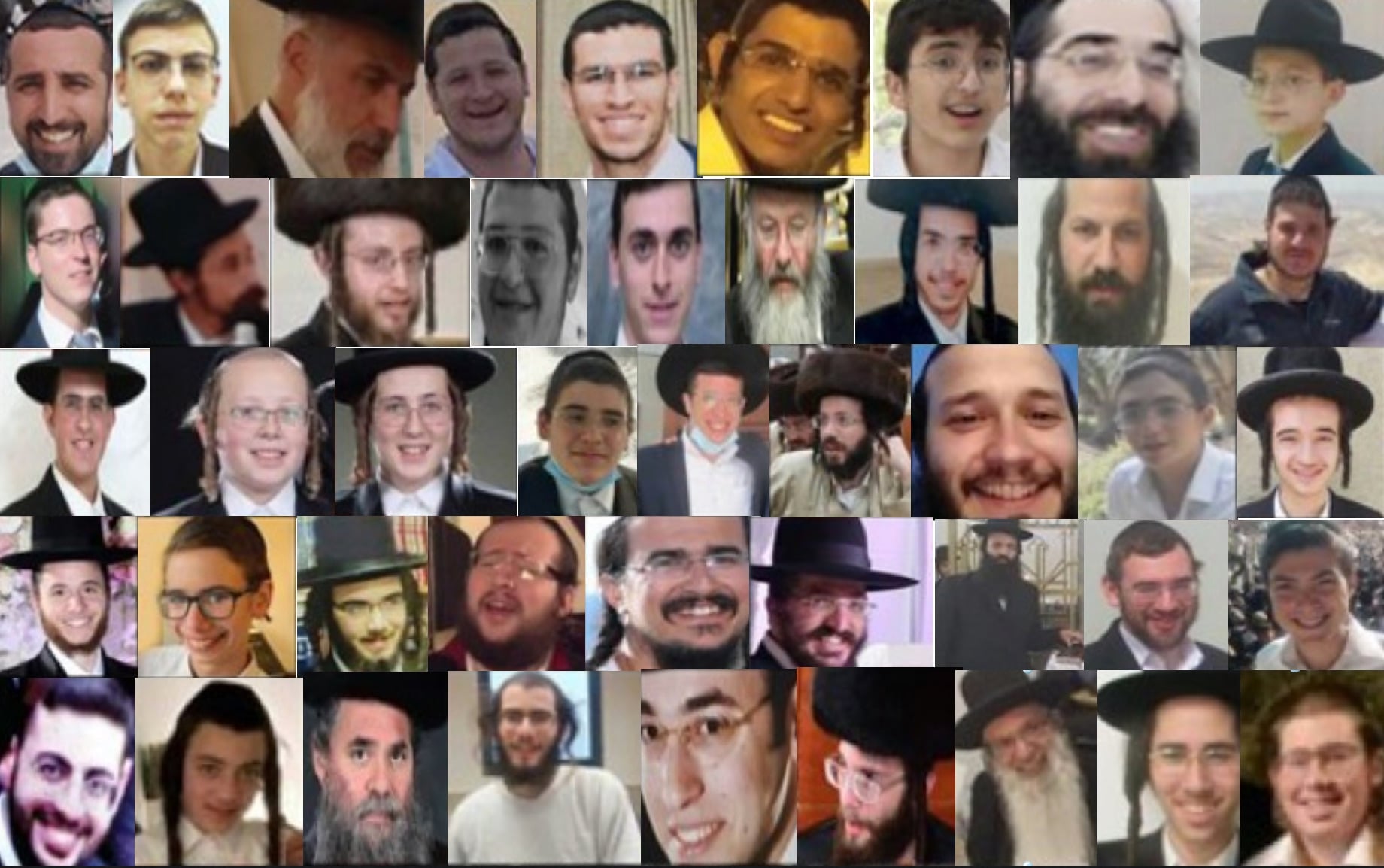
Victims of the April 30, 2021, Mount Meron disaster: Top row (L-R): Chen Doron, Haim Rock, Ariel Tzadik, Yossi Kohn, Yisrael Anakvah, Yishai Mualem, Yosef Mastorov, Elkana Shiloh and Moshe Levy; 2nd row (L-R): Shlomo Zalman Leibowitz, Shmuel Zvi Klagsbald, Mordechai Fakata, Dubi Steinmetz, Abraham Daniel Ambon, Eliezer Gafner, Yosef Greenbaum, Yehuda Leib Rubin and Yaakov Elchanan Starkovsky; 3rd row (L-R): Haim Seler, Yehoshua Englard, Moshe Natan Neta Englard, Yedidia Hayut, Moshe Ben Shalom, David Krauss, Eliezer Tzvi Joseph, Yosef Yehuda Levy and Yosef Amram Tauber; 4th row (L-R): Menachem Knoblowitz, Elazar Yitzchok Koltai, Yosef David Elhadad, Shraga Gestetner, Yonatan Hebroni, Shimon Matalon, Elazar Mordechai Goldberg, Moshe Bergman and Daniel Morris; 5th row (L-R): Ariel Achdut, Moshe Mordechai Elhadad, Hanoch Slod, Yedidya Fogel, Menahem Zakbah, Simcha Diskind, Moshe Tzarfati, Nahman Kirshbaum and Eliyahu Cohen.
Together with my brothers, I stood at the foot of the holy mountain, waiting to ascend, in awe of the thousands congregating on the mountain.
Together with my brothers, I was elevated by the mass call to accept the yoke of the kingdom of heaven: “Hashem is the Lord!”
Together with my brothers, I heard the terrible news on my way back to Jerusalem, and my heart refused to believe it.
And together with my brothers, I spent three awful hours at the Abu Kabir Forensic Institute, where I waited to identify my beloved nephew, the dear yeshiva student, Rabbi Menachem Seckbach z”l, killed in the tragedy, the father of a daughter only 1 and a half years old. After that, we accompanied him to his final resting place, broken and pained.
Everyone is brothers these days — the Hasidim and Mitnagdim, Ashkenazi and Sephardi, from Israel and from abroad, from Tel Aviv and from Bnei Brak, police, soldiers, first-responders, those who carried stretchers, and those who donated blood and who opened their hearts to the families in pain. None of us was religious or secular, one kind of Israeli or another. We were all brothers.
These days, I see the image of Aaron the Kohen in my mind’s eye, the father who lost two beloved sons on the day of his greatest joy, the day the Tabernacle (the Mishkan) was dedicated. Aaron, faced with the terrible destruction, seeing that two of his four sons were burned before his eyes, remained silent. The Torah says, “And Aaron was silent.” That silence was deafening. It has cried out and torn through the heavens since that day.
What can we say to a woman who lost her husband? To a father who lost two sons? To children who lost their father? To a baby in his mother’s womb who will be born an orphan? What can we say in the face of interminable sorrow? In the face of pain from the joy that turned to mourning? King David said, “You have turned my lament into dancing for me.” And here we are, in the face of dancing that turned to lament. And we must justify this decree, bless the bad as we bless the good, and say, “Baruch Dayan HaEmet,” Blessed be the True Judge. G-d is truth and His judgement is truth. But the human mind cannot grasp the entire truth.
Aaron, the father of sons, was also Aaron the man of peace. “Hillel says, ‘Be of the disciples of Aaron, loving peace and pursuing peace, loving the creatures and bringing them closer to Torah.’” Aaron, the father of sons, dedicated his life to making peace between people, settling disputes, bringing hearts closer to one another. Like on that terrible day about which it was said, “but your brothers, the entire house of Israel, shall bewail the conflagration that the Lord has burned,” Aaron calls to us, on this terrible today, to see ourselves as “brothers, the entire house of Israel.” One house inhabited by brothers who are different from one another, but who remain brothers. Not only when faced with tragedy, but every single day.
We must take it upon ourselves to hold on to the memories of these days. To remember the unity and the solidarity that are the character of the Jewish nation; to remember the hands that saved others together, the eyes that cried together, the hearts that were broken together. We must never again forget that we are brothers.
Related Topics
Related Posts