After Two Years Of War
Since I returned to Israel on October 13th—the historic day when all the live hostages came home—I have visited the Families Headquarters three times. It is still hard for me to believe. For two years we demonstrated and protested, shouting “Bring Them All Now!” Yet I never dared to imagine that it would really happen.
This tragedy is, of course, far from over. Thirteen dead hostages have not yet been returned. But at least I no longer have to constantly think about the hostages starving and being tortured in Hamas’s tunnels in Gaza. The atmosphere at the Families Headquarters, at least in the dining room where I volunteer, has changed—we are greatly relieved.
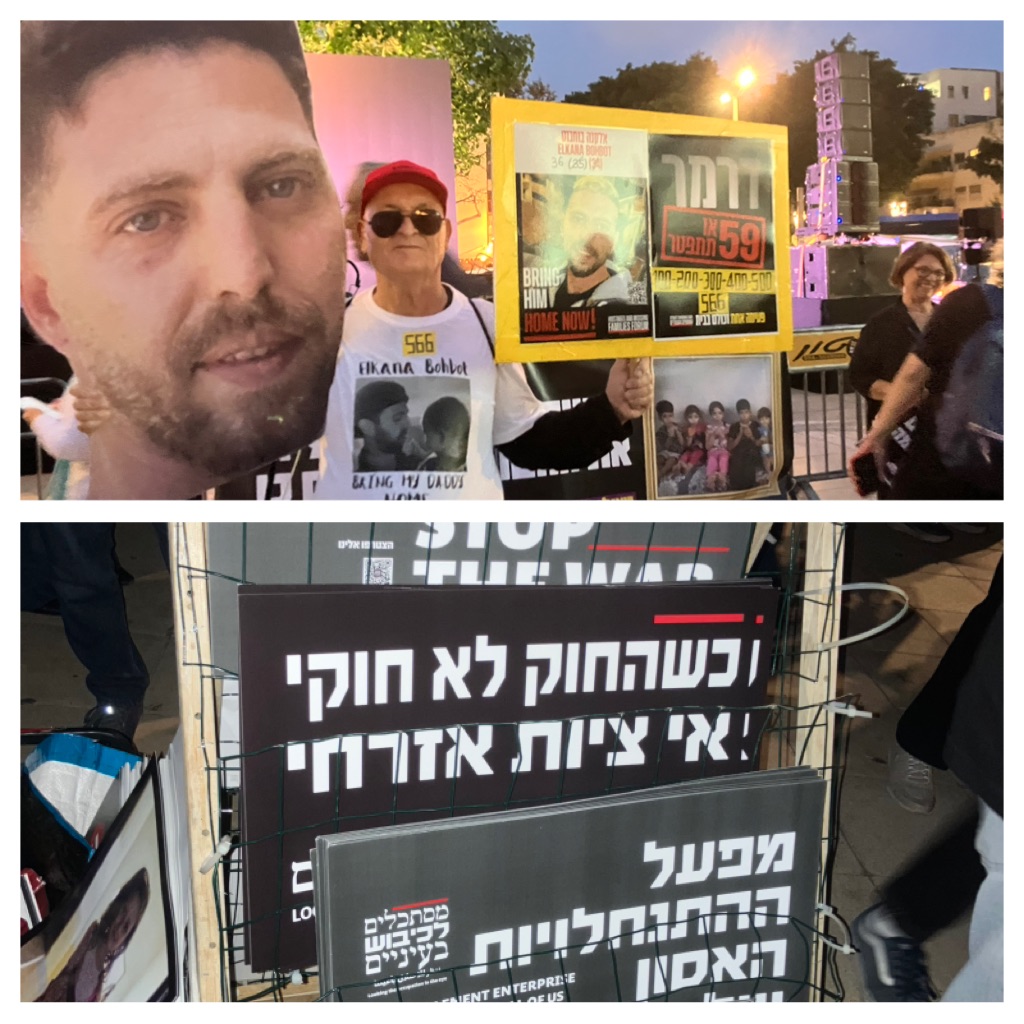
Last week, one family member became almost a star. His name is Menashe, one of the regular visitors to the dining room, or what we fondly call “minus two” (the dining room is located in the building’s basement). We always knew that Menashe was the uncle of one of the hostages, Elkana Bohbot. He attended all the rallies and demonstrations, holding posters of Elkana—an elderly gentleman standing alone, often for hours, wearing his red cap.
When Elkana finally returned on Monday the 13th, he said that during captivity he often saw a man in the news standing in demonstrations with his photo and asked who he was. He didn’t know him. It turned out that Menashe was actually a distant relative of Elkana’s father who had taken it upon himself to act as his “uncle” throughout the struggle and fought tirelessly for his return. Menashe told me that when they finally met last week, Elkana was deeply moved and grateful for his devotion, which, he said, truly gave him strength in captivity.
Menashe is not the only one who found a unique and personal form of activism. A friend of mine, an artist, felt that the hostages were being forgotten, that their presence in the public sphere was fading. She began creating small but powerful displays made of concrete, which she hung on public walls. She started with symbolic figures—like birds—and later added words and even short sentences. After a while, people began to notice her work and asked her to hang these displays on the walls of their apartment buildings. Her name is Sharon Pazner, though she never signed her creations, as personal recognition was never her goal.
Last evening, while volunteering in the dining room, I met one of the mothers whose son had been released on Monday the 13th. It was the first time I had seen her smile. Tears filled my eyes, and she hugged me to console me.
The hostages are back. Now, we wait for the dead to come home too—to find their final rest in Israel