
AGDA’s Conference Shows Abraham Accords Are Entering a New, More Serious Phase
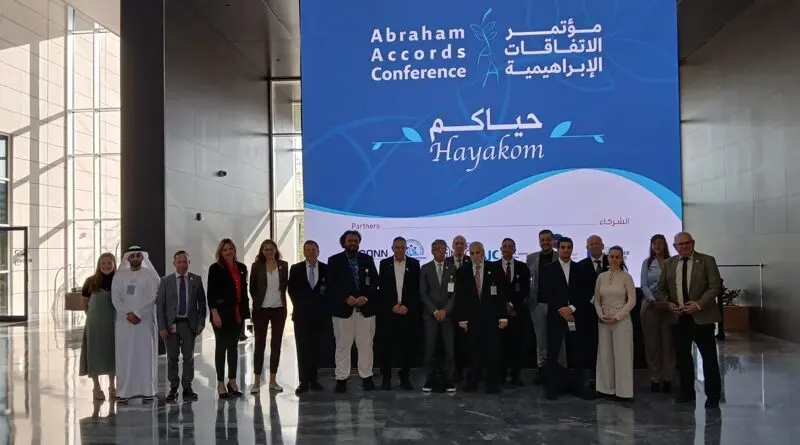
The Abraham Accords have now matured enough to move beyond their initial novelty. What kicked off in 2020 as a daring diplomatic experiment has gradually become a key component of the region’s political framework. The recent conference at the Anwar Gargash Diplomatic Academy (AGDA) in Abu Dhabi made one thing clear: the Accords are evolving. With this evolution comes both new opportunities and responsibilities.
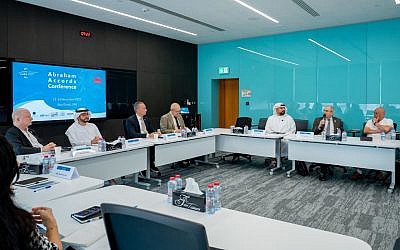
At AGDA’s conference, senior officials, diplomats, academics, and policy experts came together. The atmosphere felt notably different from the early celebrations of 2020 and 2021. The conversations shifted away from “normalization” as a goal in itself, focusing instead on what lies ahead: security frameworks, cross-border collaborations, and the increasingly interconnected economic structures developing throughout the region.
In essence, the Accords have entered a more serious chapter—one that can not rely solely on symbolism.
A Shift From Ceremony to Strategy
What stood out to many attendees was the grounded nature of the discussions. There were no lofty predictions or grand narratives about transforming the Middle East overnight. Instead, there was a realistic, almost technical understanding of the challenges that lie ahead.
According to a detailed report, speakers viewed the Accords not as a diplomatic flourish, but as integral to the region’s security framework. They recognized their stabilizing influence—especially in a Middle East that has faced repeated upheavals in recent years—while also acknowledging their limitations. They argued that cooperation can not be separated from the tensions on the ground and that it requires robust mechanisms to endure political shocks. This seems to be where AGDA envisions its role: not as a cheerleader, but as a connector between diplomacy, research, and practical policy-making.
Abraham Accords Conference: Anwar Gargash Diplomatic Academy, Abu Dhabi, UAE November 24-26 – Analysis https://t.co/Zpp9QbuQt8
— Eurasia Review (@EurasiaReview) November 30, 2025
Cross-Border Partnerships
One of the most prominent themes at the conference was the emergence of cross-border networks. In areas like logistics, energy, innovation, and crisis management, the collaboration between Israel, the UAE, Bahrain, and Morocco has transitioned from a theoretical concept to a tangible reality.
It’s now part of various projects, investments, and institutions. The region is gradually cultivating shared interests that can withstand the test of election cycles and ideological shifts. This kind of slow and steady progress may not always make the news, but it has the potential to significantly alter geopolitics over time. AGDA’s conference effectively captured this transformation: the Accords are evolving from a diplomatic novelty into a foundational framework for regional cooperation.
A Challenge That Cannot Be Ignored
However, this moment also comes with a cautionary note. Many participants pointed out the vulnerabilities surrounding the Accords, such as public skepticism in parts of the Arab world and turbulence inside Israel. If there is not genuine engagement on the Palestinian issue, the Accords could end up being viewed as elite agreements rather than true pathways to peace.
The takeaway is clear: for the Accords to truly develop, they need to be built not just on shared interests but also on a common moral vision.
AGDA’s Emerging Role
What AGDA highlighted during this conference is that the next chapter of the Abraham Accords will demand more than just diplomatic momentum. It calls for intellectual investment, innovative policies, and structured dialogue—areas where academic institutions often take the lead.
By bringing together a blend of diplomacy, scholarship, and regional expertise, AGDA has established itself as a crucial hub for shaping the future of the Accords. Not by rewriting them, but by enriching their depth.
The Middle East’s Quiet Transformation
Perhaps the most genuine takeaway from the conference is this: the Abraham Accords have withstood challenges that many thought would lead to their downfall. Now, they face a tougher task—to evolve into a framework that can foster a more interconnected, stable, and predictable Middle East.
That transformation is already in motion. You could sense it in the tone of the discussions, the practicality of the proposals, and the understanding that cooperation needs to shift from flashy announcements to lasting structures.
If the initial years of the Accords were about demonstrating their resilience, the coming years will focus on showing their ability to deliver real results.
And judging by the conversations at AGDA, the region is quietly, steadily, and more earnestly than ever preparing to take that next step.