


Retired Board-Certified Clinical Psychologist/Author
Agreements That Cannot Last
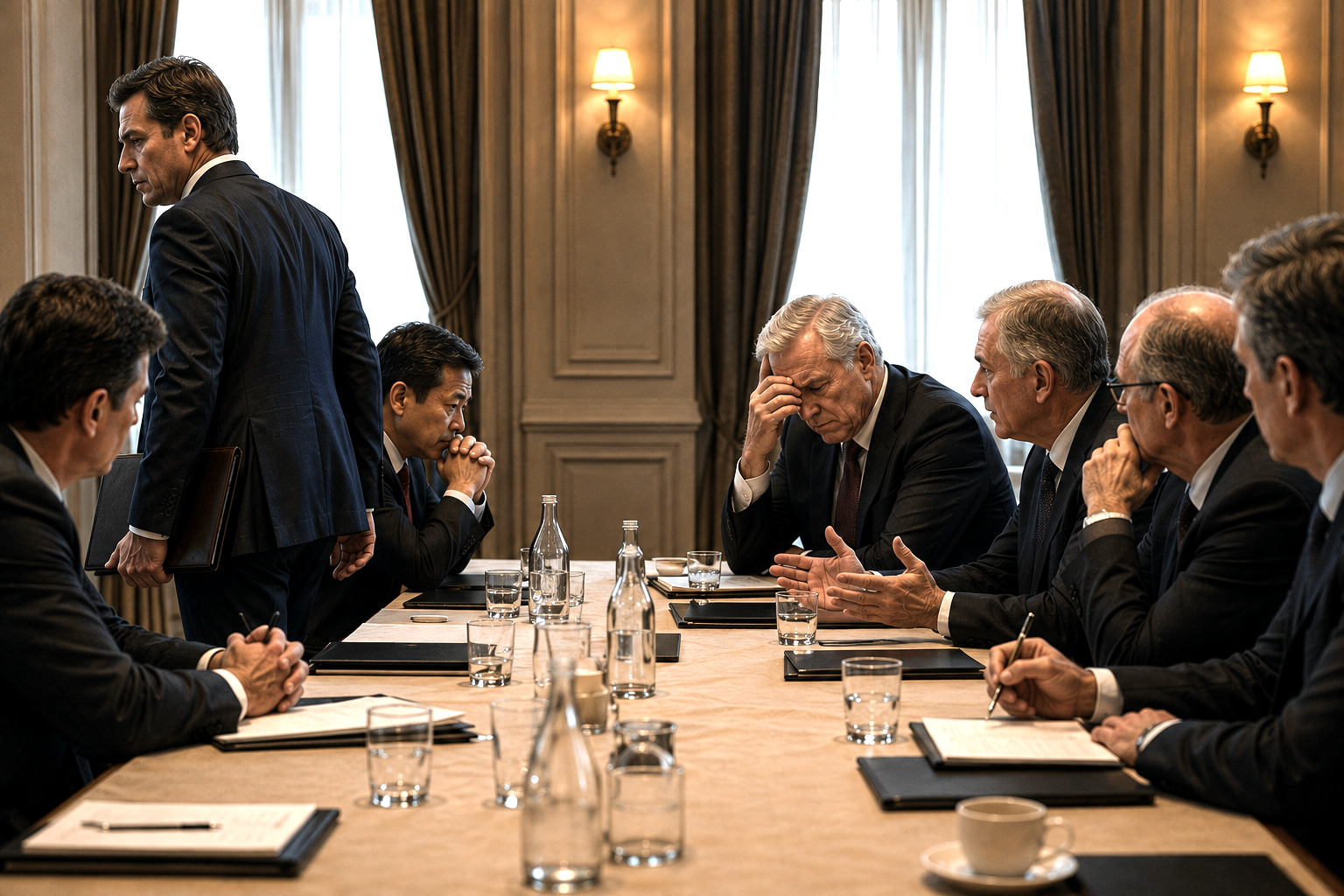
A Psychological Anatomy of Negotiation
By Dr. Ivan Gulas
A negotiated agreement becomes possible in one of two ways. Either both sides find a compromise each can live with, and take it because the alternative is worse for everyone — or one side is strong enough that the weaker party gives in, because holding out would only add to its suffering without changing the result. Most models of bargaining treat these as two roads to the same destination: a settlement. Find whichever road is open, follow it to a signature, and the conflict is resolved.
It is not that simple. A signature is not a settlement. Some conflicts run up costs indefinitely and still produce no durable agreement. Some agreements are signed willingly and broken later without a flicker of guilt. To see why, you have to stop treating negotiation as one activity. It is at least three, and the differences are usually hidden: what is actually being negotiated; whether the agreement obligates both signers in the same way; and whether the deal leaves either side room to remain itself. A deal that requires a party to stop being what it is will not hold, because no one honors terms that demand their own undoing. And past all three sits a fourth situation — the hardest — where no agreement was ever available at all.
Two Things We Confuse
Most theories of negotiation treat it as a transaction over interests — security, money, influence, resources, standing. That works, but only when the thing in dispute is an asset. Assets divide. You can split them, trade them, defer them, or pay for them, and “more for me, less for you” makes sense because the object itself can be cut in two.
It stops working when the dispute is not over an asset but over an identity. An asset is something a party has. An identity is something a party is. When I bargain over what I have, I am calculating. When you ask me to bargain over what I am, I am not calculating — I am defending. Those are different acts that happen to share a table.
Interests answer a question with a number: what am I willing to give up? Identity answers a different one, and there is no number for it: who would I have to become to give this up? There is no midpoint between being yourself and not. Ask a party to surrender half its identity and it does not hear a reasonable compromise; it hears a demand to be half-destroyed. This is why talks move easily through procedure and detail, then break apart the instant they reach the center: the subject changed from assets to identity, and no one said so. People do not, in the end, organize their lives around calculation. They organize them around meaning, and meaning builds identity, belonging, and a sense of safety the body cannot tell apart from physical safety. Touch that, and the nervous system stops filing the threat under negotiation and files it under survival. From across the table the concession looks practical. Inside the person it feels like being asked to step off a ledge. So you cannot buy it — not because the price is too low, but because naming a price is the insult. Offer to compensate someone for an identity and you have shown you do not understand what an identity is, and the offer confirms the threat instead of easing it.
When the Identity Is Fused to a Higher Mandate
There is a harder version of this, and it is the one that defeats skilled negotiators. Sometimes a party’s identity is fused at its core to a mandate it believes comes from a higher power. The commitment is not a preference or even a deep value. It is an obligation the party never granted, and so cannot give away. An ordinary identity, however fiercely held, still belongs to the person; in principle they could revise it. A mandate fused to identity belongs to no one at the table. The party is not its owner but its keeper, and trading it away would betray something above them. No agreement reaches it, because no agreement outranks its source. Negotiators read this as fanaticism or bad faith and raise the offer — and they have misread the problem completely. The party is not holding out for better terms. It is telling you, in the only language it has, that what you are asking is not theirs to give. Each time you sweeten the deal, the insult deepens: you have proven again that you still think this is a transaction. The most you will get is outward compliance. You will never get inward release.
The Same Signature, Two Obligations
Now suppose an agreement is actually reached. Both sides sign, the language is settled, the ceremony is held. We treat the signature as the end of it, as if signing puts the same obligation on both names. It does not. A signature is a container. What fills it is not the ink but the meaning each side’s culture pours in. An oath on a sacred text is the clearest case: for the believer it binds at the deepest level; for someone who sees the book as an object it weighs nothing. Same words, same gesture — the form performed, the substance absent.
This is the second mechanism, and it is badly underrated. An agreement has no binding force of its own. The force comes from the parties — and it comes unequally when the two draw their sense of obligation from different places. Two people sign the same page and walk away holding different things: one a commitment, one a tactic. What decides it is what each treats as non-negotiable. For a party built around assets, the agreement itself can bind, because its word and reputation are assets too, worth keeping. But where identity is the organizing principle — above all an identity fused to a higher mandate — the only untouchable thing is that core. The agreement is kept when keeping it serves the core and dropped when it does not, and dropping it brings no guilt, because nothing higher was broken. Such a party can make and unmake the same agreement and feel no contradiction. To you it looks like bad faith. To them it is consistency. They did not break a promise. They kept the only one that was ever real to them.
The Agreement With No Exit
The third mechanism is about the shape of the deal. Some agreements leave the conceding side no room — no exit, no way to comply and still be itself. The terms do not just cost something; they require the party to stop being what it is. As a one-time transaction this can work: the exchange happens once, the party takes the loss as a price and moves on, and the deal closes because nothing has to survive it. Over time it cannot hold. An agreement that demands a party’s ongoing non-existence is not something it can live inside; it is something it has to escape to go on existing. Compliance and survival pull in opposite directions, and when they split, survival wins — every time, without apology. This is the flaw built into any settlement imposed by raw leverage. Leverage can force a signature and close a single deal. It cannot produce what a lasting arrangement needs: room for both sides to keep existing under the terms. A deal with no exit has written its own collapse into the contract.
When a Negotiated Agreement Is Not the Solution
There is one more situation, and it is the hardest, because the problem is not that the agreement fails to hold — it is that no real agreement was ever available. Call it what it is: eat or be eaten. Sometimes a party’s core mandate is not security, or standing, or even dominance. It is the elimination of the other side. Its interest, its identity, its survival are defined by the disappearance of yours. When that is the driving commitment, there is nothing to negotiate, because what the other party requires is your non-existence, and that is not a term you can split, trade, or soften across any table.
Negotiation assumes a floor both sides share — some version of live and let live. Each may want more than the other will give, but each accepts, underneath the bargaining, that the other gets to keep existing. Remove that floor from one side and the whole activity loses its meaning. You can sit across from someone whose mandate is your destruction and sign whatever they put in front of you, but you have not reached an agreement. You have chosen the terms of your own undoing, or bought time. There is no compromise between existing and not existing; one outcome forecloses the other completely, and no drafting bridges that, because the gap is the whole point.
This is the limit case, where negotiation as a tool does not apply, and mistaking it for an ordinary hard bargain is the most dangerous error of all. The side that still believes a deal is possible keeps offering, keeps adjusting, keeps reading each refusal as a demand for better terms — when the refusal is not about terms. The one obligation that would make agreement possible, the obligation to let the other side live, is exactly the one the other party does not hold. This then eliminates all but one option — the most difficult one to make. But when security and survival are at stake, there are no other options.
Dr. Ivan Gulas is a board-certified clinical psychologist and former faculty member at Harvard Medical School. He later worked in media and technology and writes frequently on the intersection of psychology, leadership, and real-time decision-making.