Ahmed al Ahmed and the Spirit of the Righteous

Few terms carry as profound a historical significance as “The Righteous Among the Nations.” It designates non-Jews who, during the Holocaust, risked their own lives to save Jews from persecution and murder. The title is precisely defined, deliberately narrow in scope, and rightly protected. Yet, contemporary events often confront us with actions that compel us to reconsider the moral core of this concept.
An Antisemitic Attack and a Decision to Act

On December 14, 2025, a Hanukkah celebration at Bondi Beach in Sydney was targeted by an anti-Semitic terrorist attack. Armed perpetrators opened fire on a festive Jewish gathering. People fled, children screamed, panic ensued. In this moment, one man chose not to run away.
Courage, Memory, and Jewish Experience

Ahmed al Ahmed, a Syrian-born Muslim, an Australian citizen, father of two, and shop owner, overpowered one of the attackers, disarmed him, and forced him to retreat. Shortly thereafter, he was himself seriously wounded. Multiple surgeries followed. The fact that additional lives were not lost that night must be attributed to his intervention.
This act is notable not because it was spectacular but because it exemplifies a moral principle that has accompanied Jewish history since the Holocaust: the recognition that Jewish lives often depended on the willingness of individuals to act, rather than remain passive.
For Jews, this is not an abstract idea. It is part of a collective memory. During the Holocaust, millions were murdered—not only by perpetrators but also through the silence of the majority. The Righteous Among the Nations are therefore not only heroes, they also represent those few moments when humanity triumphed over fear, ideology, or opportunism.
Beyond Identity in a Polarized World
Ahmed al Ahmed did not act in 1940s Europe. He acted within a liberal democracy in 2025. Yet, the essence of his decision resonates with what those who were recognized as the Righteous faced: whether to intervene or turn away, to act or to save oneself.
What makes his action especially striking—and thus particularly significant—is the context. A Muslim saving Jews during a Jewish festival, in a time when the Israeli-Palestinian conflict fuels global emotional tensions and anti-Semitism and anti-Muslim racism reinforce each other. This reality challenges conventional dividing lines.
Ahmed al Ahmed did not act as a representative of a religion or ethnicity. He did not act politically. He acted because people were in danger. It is precisely this—saving lives without regard to identity—that links his actions to those of the Righteous During the Holocaust: they did not save Jews because they were Jewish, but because they were human.
Why This Question Still Matters
Israel established the title “The Righteous Among the Nations” not to claim moral superiority but as an acknowledgment of a historical truth: that Jewish survival has always depended, in part, on others’ willingness to assume responsibility.
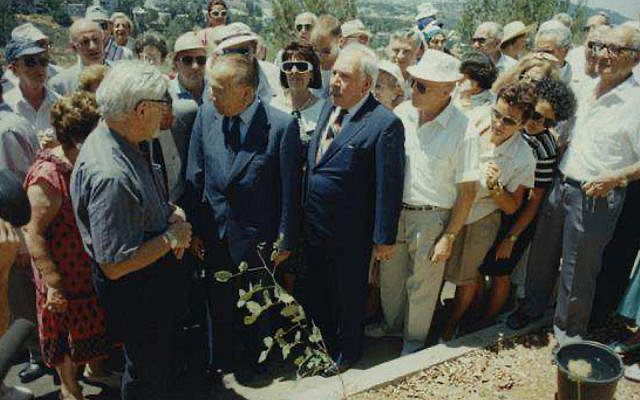
This responsibility is not a relic of the past. In 1944, Turkish diplomat Selahattin Ülkümen saved dozens of Jews on Nazi-occupied Rhodes from deportation to Auschwitz—with diplomatic courage, legal daring, and personal risk. Decades later, Yad Vashem honored him as Righteous Among the Nations. Ülkümen himself later said he had simply done what any person should do.
Ahmed al Ahmed does not belong to this tradition because he bears a title. He belongs because he demonstrates that the moral question remains the same: what do we do when Jewish lives are threatened?
In Israel, this question is existential. The Jewish state was founded on the experience that Jews cannot always rely on others for protection. Yet, like any democracy, Israel depends on the understanding that moral categories transcend national boundaries. Remembering the Righteous is not a nostalgic exercise but an ethical obligation.
When a Muslim today protects Jews from anti-Semitic violence, it does not diminish Jewish vulnerability; it affirms it. It reminds us that solidarity does not require shared identity.
Perhaps our time does not need new titles of honor. But it does require a clear understanding of what these titles signify. In this way, Ahmed al Ahmed is not merely a symbol, a PR moment, or an exceptional case. He exemplifies that the spirit of the Righteous is not confined to the past.
Not because history repeats itself. But because the need for responsible actions does.