A New York City Cantor
Aiders of the Lost Ark

Old Route 66, originally a dirt and gravel road. Photo Credit: Lauren Singer
Rediscovering the Litvak Shul of Superior, Wisconsin
We left for Los Angeles on the weekend of Tisha B’Av, bound for another yearly family cross-country road trip — this time to New Orleans. Driving along the broken spine of Route 66, which turns 100 this year, we passed through abandoned towns: boarded storefronts, hollowed-out main streets, neon signs long gone dark. They stood like ghosts of a lost America.
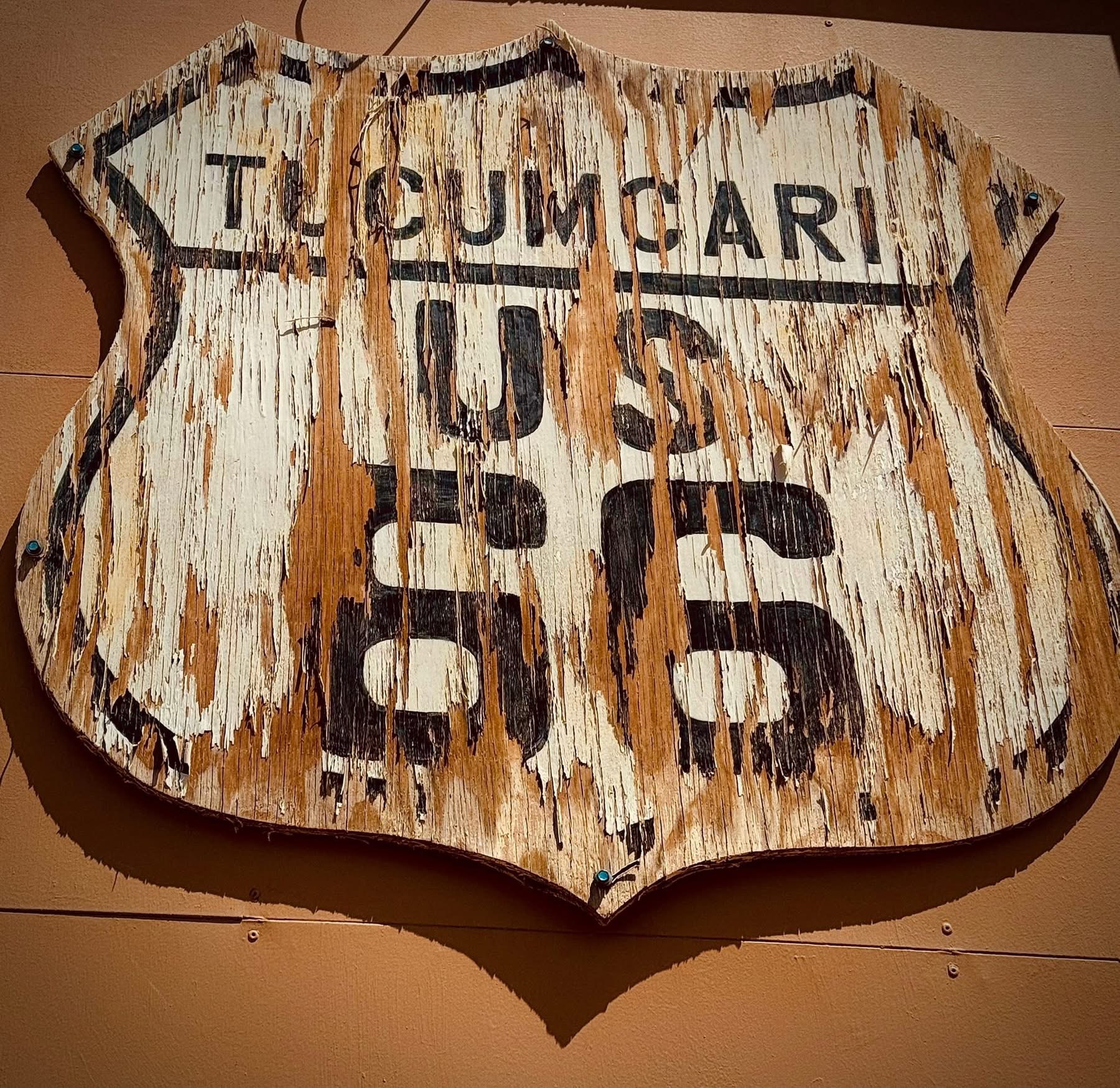
The scene could not have been more fitting for Tisha B’Av, the day Jews mourn the destruction of our Temples in Jerusalem. To travel through America’s ruins while recalling our own people’s ruins is to feel the same rhythm of history: loss, exile, and fragile survival.
The Ark Returns
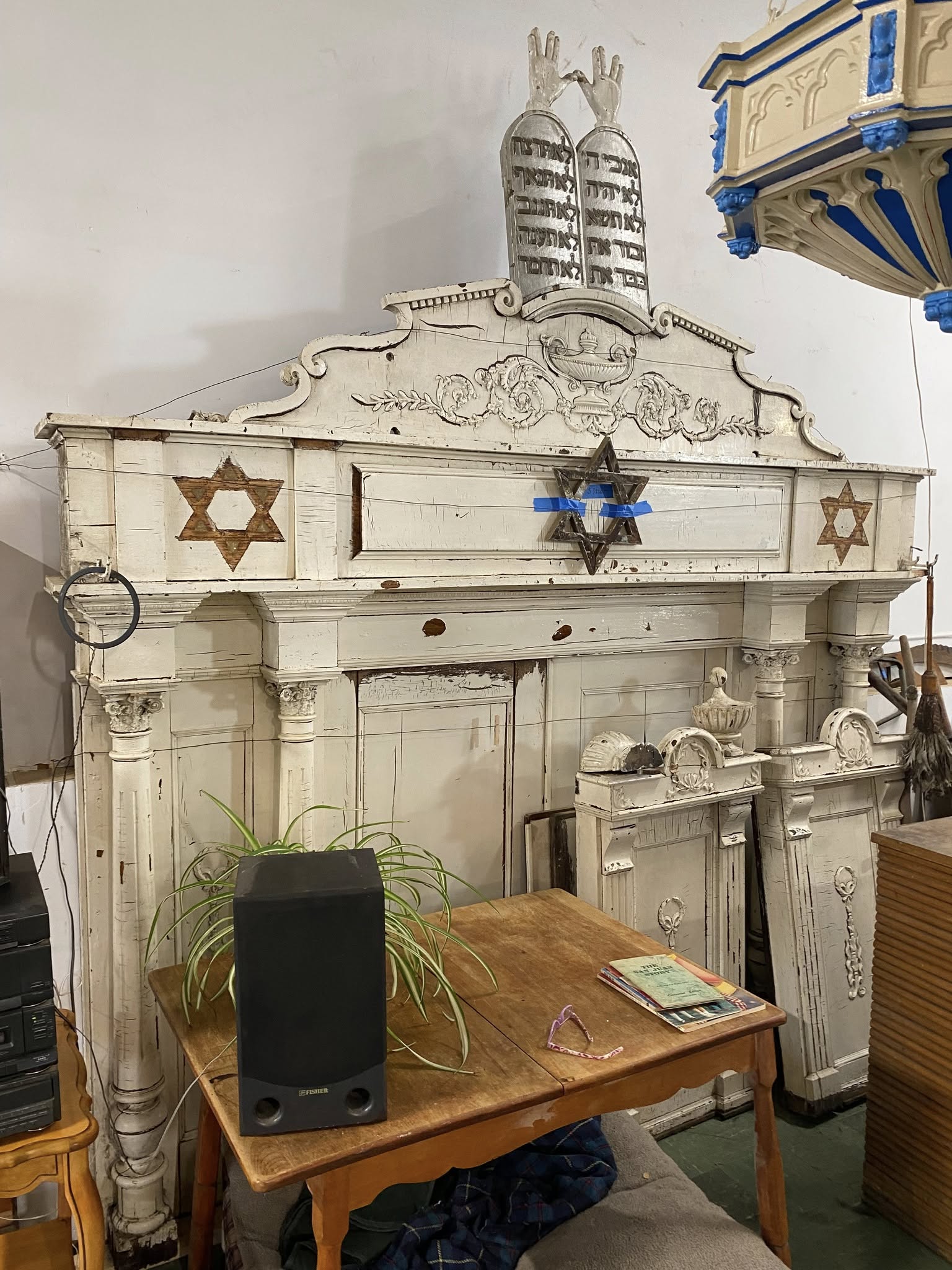
Just before we hit the road, I received news that jolted me back to my childhood: the ark from my synagogue in Superior, Wisconsin — Agudas Achim, the Hebrew Brotherhood, though we called it simply the Litvak Shul — had been found.
It had been sitting for more than a decade in an antique store in Two Harbors, Minnesota, a relic of a community thought long erased.
The timing was uncanny. At that very moment, my colleague Rabbi Andy Bachman was in Superior, working with the Wisconsin Jewish Federation to preserve abandoned Jewish cemeteries across the state. He kindly offered to cross the bridge to Duluth to say Kaddish at my father’s grave. Standing there, he read aloud a poem my father wrote about the brevity and beauty of life — words my mother lovingly chose to inscribe on his stone.
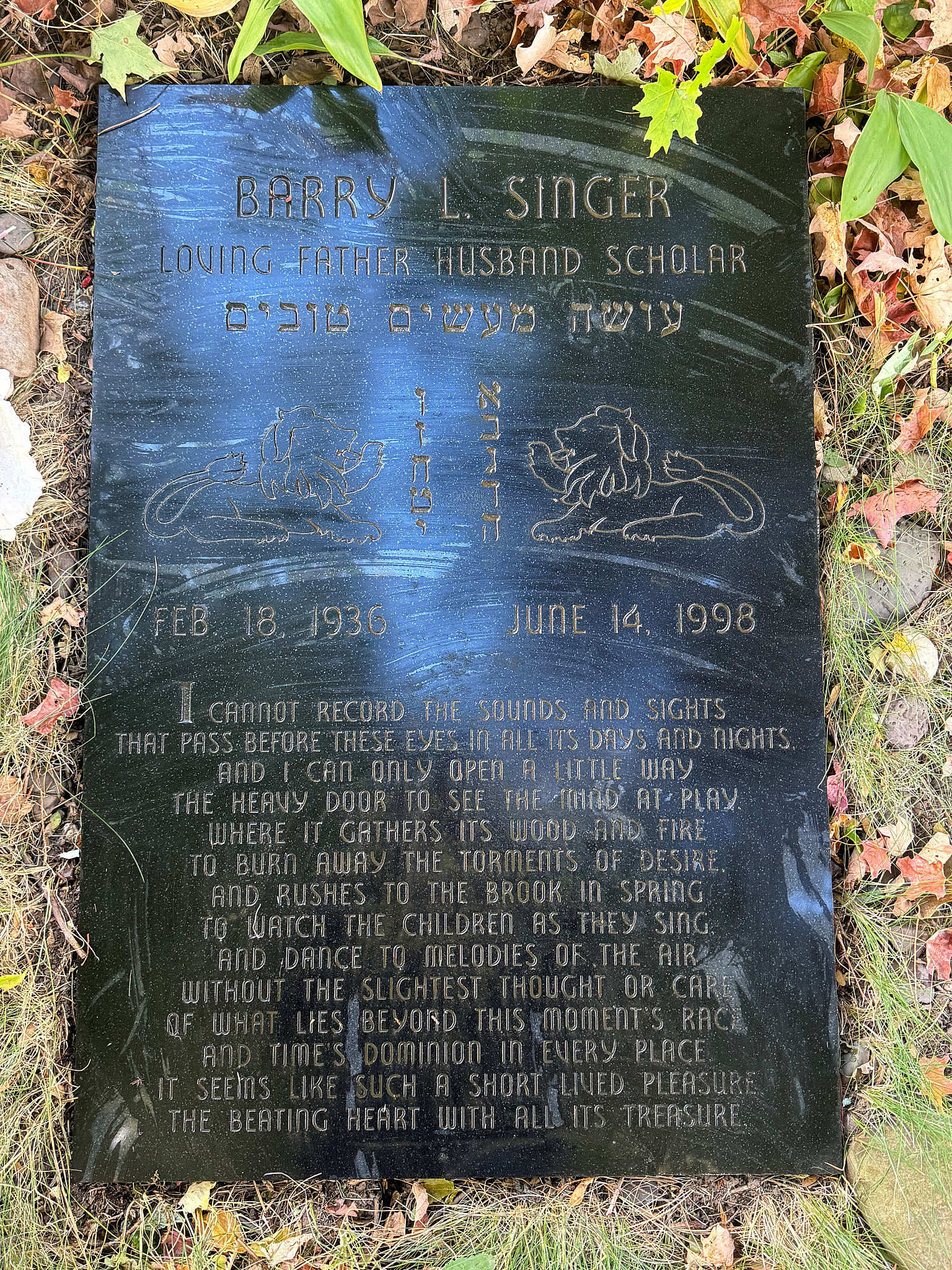
My father, an English Literature professor and librarian, was also a local historian who devoted his life to documenting Superior’s lost stories: from sports heroes and shipbuilders to the Jewish community. To learn of the ark’s rediscovery just as a rabbi was reciting my father’s poem over his grave — on the eve of Tisha B’Av, no less — felt like more than a coincidence. It was a reminder that memory is fragile, but it can be saved.
A Lost Jewish City
Most people today have never heard of Superior. Yet in 1910, it had surged to become Wisconsin’s second-largest city, a bustling port at the tip of Lake Superior, home to several hundred Jewish families and two Orthodox synagogues facing one another on Sixth and Hammond Avenue: one Russian-Polish, one Litvak.
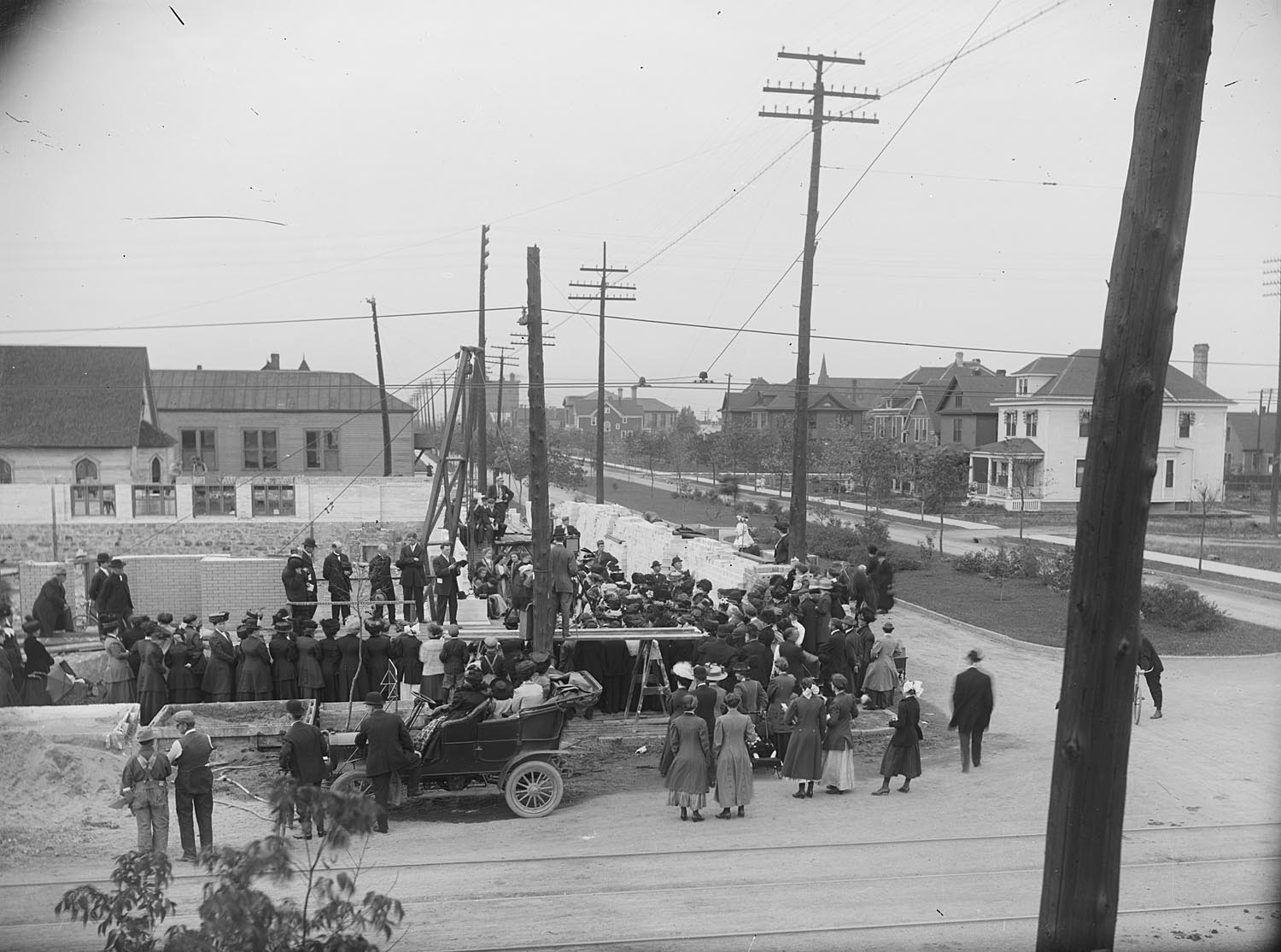
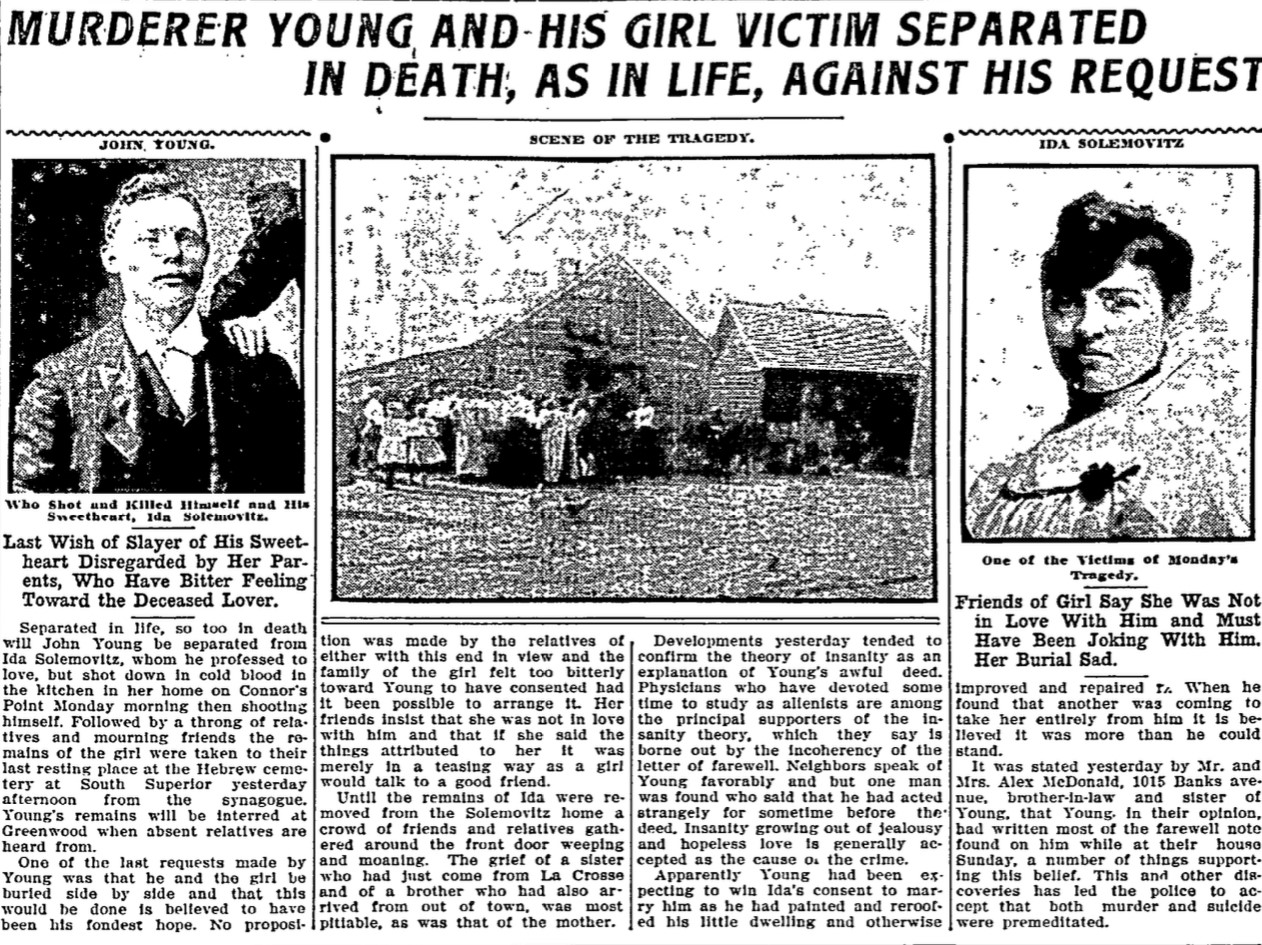
The Litvak immigrants arrived in the mid-1880s, fleeing Russian pogroms and drawn by General John Hammond’s exciting new industrial port. They came in family groups and founded Agudas Achim in 1890. Hibbing’s Agudas Achim — where Robert Zimmerman, later Bob Dylan, celebrated his Bar Mitzvah in 1954 — was their sister synagogue. Dylan’s mother’s family roots reached first to Superior, where his great-aunt Ida Solemovitz was murdered in 1906, prompting the family to change its name to Stone and relocate to Hibbing.
The link between Agudas Achim of Superior, Eveleth, and Hibbing was later documented in a brief history of the Hibbing synagogue authored by Rabbi Dr. Reuben Meir (Rabinovici), Dylan’s so-called “tutor” who he once said appeared and disappeared from Hibbing, just for his Bar Mitzvah. In truth, he served as Hibbing’s rabbi from 1952 to 1956. Descended from a long line of rabbis in Harlau, Romania, he reunited with his brother, also a rabbi in Minneapolis, after the Holocaust in 1949. He published books of sermons in Hibbing before retiring back to New York City as a touring scholar.
The life of Superior’s synagogue was carried not only by its rabbis but also by its cantors. The first, Raful Kaner, was a prolific Lithuanian-trained synagogue composer whose manuscripts survive at YIVO. His great grandson Dean Kaner wrote a play called Hardball about him and his son Hank, who like his cousin Morrie was offered a MLB contract, but turned it down due to his strict Orthodox religious observance as the son of the cantor and a need to care for his ailing father. His successor, Cantor Hirsch Louis Chazin — the great-grandfather of my friend Cantor Shira Lissek and grandfather of Metropolitan opera star Atarah Hazzan — lived to 95 and was celebrated as the world’s oldest working cantor. His voice may be heard here.
The Superior newspaper in 1890 announced the founding rabbi of the Hebrew Brotherhood, H. (Hyman) Bloom, who was a local pioneer and businessman. Together with his brother David, shortly after the turn of the century, they established the aforementioned Agudas Achim congregations in the Iron Range.
By 1922, Rabbi Morris Hyatt (Arnovich originally) arrived from Latvia, and was later joined in leadership by his son Alex, creating a rabbinic dynasty that kept Agudas Achim alive through the 1970s. But by then, the neighboring Russian shul modernized, became Conservative, and moved to a new building closer to where the next generation of Jews lived, across town. Orthodoxy was waning, young Jews were leaving, and the congregation struggled to gather a minyan. Alex’s health was deteriorating, and the minyan stopped functioning around 1974-6.
He retired to live with his brother, Rabbi Julius Hyatt, in Silver Springs, Maryland, who also served an Agudas Achim congregation for 40 years in Peoria, Illinois. Alex passed away in 1982 and was returned to Superior for his burial. His brother Julius was also buried there in 2008. Though I unfortunately never met them, the Hyatt rabbis are still very fondly remembered by locals, Jews and non-Jews alike.
Decline and Demolition
By the 1980s, the Litvak shul was crumbling. I remember walking its sagging balcony as a child, watching my father sway in prayer on the bimah, feeling I might fall through the fragile floor with the plaster flaking from the walls. A faded Yiddish sign still hung at the entrance listing the cantor’s qualifications that still make me laugh: must be religiously observant, Shomer Shabbos, well loved by all, have a beautiful voice, not be an am ha’aretz (a fool, ignorant of Torah), and above all — a beautiful beard. For the beard alone, I would have been disqualified.
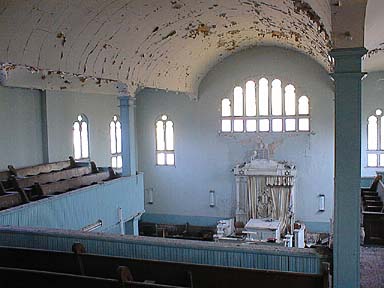
But darker forces hastened the synagogue’s end. A Torah, kiddush cup, and flag were stolen in 1985. The Torah was recovered accidentally in a home two years later and two arrest warrants were to be issued. More items started mysteriously disappearing.
Two local business men and schemers emerged. Morris “Angel” Kramer, who came into town pretending to be a rabbi and a lay cantor, who owned Angel Appliances and marketed Lake Superior bottled water, and his gun-toting associate, Sam Seikkula, who worked at bars and owned pawn shops that he gave Jewish names like Bernstein’s and Goldstein’s, despite not really being Jewish at all. Together they tried to claim their share of the sale of the building as members, allegedly stealing and destroying the congregation’s handwritten board books, the minutes and finances of the synagogue, erasing a century of history.
It was suggested that Seikkula may have been bribing police, making violent threats to locals, and was believed to have shot his gun through the storefronts of numerous Jewish-owned businesses. His notoriety as a neighborhood bully became so infamous that locals recall a young Craig Rivera from “A Current Affair” coming to Superior in 1989 to investigate him. Terrified, the elderly members didn’t report the stolen books to the police, gave up on selling the building and simply shuttered the synagogue, determined that the two bullies would not win.
In the fall of 2000, the building was demolished quietly and without public notice. I was in Israel at the time, beginning cantorial school. No obituary was written for the shul.
Its Torahs and Judaica were quietly moved to Duluth’s Adas Israel, only to perish in an arson fire in September of 2019 and yet again in a second arson fire in a storage garage in November, just days after the arsonist, Matthew James Amiot, was sentenced to a year in prison. One stunned Adas Israel congregant remarked after the second fire, “I don’t know if we’re dealing with a strange coincidence or what. If it is, it’s mind-blowing.”
Although the court determined Amiot’s motivation wasn’t antisemitic, and Adas Israel’s Torahs were all reportedly saved from the first fire, Superior’s scrolls and other Judaica from area synagogues that were collected, including yahrzeit plaques and other sacred relics, should also be remembered.
All I had believed that had survived was that Yiddish placard, a recent gift to me from the last architect to have visited and studied the building and its illustrious history before it was demolished, Robert Davis. Those old Litvak requirements for my profession are proudly framed in my office now, but I have no plans on growing a beard.
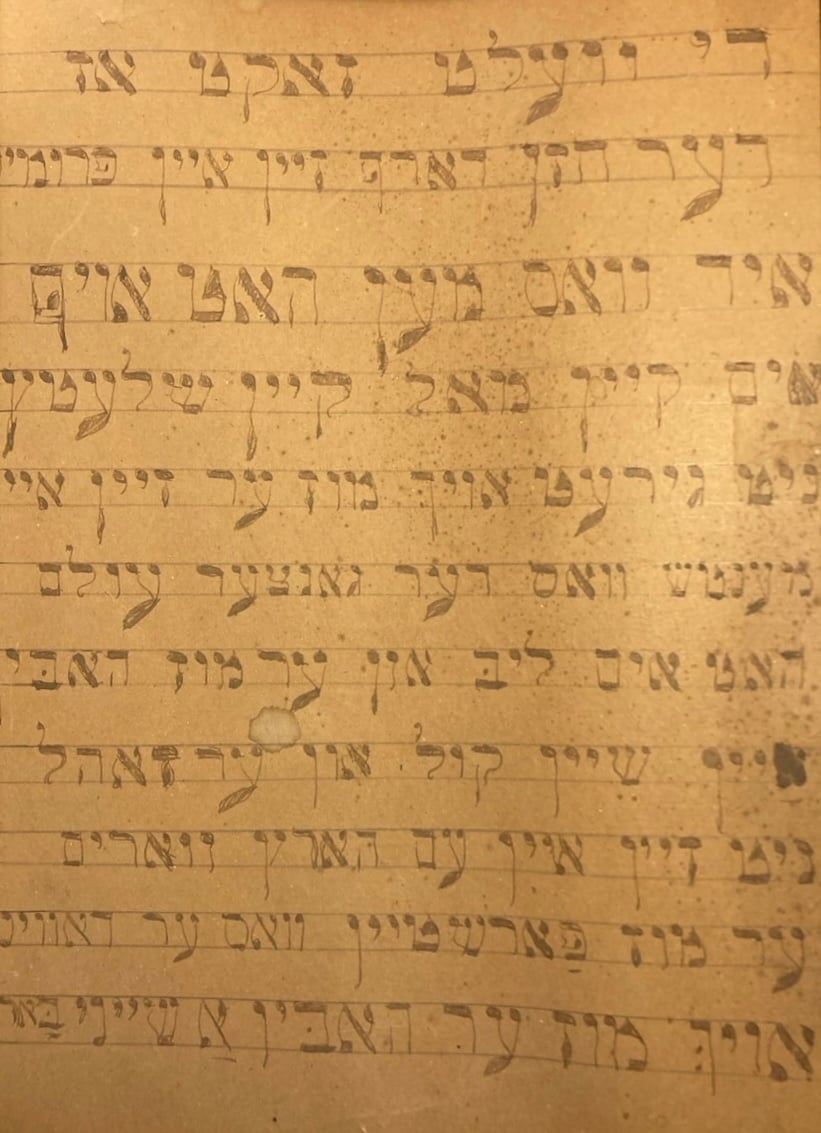
But the sign speaks volumes: to its end, this was still a congregation of immigrants, worshippers who prayed and argued and sang in the language they brought from Lithuania.
Memory and Responsibility
Memory finds a way. Ann Schulman’s 2001 play Eternity, which premiered at The History Theater, imagined ancestors rising from Superior’s cemetery to save the synagogue. The production featured Bob Dylan’s music, gravestone rubbings from the Hebrew cemetery, and — in a chilling moment of recognition for me — the name “Singer” on a gravestone at center stage.
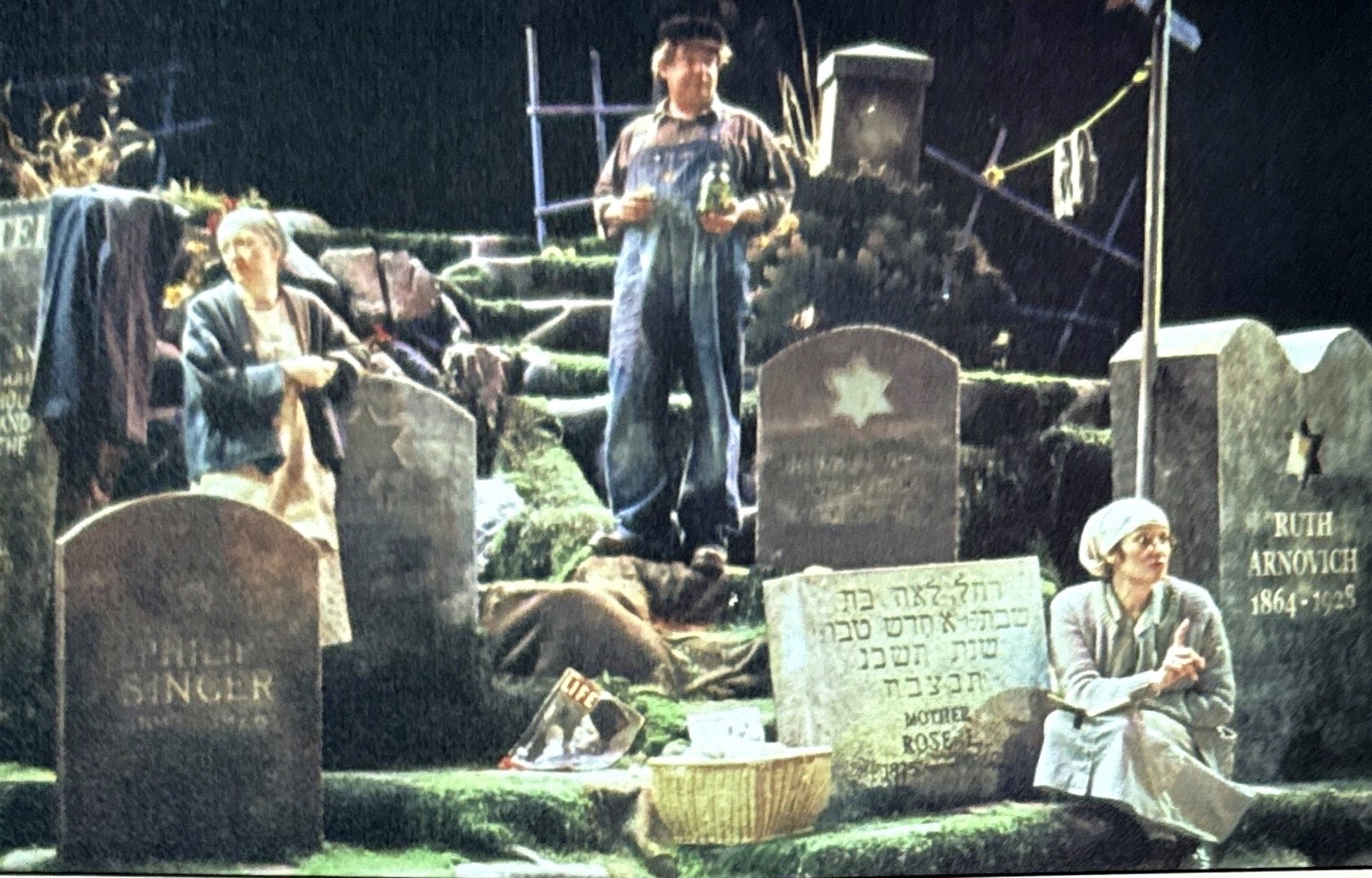
That cemetery still holds the Hyatt rabbis, Morrie Arnovich, the first Orthodox baseball star who returned to Superior to become the president of his uncle’s synagogue after winning the 1940 World Series, and many of Dylan’s forebears — the “Rolling Stones of Superior,” as I call them. Gravestones once toppled by time and neglect but still speaking of Lithuania and loss.
And now the ark has resurfaced. Discovered in a dusty antique shop, badly scarred but standing, with the aid of donors it will soon be preserved by the Upper Midwest Jewish Archives at the University of Minnesota — alongside my father’s research.
This rediscovery is not only about one synagogue. It is about responsibility. Small, dwindling Jewish communities cannot preserve their legacies alone. They are too fragile. If we are serious about honoring our past, we must build partnerships: Jewish Federations, historians, civic leaders, and neighbors. Memory must be carried collectively, across faiths and denominations.
A Lost America
As our car rolled eastward along Route 66, past Woody Guthrie’s home, then down Highway 61 past the forgotten blues trail towns and Robert Johnson’s grave to New Orleans, Dylan’s voice on Highway 61 Revisited in the background, I thought of his unexpected words in his trailer for Machine Gun Kelly’s new album, Lost Americana. For me, Superior is that lost America: once a thriving city of immigrants, now a graveyard of memory. My father tried to save that story. He hoped to write a book about it before he passed. In my application to cantorial school in 1999, I recalled the Litvak shul and its demise as my calling to preserve Jewish life through music. I will present this history next spring at my synagogue in a concert called Crossroads of the North. In the words of Rabbi Tarfon, who my father often quoted, ”you are not required to complete the task, nor are you allowed to desist from it.”
Now, as if from an Indiana Jones film, the lost ark, a fragment of a forgotten world has returned. Scarred, fragile, diminished — and yet still standing.
Just like Jewish memory.
Just like us.
Related Topics
Related Posts