


Alain Michel Interview | Alexandre Gilbert #304
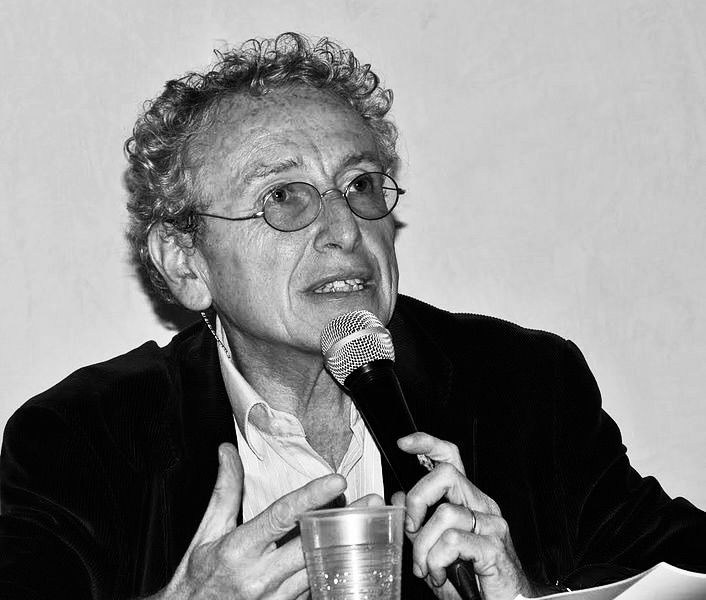
Alain Michel as a french historian.
Has the well-known controversy over Marshal Pétain’s role produced any unexpected effects in recent years?
Alain Michel: I think it’s necessary to clarify certain terms in your question. For there to be a “controversy,” there must be a genuine debate — which may be heated or even aggressive — but which above all involves an exchange of arguments. Yet there has never really been a debate since the publication of my book in 2012, followed by Éric Zemmour’s in 2014. Beginning with the works of Paxton and later Klarsfeld in the early 1980s, a certain interpretation became a kind of doxa — an unquestionable historical belief. From that point on, any attempt to challenge it was considered illegitimate.
The established model portrayed Vichy as antisemitic — which is accurate — but also as having, from the summer of 1942 onward, deliberately aligned itself with the Nazi program of extermination, even at times anticipating German demands in the destruction of Jews living in France. By turning this interpretation into an unquestionable dogma, any alternative reading of history is treated as heresy. One cannot debate with an inquisition, since its arguments rest entirely on authority.
It’s worth noting that since the 1980s, no serious historical research has sought to verify whether Paxton’s or Klarsfeld’s works strictly adhered to sound historical methodology, or whether they should be accepted wholesale.
Secondly, I believe it is a mistake to focus so narrowly on Marshal Pétain. In 1940, he indeed played an active role in developing antisemitic policies, but by 1942 he merely approved measures decided by Pierre Laval. It is therefore more accurate to speak of the actions of the Vichy government as a whole.
To answer your question, the recent emergence of “pockets of dissent” challenging the dominant doxa — notably with Jean-Marc Berlière’s 2023 book Histoire d’une falsification — marks, I think, the beginning of a long process toward restoring a genuine and healthy historical debate about the Holocaust in France.
Do you think this controversy has contributed to an increase or a decrease in antisemitism?
Alain Michel: I don’t believe this so-called “controversy” has had any influence on antisemitism whatsoever. Contemporary antisemitism stems directly from Islamist ideology and from the negative image of Jews that certain interpretations of Islam have perpetuated for centuries.
Your name was mentioned on the popular TV show Quotidien by YouTuber Yann Bouvier. What did you think of his comments?
Alain Michel: Something quite interesting happened on that show. My criticism of Zemmour — in Le Journal du Dimanche and Causeur, both cited by Bouvier — was about his form, not his content, as I explained at the start of this interview. Yet the phenomenon described by Zemmour is accurate: the Vichy government did protect French Jews — a fact even acknowledged by the Nazis themselves in a February 1943 exchange between Oberg, the SS chief in France, and Himmler.
But if you watch Quotidien closely, you’ll notice that Bouvier cites my critique of Zemmour without specifying that it concerns only the form. This omission allows him to avoid addressing the core question: did Vichy protect French Jews? He cannot answer, because doing so would mean challenging the established doxa. Instead, he manipulates my words to sidestep the issue — and the show’s host fails to ask him the obvious follow-up: “So, Mr. Bouvier, do you personally believe that Vichy protected French Jews?”
(Editor’s note — During the broadcast, Bouvier was asked about the possibility of portraying Pétain, as an individual, as the savior of the Jews — not about Vichy. He quoted Alain Michel’s remarks, twice emphasizing that Pétain could not be credited with the lower mortality rate among French Jews, as he had a “genuine streak of antisemitism.” Bouvier restates Alain Michel’s thesis: that it was the Vichy government — particularly Laval, assisted by Bousquet, and not Pétain — who might be credited for the comparatively lower mortality rate among Jews in France, while noting that such a thesis remains an isolated one. Bouvier published France fictions, histoire des idées reçues de l’histoire de France. (Perrin, 2025))
Has the Internet had a positive or negative effect on this topic?
Alain Michel: I think the Internet increases confusion. It enables people with no real archival research experience to make false assertions that seem true to them simply because they confirm their own preconceived opinions.
In your view, what is the main area of research that still needs to be explored?
Alain Michel: We need to start again from scratch — to establish the facts independently of ideological bias. History is neither right-wing nor left-wing; it is only the history of reality. That is what I’ve been striving to do for years, albeit slowly, since no research center has been willing to support me. It’s crucial to expose the distortions and convenient compromises that have crept into the narrative — but as always, people dislike the one who dares to say that the emperor has no clothes.