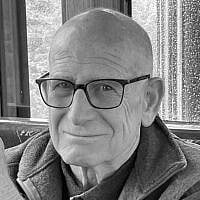
Alex Kleytman’s Last Light
There are deaths that wound a family, and there are deaths that indict an age.
Alex Kleytman – an 87-year-old Holocaust survivor – was killed on Bondi Beach on the first night of Hanukkah, in an attack authorities have treated as terrorism aimed at a Jewish gathering. According to accounts reported by journalists speaking with those closest to him, he died shielding his wife – a final, instinctive act of love and protection.
It is difficult to convey the obscenity of that sentence without turning it into something ornamental. One does not wish to gild grief. Yet the bare fact remains: a man who survived the industrialized annihilation of European Jewry – who made it through the century’s most meticulously organized machinery of death – was cut down in the open air, on a beach, during a festival dedicated to light.
Hanukkah, for those who have forgotten (and the world has a deplorable talent for forgetting Jewish things), is not a triumphalist holiday. It is not an empire’s birthday. It is a commemoration of survival, of identity held stubbornly in public, of the refusal to be extinguished. A candle in the window is not a boast; it is a declaration: we are still here.
And that, in the end, is what Alex Kleytman’s murder was truly aimed at—the attempt to make “still here” feel like a provocation. The attempt to turn visibility into vulnerability, joy into a liability, and gathering into a gamble.
Let us be precise, because precision is a form of moral hygiene: this is what hatred does when it believes it can get away with it.
Now we come to the part that will be called “too political” by people who treat politics as something that happens in parliament rather than in blood-soaked sand.
The cowardice that enables such horror is not confined to the gunman’s hand. It also lives – comfortably, remuneratively – in the offices of politicians and state officials who have become preoccupied with being inoffensive instead of being responsible. They speak as though the greatest danger to the republic is a badly phrased sentence. They fear a headline more than an ideology. They dread social-media outrage more than social collapse.
So we get the language of fog. “Community tensions.” “Sensitive issues.” “Complexities.” We get condemnations that are scrubbed clean of nouns, as if naming the target might offend the sensibilities of those who would prefer not to notice what is happening. We get euphemism draped over reality like a towel over a wound—less for healing than for concealment.
But extremism is not defeated by politeness. It is not pacified by the fear of being called impolite names by people who have no intention of living under the rules of a plural society. Radical movements do not interpret delicacy as decency. They interpret it as permission.
We are told—often by the same people who have watched the fire spread—that democracy is “fragile.” Indeed it is. But fragility is not an excuse for paralysis; it is a demand for fortification.
Democracy is our most precious asset because it is the only system that allows people to live as themselves without coercion: Jews as Jews, Muslims as Muslims, Christians as Christians, atheists as atheists—citizens not as subjects, consciences not as captive property. That is not a sentimental aspiration. It is the hard-won architecture of civil peace.
And civil peace has enemies. They may wrap themselves in religious language, political grievance, tribal identity, or the fever-dream of apocalyptic heroism. The label changes; the mechanism does not. They preach death. They glamorize cruelty. They sanctify domination.
Against this, we must do something profoundly unfashionable: we must build law that is brave enough to describe the threat.
The UK already has strong counter-terrorism law; terrorism is clearly defined in statute, including violence committed to advance a political or religious cause. The UK also has hate-crime and public-order frameworks that address stirring up religious hatred.
And yet, as policymakers themselves implicitly concede, there remains a grey zone – an area in which extremist activity may be profoundly harmful while sitting below the terrorism threshold, and where non-statutory definitions are used for engagement and policy rather than as an operational legal tool.
That gap matters. It is where intimidation grows legs. It is where radicalization becomes routine. It is where threats against minorities are normalized as “activism,” where incitement is passed off as “passion,” where the long grooming of violence becomes a background hum – until it abruptly becomes a siren.
Bondi is what happens when a society confuses the absence of a legal label with the absence of danger.
So let us be plain: we need stronger legal responses to religious extremism – crafted with the seriousness that a democracy owes itself. Not laws that criminalize belief, but laws that target coercion; not laws that police theology, but laws that confront intimidation, incitement, and organized movements that seek to strip others of rights and safety. That can be done in a rights-respecting way; it must be done in a rights-respecting way. But it must be done.
Alex Kleytman’s life, from what has been publicly reported, held the essential narrative of Jewish history in the modern age: survival, migration, rebuilding, love, continuity. And then – at the very moment when candles were to be lit to honor endurance – his life was taken by those who resent the fact that Jews endure at all.
How, then, do we honor him?
Not by a moment’s silence that lasts precisely as long as it takes for the next news cycle to refresh. Not by solemn phrases that dissolve in the air. We honor him by refusing to let the manner of his death become merely another entry in the world’s shameful ledger of antisemitic violence.
We honor him by insisting that the state’s first duty – to protect the public – means protecting minorities without asking them to become invisible. We honor him by confronting the ideological incubators of violence with law, enforcement, and moral clarity. We honor him by building institutions that do not flinch at the moment they are most required.
And we honor him in the only way that truly defeats those who preach death: we keep lighting the candles.
Not as a gesture. As a program.
If radicals continue to shoot into the light, then our answer cannot be to dim ourselves for their comfort. Our answer must be to become, stubbornly and relentlessly, more luminous: more honest, more courageous, more legally prepared, more united.
Next year, when we light Hanukkah candles again – on beaches, in town squares, in windows across the diaspora—let it be said of us that we did not only remember Alex Kleytman.
Let it be said that we acted for him.