Ali Larijani’s Comeback
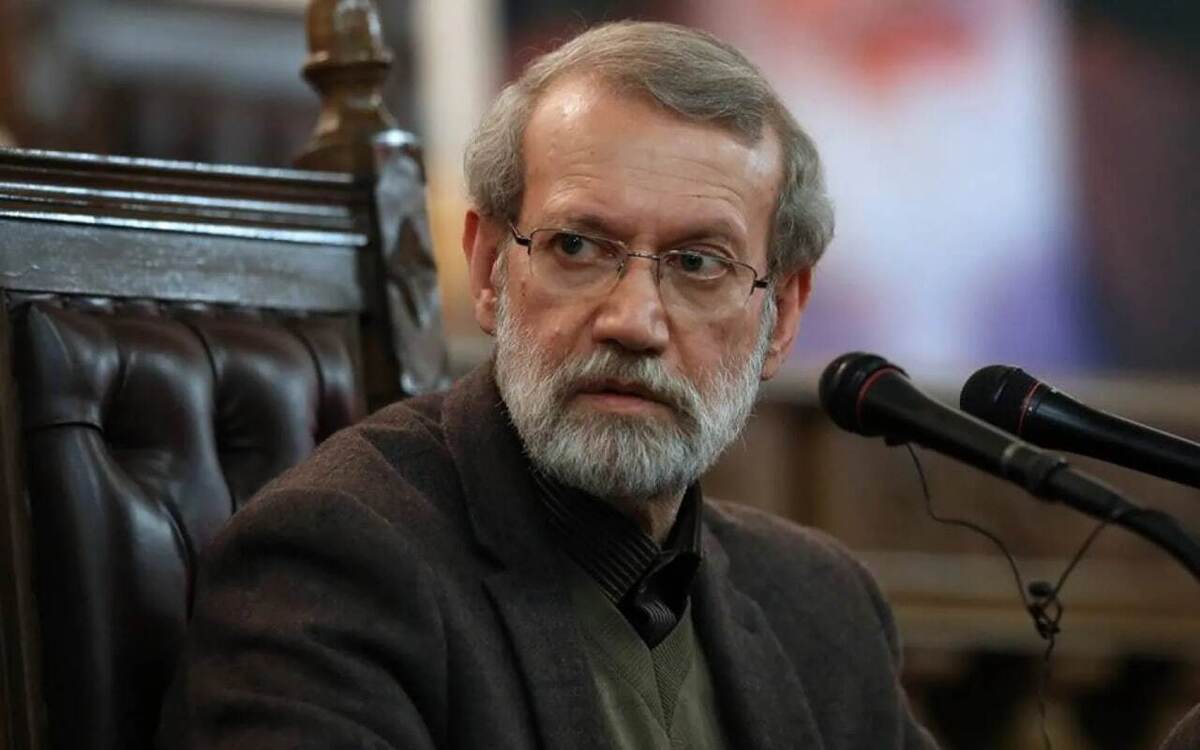
The appointment of Ali Larijani as secretary of Iran’s Supreme National Security Council (SNSC) holds domestic and international significance. But rather than a meaningful change in Iran’s policies at home and abroad, his ascension to the post is the product of shifts in the constellation of power in Tehran following historic failures during the 12-Day War with Israel. In appointing Larijani, the supreme leader is aiming to unite the Islamic Republic’s elite, instill professionalism after security failures, while managing relations with China and Russia and the West.
The SNSC is a critical institution in the Islamic Republic, where national security matters are coordinated, debated, and presented to the supreme leader for approval. Larijani’s predecessor Ali Akbar Ahmadian, appointed under Ebrahim Raisi’s presidency in 2023, had a disastrous tenure, where he held his seat as Israel and the United States launched military strikes against the Iranian nuclear program for the first time since the Islamic Revolution in 1979.
Larijani’s Path to Power
Born in 1958 in Iraq, Ali Larijani has held a multitude of positions in the Islamic Republic’s political establishment. He began his career as a parliamentary deputy to the commander-in-chief of the Islamic Revolutionary Guard Corps (IRGC). Later he was a deputy cabinet minister in the 1980s. During the presidency of Ali Akbar Hashemi Rafsanjani, Larijani served first as culture minister and then as director-general of Islamic Republic of Iran Broadcasting (IRIB), a key position which the Office of the Supreme Leader controls.
In this time period, Larijani was a conservative voice in the halls of power. He succeeded Mohammad Khatami as culture minister after the latter resigned amid pressure over his more permissive views. Larijani was a hardened voice in the ministerial role. At one point, his Culture Ministry attempted to change the words of literary classics to more acceptable ones in line with the mores of the Islamic Republic. Larijani’s tenure overlapped with the Chain Murders which saw scores of Iranian intellectuals murdered by the state.
Later, at the dawn of the presidency of Mahmoud Ahmadinejad in 2005, Larijani became secretary of the SNSC, but his tenure ended abruptly in 2007 amid power struggles. Thereafter, he became the longest-serving speaker of parliament in the history of the Islamic Republic. During this time, Larijani became an ally to Ahmadinejad’s successor Hassan Rouhani as the latter’s administration negotiated with the P5+1 which produced the Joint Comprehensive Plan of Action (JCPOA). Larijani ran parliamentary interference for Rouhani to ensure the JCPOA’s implementation.
However, Larijani’s political stock began to wane as his brother Sadegh Larijani’s reign as chief justice ended in controversy in 2019. Ali Larijani himself left the speakership of parliament in 2020. Soon after, he became an advisor to the supreme leader. But Khamenei still humiliated him after Larijani was disqualified by the Guardian Council twice as a candidate for the presidency—in 2021 and 2024. One reason was his daughter lives in the United States. Sadegh Larijani later resigned from the Guardian Council. This was a comedown for the Larijani dynasty as they went from at one point controlling two branches of the Islamic Republic’s political establishment to being forced off the ballot for the presidency twice and losing a seat on the Guardian Council. Sadegh Larijani was even mentioned as a potential candidate as Khamenei’s successor. Those ambitions ground to a halt. While Sadegh still retained a position as chairman of the Expediency Council, the family was at a low point in influence in Tehran.
That began to change in 2024-2025 as Ali Larijani became an increasingly visible emissary for the supreme leader—travelling to Lebanon and Russia. These were trips which would have been normally undertaken by Ali Akbar Velayati, the supreme leader’s ailing foreign policy advisor, in the past. But Larijani was proving himself as a trusted interlocutor during a deterrence crisis for the supreme leader after Israel’s killing of Hezbollah’s Secretary-General Hassan Nasrallah. During the 12 Day War, Larijani gave multiple interviews, where he threatened the director-general of the International Atomic Energy Agency (IAEA) Rafael Grossi, saying “when the war is over, we will settle accounts with Grossi.”
A Unifying Figure for the Political Establishment
Larijani represents a unifying figure for the Islamic Republic’s political establishment. His experience serving under conservative presidential administrations will assist him in this role. Larijani’s reputation as an ally of Hassan Rouhani in parliament during his presidency will also earn him the trust of pragmatists in Tehran. Larijani will additionally be able to use his early experience as a parliamentary deputy to the IRGC’s commander-in-chief to bolster his credibility with the IRGC. As far as the Office of the Supreme Leader is concerned, Larijani has maintained the confidence of Khamenei. This is because, aside from writing public letters to the Guardian Council questioning his disqualifications from running for presidency, he did not publicly rebel against the Islamic Republic’s system in the manner that Ahmadinejad and others did after they were marginalized.
Instilling More Professionalism
The supreme leader also likely hopes to use Larijani to instill some professionalism in the security establishment after significant losses during the 12 Day War. Before his ascension as secretary of the SNSC, Larijani has reportedly served on a committee which oversaw negotiations with the United States in April and May 2025, where he advised on strategy, former foreign minister Kamal Kharazi provided input on foreign policy, and Mohammad Forouzandeh offered counsel on military issues. This pointed to a lack of confidence in Ahmadian to manage these delicate negotiations as his predecessors like Ali Shamkhani had done in the past. Larijani has more administrative, political, and technocratic experience than Ahmadian, who had spent his entire career in the IRGC before becoming SNSC secretary. It is this skillset which Khamenei is likely counting on to solve problems.
In this respect, Larijani will likely be a stronger SNSC secretary than his predecessor given his stature across different branches, ministries, the Office of the Supreme Leader, and his early stint in the IRGC. All of this, coupled with the establishment of a National Defense Council, which existed in a form during the Iran-Iraq War, speaks to a system that is retooling itself as the supreme leader ages, succession looms, and more conflict with Israel is potentially around the corner. The increased risk-readiness of the United States to use military force against Iran also reinforces the need for these modifications.
The internal dynamics of the SNSC itself have changed since the 12 Day War. Pezeshkian, who remains chairman, is likely now more comfortable with Larijani as secretary than Ahmadian, who he inherited from the Raisi administration. Likewise, there is a new chief of staff of Iran’s Armed Forces Abdolrahim Mousavi, a commander-in-chief of the Islamic Revolutionary Guard Corps (IRGC) Mohammad Pakpour, and a chief commander of the Artesh Amir Hatami who all retain SNSC membership. Mousavi replacing Mohammad Bagheri, who was killed by Israel, as chief of staff marks the first time a career Artesh officer filled his critical post and represents one more seat for the Artesh at the decision-making table as Bagheri had been an IRGC officer.
The addition of Shamkhani and Ahmadian as representatives of the supreme leader on the new Defense Council may add some complexity to the new set-up. This is because Ahmadian had been a protégé of Shamkhani, was pushed out of the SNSC secretary role and demoted, prompting criticism of reformist expectations surrounding Larijani from Nour News, a Shamkhani-aligned media outlet.
Managing Relations with East and West
Larijani will be well-placed to preserve the Islamic Republic’s interests in China and Russia. The Islamic Republic’s new ambassador to China is former interior minister Abdolreza Rahmani Fazli, who has been a protégé of Larijani’s for years. Larijani himself played a key role as Khamenei’s advisor in sealing the 25-year comprehensive strategic partnership agreement with China. Larijani also has a relationship with Russian President Vladimir Putin to a greater degree than Ahmadian, having met with him multiple times over the years.
Western governments, like Europe and the United States, also have long experience with Larijani, who is well-known in capitals. This stems from his experience as the lead nuclear negotiator when he was secretary of the SNSC from 2005-2007. Some governments, particularly in Europe, may view Larijani’s appointment as a sign that the Islamic Republic intends to pursue meaningful diplomacy over the nuclear file given the perception of him being an ally of Rouhani. Larijani had also in the past made more conciliatory comments about the hijab, signaling his support for less punishing restrictions. He said in 2022, “the hijab has a cultural solution, it does not need decrees and referendums. I appreciate the services of the police force and Basij, but this burden of encouraging the hijab should not be assigned to them.” Velayati himself has recently spoken of the need for some “social changes to meet public demands.”
However, Larijani’s threats against the IAEA director-general should make these policymakers question that assumption. He served as a member of the SNSC as speaker of parliament all while the regime pursued terrorism and hostage taking. Additionally, Larijani has made inflammatory comments in the past, endorsing the storming of the UK embassy in Tehran in 2011. Larijani also criticized nuclear concessions Iran made at the end of the Khatami administration, when it agreed to temporarily suspend enrichment of uranium. In 2004, he derided the move as exchanging a “pearl” for a “bonbon” from the West. This portends confrontation, not conciliation, with the United States as President Trump demands zero enrichment. Larijani is a loyal lieutenant of the supreme leader, and he would not have risen through the ranks without his commitment to the ideological tenants of the Islamic Republic.
Having Larijani in this seat may also be a ploy by the supreme leader to install someone as secretary who is a softer face to the world and the Iranian people as a pressure valve at a time when the Islamic Republic’s existence has been questioned amid significant damage after the 12 Day War. This is to create the illusion that the Islamic Republic is ready for dialogue and reform at a vulnerable moment to buy time and space, when the 46-year history of the system suggests fundamental reform is impossible.
In the end, Larijani’s second stint as SNSC secretary is a nod to the historic failures the Islamic Republic has experienced since Hamas’s October 7, 2023 massacre in Israel. It will also position Larijani in a key role as the supreme leader ages and succession looms. It signals that the supreme leader is making changes—but ones that will bolster the Islamic Republic’s core ideological and foreign policy pillars, not radically change them.
Jason M. Brodsky is the policy director of United Against Nuclear Iran (UANI).