
Bringing Jews from Western Countries to Israel
Aliyah 3.0
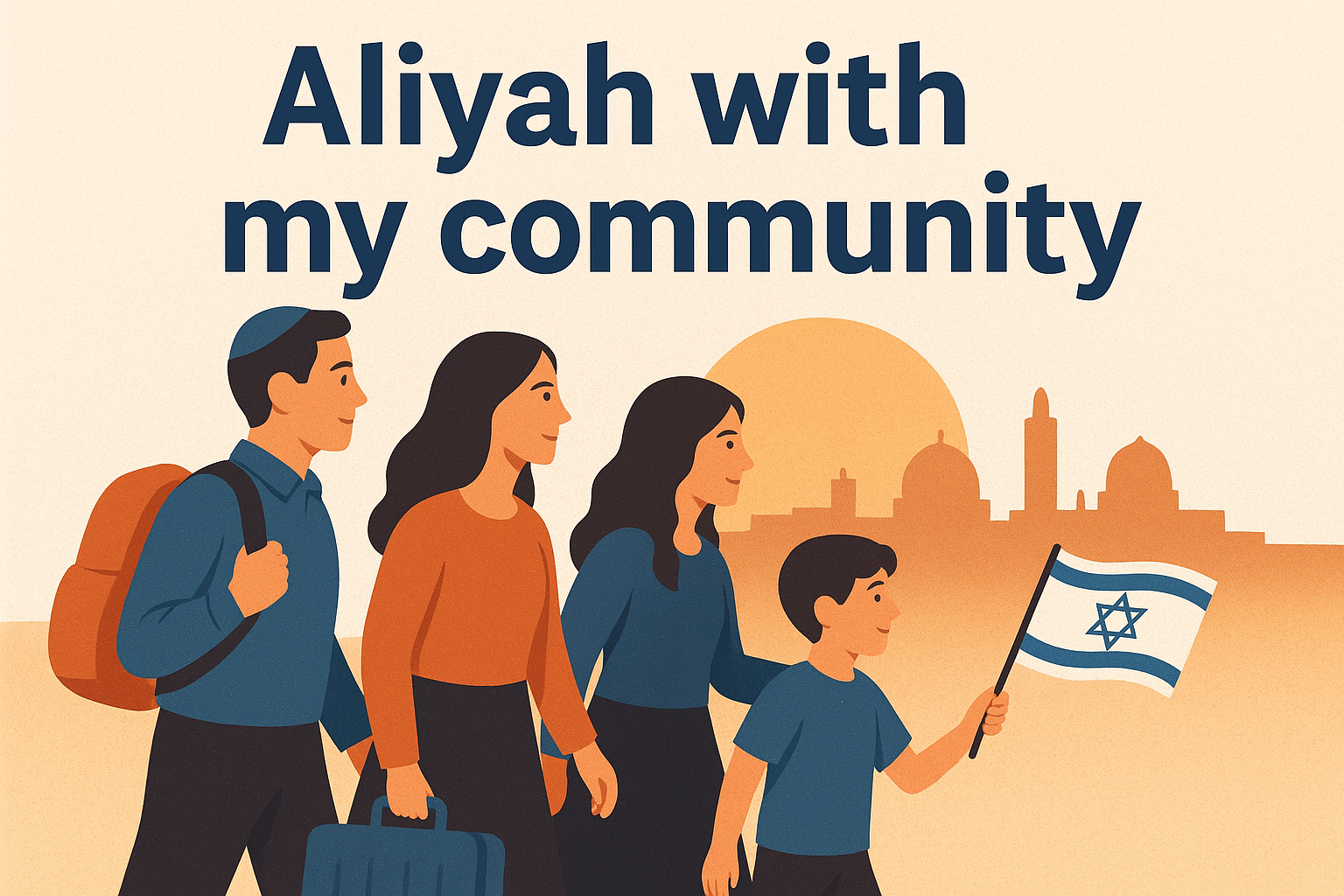
Aliyah 3.0 is coming. Let me explain.
In the wake of October 7th, the dangerous conflation of anti-Zionism and antisemitism has shaken Jews around the world. For many, it’s the first time they’re seriously questioning the future of their families in the countries they’ve always called home.
Across Western countries—like the UK, France, Canada, Australia, and the United States—talk of Aliyah is no longer theoretical.
Shabbat tables are increasingly filled with heartfelt conversations about leaving behind the familiar and moving to Israel—not someday, but soon.
Make no mistake: thousands of Jews will be making Aliyah.
But this wave will look very different from those that came before.
A New Chapter: Aliyah 3.0
This emerging wave—what I call Aliyah 3.0—marks a radical shift from previous migrations of Jews from the West.
- Aliyah 1.0 were Jews who emigrated before 1948 or in the early years of the State. These were the pioneers—brave individuals who severed ties with their birth countries to help build a fledgling nation, often at great personal sacrifice.
- Aliyah 2.0, like my own journey two decades ago, was driven by Jews seeking community in Israel. We moved to established Anglo enclaves—Ra’anana, Modiin, Efrat, Jerusalem, Beit Shemesh—where we could integrate into a familiar and welcoming place.
But Aliyah 3.0 is something entirely new.
This new wave is composed of Jews who, until recently, never truly considered moving to Israel—not because of a lack of love for the country, but because they were deeply rooted in the Diaspora. They loved their lives. Most importantly, they loved their local Jewish communities.
And that’s the hardest part about Aliyah 3.0: leaving behind those tight-knit communities.
Not To a Community—With a Community
That’s why a powerful new idea is taking hold.
Aliyah 3.0 isn’t about individuals or even families making the leap.
It’s about communities moving together.
In cities around the world, WhatsApp groups are quietly forming—Jews in the same neighborhood, synagogue, or school network exploring the possibility of making Aliyah as one. Together.
These groups are often formed in secrecy, due to the sensitivity and emotional weight of such a decision. There’s almost a sense of “coming out” as members reveal their hopes—and fears—for the first time to trusted friends.
A New Model of Aliyah
Of course, the practical needs remain: affordable housing, good schools, job opportunities.
But for Aliyah 3.0 Jews, the most important requirement is clear: a place in Israel where their entire community can land together.
This shift is already transforming the dream of “living in Israel” into something far more inspiring:
Living in Israel with my community.
Related Topics
Related Posts