Aliza Bulow: Past … Present … and Future
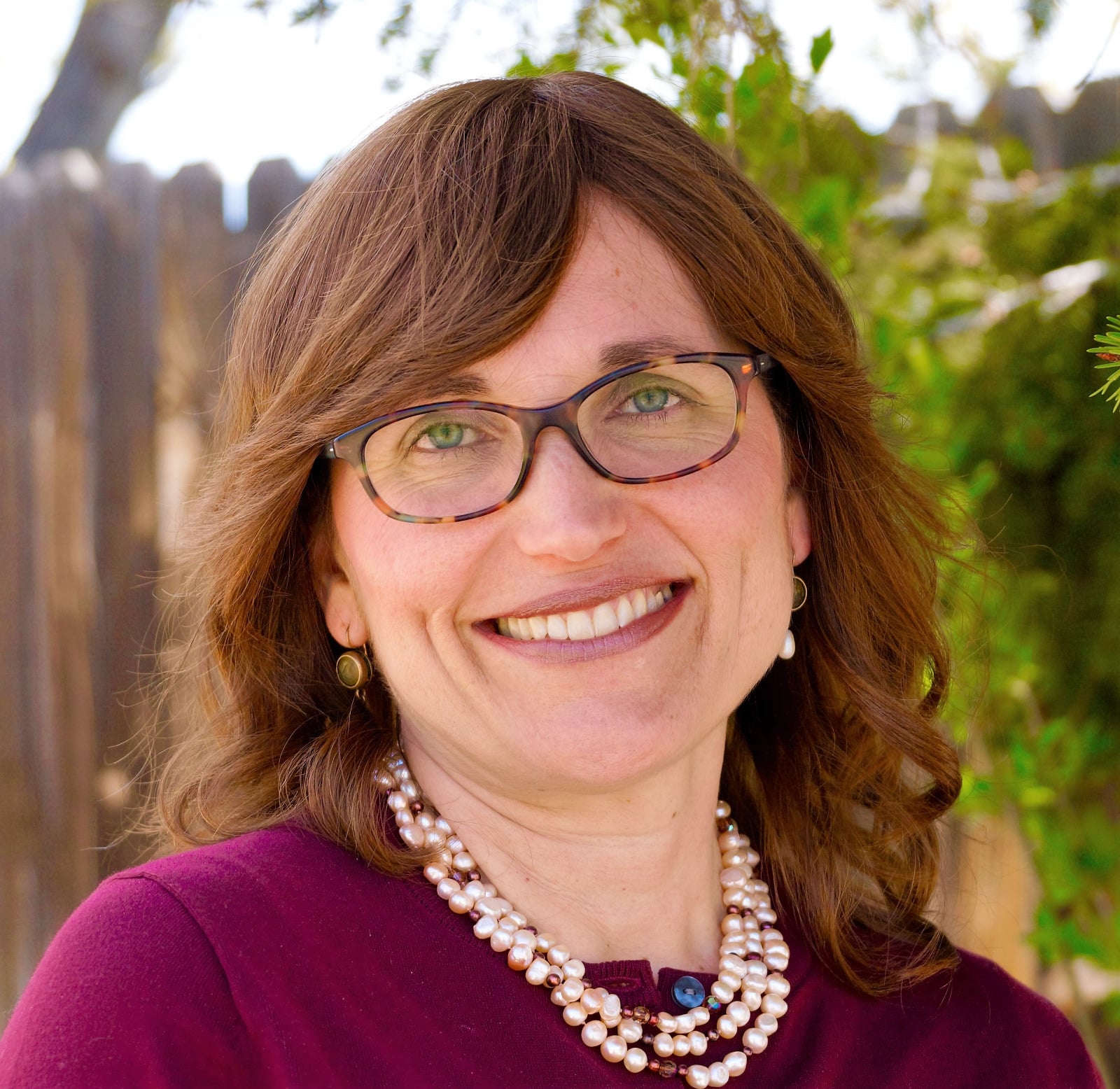
If you’ve ever met Aliza Bulow, you know she’s the kind of person who could fill a book with her life story. And if she did, you’d probably read it in one sitting.
She calls herself a “first-generation Jew” — a phrase that only hints at her remarkable journey. Born in the United States in the 1960s to Protestant parents who were deeply involved in the civil rights movement, Aliza grew up surrounded by activism. Her childhood memories aren’t of playgrounds and cartoons — they’re of picket lines and marches. She walked in the Poor People’s Campaign in Washington, DC, picketed schools in Rochester, NY, and even helped desegregate her high school in Portland, OR.
By the time she was 11, Aliza had already begun to step away from her family’s religion, searching for something that truly spoke to her soul. At 14, she stumbled upon a book that would change everything — To Be a Jew by Rabbi Hayim Donin. That was the spark. Two years later, she formally converted to Judaism.
And then she dove in headfirst. Just six months after her conversion, she was on a plane to Israel for intensive Torah study. She learned at Michlelet Bruria, studied at Hebrew University, and even served in the IDF’s Nachal unit during the First Lebanon War.
While in Israel, she met her future husband, Ephraim. The two married in 1985, but they didn’t just settle down quietly. They traveled to Russia to support Soviet refuseniks — putting themselves in the middle of another historic Jewish movement.
But if you ask Aliza, she’ll tell you the chapters that matter most are the ones she’s been writing since then.
Today, she’s the founder of CORE (CoreTorah.org), an organization with a big vision: a world where Jewish women feel deeply connected — to Hashem, to Torah, and to each other — so that warmth and inspiration ripple out into their families and communities.
CORE works to empower observant women — mothers, teachers, rebbetzins, community leaders — to become engines of spiritual transmission. It’s about strengthening the networks that hold Jewish life together, while helping women bring Torah into every corner of their lives with confidence and joy.
The organization’s work takes shape in three main ways:
- A 2½-year training program that prepares women to serve as spiritual guides and community anchors. It’s not just theory — they tackle parenting, marriage, mental health, trauma, infertility, faith, and relationships, all grounded in a halachic Torah framework.
- Networks of women who are in similar communal roles — rebbetzins, kallah teachers, educators, chevra kadisha members, trauma healers, nonprofit CEOs, teen support professionals — so they can share wisdom and support each other.
- Small, local circles of 5–15 women who meet regularly with a trained facilitator, building friendship, resilience, spirituality, and a stronger sense of communal care.
In just a few years, CORE has reached more than 3,000 women in over 100 cities across six continents. Women describe it as transformative — gaining listening skills, Torah-based insight, a stronger spiritual foundation, and a network of other Jewish sisters who “get it.”
One thing Aliza is passionate about: teaching women to truly listen before they speak. “It’s not about giving advice,” she says. “It’s about helping people make thoughtful, informed decisions.” She dreams of a future where observant women are not only respected for their communal work, but also have clear career paths, ongoing training, and real recognition.
Her belief is simple but powerful: when you invest in Jewish women — through education, connection, and emotional and spiritual tools — you strengthen families and entire communities.
Aliza’s personal path hasn’t been without hardship. She lived in eight cities before the age of 11, followed by the divorce of her parents and their subsequent distraction as they sought new relationships. And she raised a mentally ill son who died as a teenager from his illness. Through it all, her relationship with God was her anchor. “Hashem was my parents,” she once shared in a podcast, “and the Torah has anchored me during my life.”
Through regular Torah learning and guidance, Aliza learned to see–and to live–the challenges as pathways for growth. In fact, she now sees what others might call “tests” as “custom-designed workshops by Hashem,” and she understands that these workshops helped develop the capacity she shares with the world today.
Though she did not have a singular key influencer, she is quick to credit her mentors, key among them, Rebbetzin Tehilla Jaeger, Miriam Lowenbraun, Debbie Greenblatt, and Rabbi Avraham Edelstein. And even brief encounters made significant impressions; when she asked Rabbi Dovid Refson, the founder of Neve Yerushalayim, an institute of learning for women in Israel, to help bring more learning to women in the USA, he looked at her sternly and said, “Start teaching,” a surprise directive that became the foundation of her life’s work.
Being a first-generation Jew comes with its own mix of challenges, though. Aliza is keenly aware that she’s helping to build a Jewish future without having come from a Jewish past. While she feels deeply part of the Jewish family, not all her Jewish counterparts share that feeling.
However, she sees a silver lining. Without inherited Jewish trauma, she approaches Hashem with what she calls “love, trust, hope, and an almost giddy excitement.” For her, it’s not just that she believes in God — it’s that she feels God believes in her.
Maybe that’s why she feels confident about where she is headed. “We may not have a Jewish past,” she explains, “but that drives us to build a strong Jewish future.”
Looking at the communities she’s nurtured and the lives she’s touched, it’s clear that Aliza Bulow isn’t just building a movement, she’s building the women who are building the Jewish future.