
Did Rachel use fertility treatments?
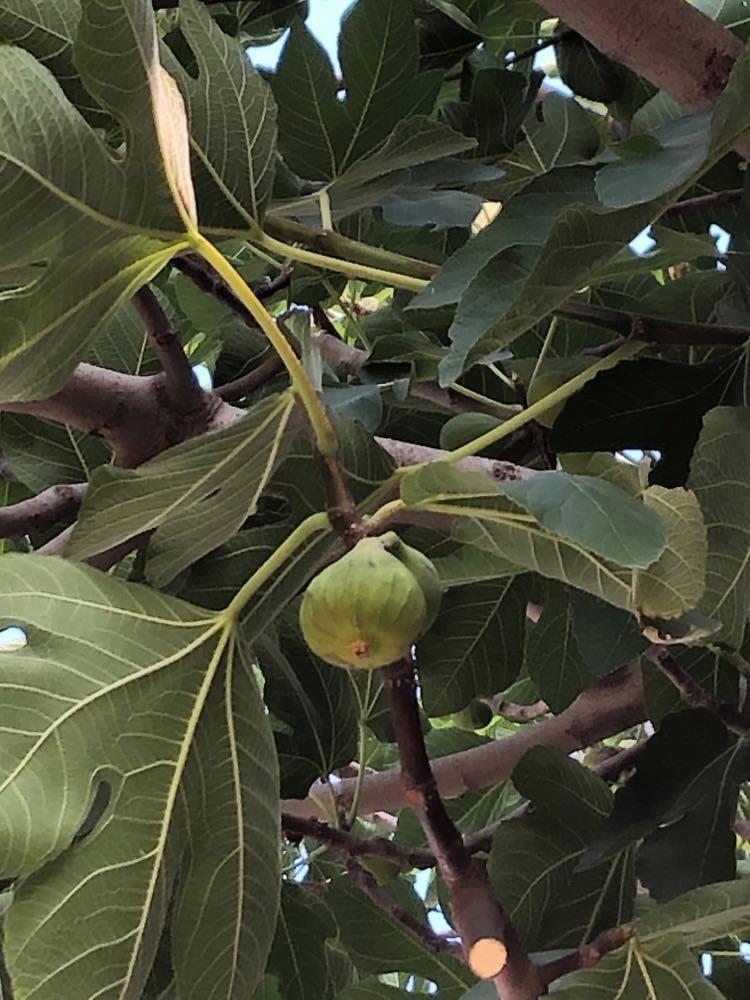
Let’s take a look at the dudaim plants that are mentioned in Parshat Vayetze (Breisheet 30:14-16) and analyze if they were fertility treatments:
During the wheat harvest, Reuven went for a walk and found dudaim in the field. He brought them to his mother, Leah. Rachel said to Leah, “Please give me some of your son’s dudaim.” Leah replied, “Isn’t it enough that you took my husband? Would you also like to take my son’s dudaim?” Rachel said, “Very well, he will be with you tonight in exchange for your son’s dudaim.” When Yaakov came back from the field in the evening, Leah went out to meet him and said, “You will come to me, for I have hired you with my son’s dudaim.”And he was with her that night.
There is a dispute as to what the dudaim are:
Sforno says that when Reuven saw that his mother was unhappy that she was no longer having children, he brought dudaim, a pleasant smelling herb, the fragrance stimulating the human organs related to conceiving and giving birth. The rabbis taught in Bava Kama 82 that garlic had a similar effect. It is possible that the dudaim had an even better effect in stimulating the feelings of love between a man and his wife.
This idea is based on Shir HaShirim 7:13-14:
Let us go early to the vineyards; Let us see if the vine has flowered, if its blossoms have opened, if the pomegranates are in full bloom. There I will give my love to you. The dudaim yield their fragrance, at our doors the sweetest of fruits; both freshly picked and long-stored, my beloved, I have kept them for you.
Based on Shir HaShirim, this plant is rich in fragrance. Rashbam says that the dudaim are figs as we see in Yirmiyahu 24:1: “God showed me two dudaei te’enim, baskets of figs…”
According to Rashi, they are sigli, violets which in Arabic are called Jasmin.
Ramban does not agree with Rashi since jasmine is not the same as sigli which is an odorous herb. He prefers Onkelus’ opinion that it is yavruchin, mandrakes.
Ibn Ezra brings Onkelus’ translation, mandrakes which have a good smell and are in the shape of a person with a head and hands, yet he doesn’t understand how they help with getting pregnant since they have a cold nature.
Ramban believes that the correct interpretation is that Rachel wanted the dudaim for delight and pleasure, not as a fertility treatment, for it was through prayer that Rachel’s barrenness was alleviated, not by medicinal methods. Reuven brought the branches of dudaim or the fruit, which resemble apples and have a good odor. The stem, however, which is shaped in the form of the human head and hands, he did not bring, and it is the stem which people say is an aid to pregnancy. And if this is true, it is by some peculiar effect, not by natural quality. Ramban adds: But I have not seen this any of the medicinal books.
After the incident with the dudaim we read (Breisheet 30:17): “God listened to Leah, and she became pregnant and bore Yaakov a fifth son.” Leah then gives birth to another child (verse 19): “Leah conceived again and bore her sixth son to Yaakov”. And again in verse 21: “Afterwards she gave birth to a daughter, and named her Dina.”
Rachel finally conceived over four years after the dudaim incident (verses 22-23): “God remembered Rachel and God perceived her plight and opened her womb. She conceived and gave birth to a son. She said ‘God has removed my shame.’”
Sforno explains: God remembered the efforts she made to produce offspring for Yaakov by giving him her maidservant as a surrogate and acquiring the dudaim. After she made these two efforts, she then prayed to God and He heard her prayers.
Even though the dudaim were not proven to work, Rachel was willing to do everything in her power and try every method available to her in order to try to conceive a child. She selflessly gave her handmaid to her husband as a surrogate and she even gave Leah an extra night with Yaakov in order to acquire the dudaim. In the end, it was through prayer and connecting to God that she ultimately conceived.
Rachel did not leave any stone unturned in her quest to have a child. We learn from Rachel that although prayer may be the key, prayer alone may not be enough.