
Alternatives to Car Ownership
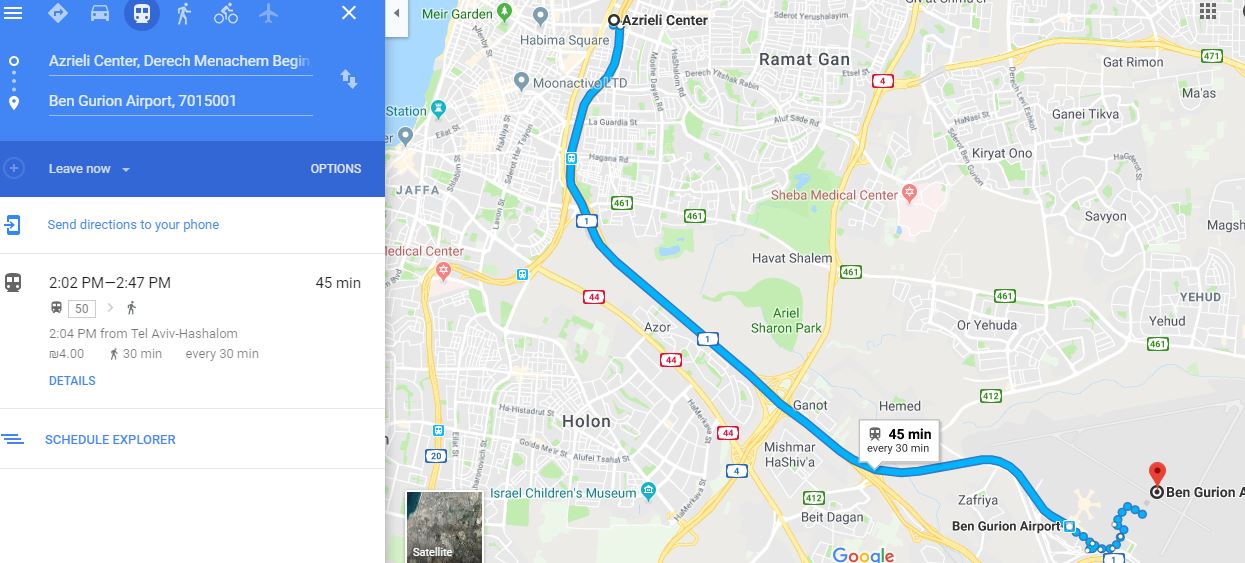
With the high costs of car ownership and an adequate amount of public transportation in many cities, many Israelis opt not to own a car. While for some it is simply because they can’t afford it, many go carless by choice. After posing the question in a Facebook group, there were many responses. “Living in Jerusalem without a car is my number one Aliya life hack!” one person responds. “There’s no parking in my neighborhood”, says another.
Some find that it is too big a hassle to deal with all the responsibilities of owning a car. Such as maintenance, looking for parking and the like. It may be out of a desire to reduce their ecological footprint. Additionally, some have found if they don’t need it and they would prefer to reap the savings. Whatever your reason, if you want to be mobile without a car, it’s important to be well acquainted with the different options and tools available.
Buses and taxis have been around longer than the state of Israel. Yet now websites and smartphone apps have made it even easier to utilize these services.
Public Transportation
This is the cheapest option available. Jerusalem offers a light rail, and Tel Aviv has been working on one. Haifa has the country’s only underground transit system. If you have the app Moovit or Google maps, you can check which bus lines to take based on your location, as well as a time estimate. Bus arrival times are updated in real time. These tools are both available on the internet as well. Moovit and Google maps can also provide live directions and alert you when you are approaching your stop.
Taxis
According to Numbeo.com, while gas in Israel costs more than double the price in the US, taxis are still cheaper here. This is due in part to the abundance of taxis to be found. Taxis are as Israeli as falafel. In cities such as Jerusalem and Beit Shemesh, it is possible to call a dispatcher and a car usually arrives within 5 minutes. However, what if you are in a place that it is harder to find a taxi? The Gett app helps you request a driver who is nearby. This enables you to “hail a cab” through your phone, and can usually bring someone in a matter of minutes. You have to option to pay with a credit card or cash.
Ride Sharing
Hitchhiking, known as ‘tremping’, while dangerous in many countries, is quite common in certain parts of Israel. That’s not to say there aren’t risks here either, there have been episodes of hitchhiking here that have not led to happy endings. However, in the more remote areas where buses are scarce, such as the north or Gush Etzion, many Israelis rely on this method to get around. Also, Moovit carpool has an option to request a carpool in the direction you are going, for about the cost of a bus ticket. Sometimes there is someone already offering a ride, which will be listed when entering your designation. There is also Waze carpool, though that is primarily for a daily commute.
Car Sharing
Car sharing is an hourly rental car service. Yet, instead of having to show up to a rental car agency to pick a car, you can pick one up is one of the designated parking spaces at any hour of the day. Just make a reservation either through the app or website, open the car using the code they provide you. They charge an hourly rate plus a gas fee based on distance traveled. The fees can add up, so when traveling between cities, it may be cheaper to get a daily rental from an agency. However, this service offers the convenience of being able to obtain a car right away, provided no one else has reserved it. Also, the entire process is entirely self-service.
While Citycar first brought this service to Israel, they are based primarily in Haredi areas. This makes sense from a business perspective as the Haredi population owns fewer cars per capita. However, there are many other neighborhoods where a significant number of people do not own cars. Cars2go came to Israel and helped bring this service to other areas such as Tel Aviv, Netanya, and Ranaana.
Of course, every household is different. People may need a private vehicle for work or their own personal reasons. However, it’s worth asking if a car is a necessity or just a convenience. If it’s the latter, these alternatives could easily save you 2,000 NIS a month.