
Ambient Terror
Perpetual Psychological Pressure
There is a form of terror that does not primarily operate through mass casualty attacks.
It does not need to.
Its power comes from shaping atmosphere.
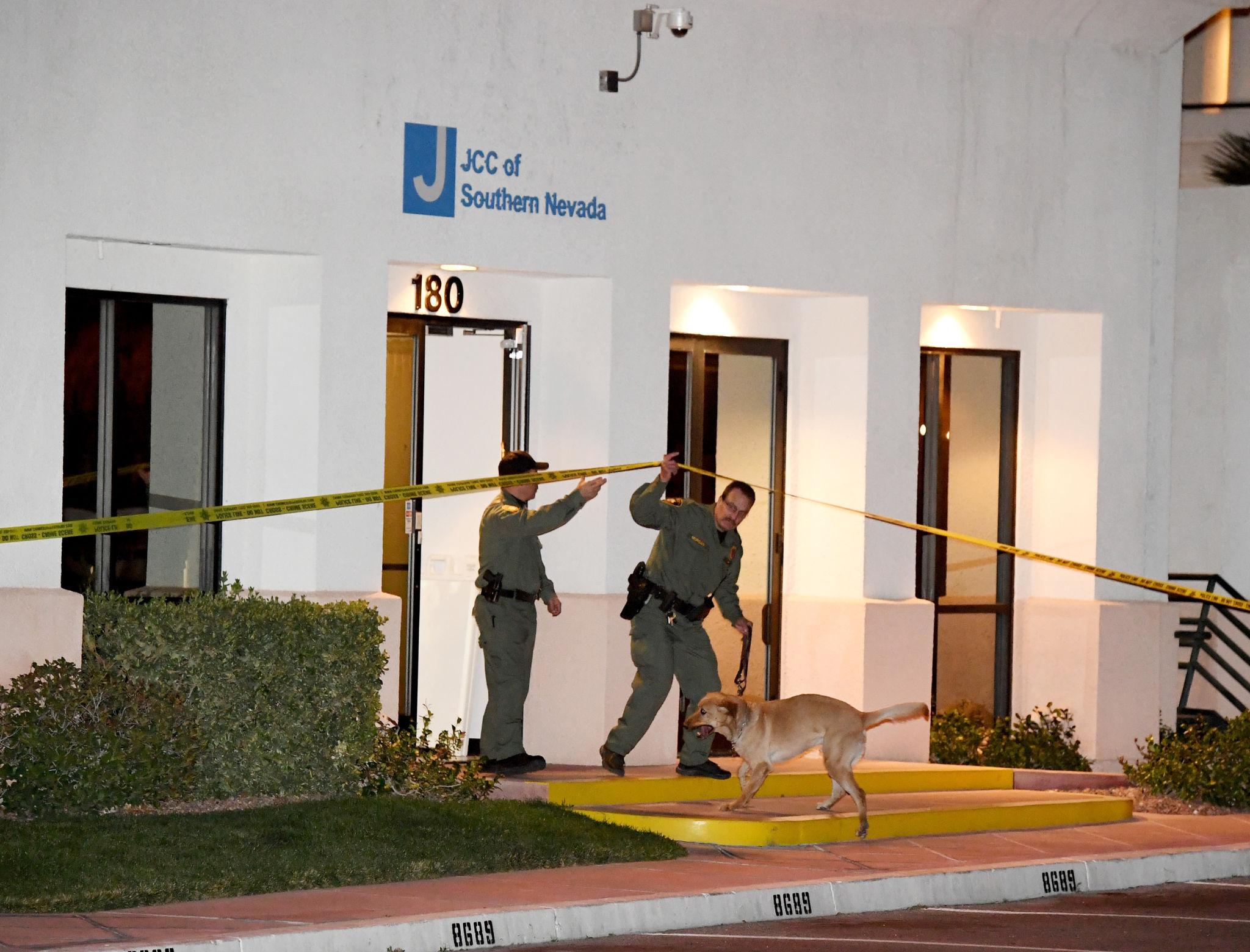
It exists in the background of ordinary life: the notification that interrupts dinner, the protest chant that migrates from fringe spaces into respectable institutions, the synagogue installing new barriers, the student wondering whether wearing a Magen David necklace is worth the risk, the parent checking social media before sending their child to campus, the low-grade awareness that a political argument can suddenly become existential.
This is what I have begun to think of as ambient terror.
Not terrorism merely as an event, but terrorism as environmental condition.
The point is not always to kill. The point is often to alter behavior.
And increasingly, that alteration is achieved through the management of uncertainty, social intimidation, symbolic targeting, and perpetual psychological pressure.
After October 7, many Jews experienced this shift viscerally.
The massacre itself was horrifying enough. But what followed revealed something larger than a single attack. The event radiated outward into universities, workplaces, social circles, media ecosystems, and online life. Jewish communities around the world suddenly found themselves navigating a transformed psychological environment.
People who had never thought twice about their identity began performing risk calculations.
Should I wear this? Should I say this? Should I post this? Should I attend this event? Will this become an HR issue? Will this friendship survive? Will this neighborhood remain safe?
These are not the questions of a society experiencing isolated violence.
They are the questions of a society adapting itself to ambient pressure.
Terror as Atmosphere
Modern liberal societies often conceptualize terrorism too narrowly.
We imagine terrorism as spectacular violence: bombings, hijackings, shootings, massacres. But historically, terror has almost always had a broader purpose. Violent acts were meant to produce downstream political and psychological effects disproportionate to the attack itself.
A small number of actors can influence millions of people if they successfully alter social behavior.
This is why terrorism has always possessed a theatrical component.
The audience matters as much as the victims.
But social media, algorithmic amplification, and high-velocity digital communication have transformed this dynamic. Terror no longer requires singular dramatic events to maintain psychological presence. The atmosphere can now sustain itself continuously.
A slogan trends. A video circulates. A rumor spreads. A confrontation goes viral. An intimidation campaign forms online. A protest appears outside a synagogue. A faculty statement emerges. A celebrity posts something inflammatory.
Each individual event may appear minor in isolation.
But collectively they generate persistent emotional conditioning.
The population learns that volatility is always nearby.
This is ambient terror: not necessarily the constant presence of violence, but the constant presence of psychological possibility.
The Gray Zone of Social Coercion
One reason ambient terror is difficult to confront is because it frequently exists below the threshold of traditional legal or military frameworks.
Much like modern geopolitical “gray zone” operations, the activity often avoids crossing clear lines.
A protest may technically be lawful. A slogan may technically be protected speech. An online campaign may technically violate no policy. A harassment effort may remain decentralized enough to evade accountability.
But the cumulative effect can still be coercive.
This matters because liberal societies are structurally optimized to respond to discrete violations.
They are less capable of responding to distributed atmospheres.
A society knows how to prosecute a bombing. It is much less clear how a society responds to the normalization of intimidation.
And because the pressure is ambient rather than centralized, institutions often minimize it.
Each incident appears individually manageable.
The aggregate effect becomes visible only afterward.
The Jewish Experience as Early Warning System
Historically, Jews have often functioned as an early warning system for broader civilizational instability.
Not because Jews are uniquely fragile, but because Jewish communities frequently sit at the intersection of political, ideological, and identity conflicts.
The same social mechanisms that first become visible through antisemitism often later expand outward.
We are already seeing this dynamic.
The techniques initially justified against Zionists or Jews increasingly migrate elsewhere:
social ostracism, ritualized ideological denunciation, career intimidation, doxxing, public loyalty tests, normalization of harassment, and the erosion of distinctions between disagreement and moral contamination.
The target changes. The mechanism persists.
This is one reason many Jews reacted so strongly after October 7 to rhetoric that others dismissed as merely symbolic.
Jewish historical memory is highly sensitive to atmospheres.
Long before catastrophe arrives, the environment changes first.
The jokes change. The social incentives change. The tolerance thresholds change. The language changes. The moral asymmetries become visible.
History rarely announces itself all at once.
It accumulates socially before it crystallizes politically.
Why Modern Media Intensifies the Problem
The architecture of modern communication systems is uniquely suited to sustaining ambient terror.
Algorithms optimize for emotional salience, conflict, novelty, outrage, and identity reinforcement.
This creates a perpetual feedback loop.
Highly charged content spreads faster. Frightened users engage more. Angry users post more. Polarized communities generate stronger retention.
The system does not necessarily require coordination.
Its structure naturally amplifies emotionally destabilizing material.
Under these conditions, even geographically distant conflicts become psychologically local.
A person sitting in Kansas can experience Middle Eastern conflict not as foreign news, but as an immediate social threat affecting their workplace, friendships, synagogue, or community.
The boundaries between domestic and foreign conflict begin to erode.
This is especially dangerous in pluralistic societies because ambient terror erodes trust horizontally.
People stop assuming social stability.
And once populations begin psychologically adapting to instability, they become more vulnerable to radicalization, authoritarian temptation, and tribal retreat.
October 7 and the Return of Vulnerability
For many Israelis and diaspora Jews alike, October 7 shattered assumptions that had quietly developed over decades.
There was an implicit belief, especially in the West, that advanced societies could gradually move beyond existential vulnerability.
Technology would stabilize things. Globalization would stabilize things. Economic integration would stabilize things.
Instead, many people discovered that modernity had not eliminated primal insecurity.
In some ways, hyperconnectivity intensified it.
The massacre itself was horrifying.
But psychologically, what followed may prove equally significant.
The realization that many institutions were unable or unwilling to provide moral clarity created a profound rupture of trust.
For countless Jews, the experience was not merely fear.
It was disorientation.
The realization that social consensus was far thinner than previously assumed.
The Danger of Permanent Activation
A society cannot remain psychologically mobilized forever without consequences.
Permanent activation corrodes civic life.
People become more suspicious. More reactive. More tribal. More emotionally exhausted.
And eventually, populations begin seeking systems that promise order rather than freedom.
This is one of the deepest dangers of ambient terror.
Even when it does not produce immediate mass violence, it gradually alters the emotional baseline of society.
Citizens begin orienting themselves around threat management.
That has enormous downstream consequences for politics, culture, education, religion, and social trust.
The irony is that many participants in these systems do not even perceive themselves as contributing to terror.
They experience themselves as activists, commentators, influencers, or moral actors.
But atmospheres emerge from cumulative behavior.
A thousand small acts of intimidation can reshape society just as effectively as a single dramatic event.
Resisting the Atmosphere
Liberal democracies face a difficult challenge.
They must preserve freedom while also recognizing that social coercion can become structurally destabilizing even when no single act crosses a clear legal threshold.
This requires developing stronger cultural antibodies.
Communities capable of solidarity. Institutions capable of moral clarity. Leadership willing to distinguish between disagreement and intimidation. Media ecosystems less dependent on perpetual outrage.
Most importantly, it requires refusing to normalize ambient fear.
Terror succeeds when populations unconsciously reorganize themselves around intimidation.
The goal cannot merely be preventing attacks.
The goal must also be preserving the psychological conditions necessary for free civic life.
That means maintaining the ability to speak openly, gather publicly, practice religion visibly, and participate in society without constant background calculation.
In the end, ambient terror is dangerous precisely because it is easy to adapt to.
Human beings acclimate remarkably quickly.
We normalize barriers. We normalize escorts. We normalize social fear. We normalize silence.
And only later do we realize how much freedom quietly disappeared in the process.