An actually pro-Palestinian MIT graduation speech
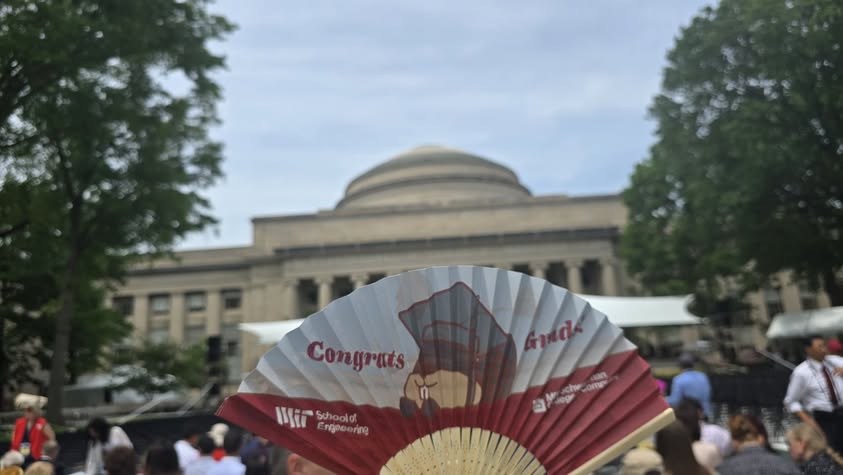
By now, readers already know the main graduation ceremony for the Massachusetts Institute of Technology, my alma mater, was marred a few days ago by the generic anti-Israel and anti-MIT speech of its graduating-class president.
Let’s leave aside all of the many issues about which you’ve already heard. Yes, allegedly the speaker lied about the content of her speech, submitting for approval a decoy speech and giving a different one. Yes, she wore a keffiyeh, a symbol that has come to be ominous to most Jewish people through the speech and action that often accompany it. Yes, the speech itself was riddled with bias and inaccuracy, including accusing MIT of “direct complicity” in a so-called “genocide,” making Jewish participants feel targeted by homicidal, millennia-old blood libels.
The worst part of giving a trite, TikTok-depth graduation speech on a tragic issue of devastating complexity is that it really missed the opportunity to talk to MIT’s graduates and guests about what MIT actually is. The speaker missed the opportunity to talk about what members of the unique Institute community are doing every day to advance the cause of Palestinians themselves.
- For example, the speech could have mentioned the Global MIT At-Risk Fellows Program. The program helps Palestinian researchers engage in projects with MIT to bring in diverse ideas and create opportunities for the Palestinian researchers as it did for Ukrainian researchers before.
- The audience didn’t get to hear about Middle East Entrepreneurs of Tomorrow (MEET). Founded in 2004, “MEET inspires Israeli and Palestinian youth to find common ground” through learning “computer science, entrepreneurship, and leadership skills so they can make a lasting, meaningful change in their communities.”
- The speaker could have talked about the MIT-Kalaniyot Fellowship Programs. Since 2024, this program has brought together Israeli Arabs, Palestinian citizens of Israel, and other Israelis to MIT to conduct research, bringing people together to advance shared research interests.
- The speaker missed the chance to talk about MIT’s work with Tech2Peace, a dialogue and tech-training program that brings together Israeli and Palestinian young adults, including MIT interns. (She also missed the opportunity to acknowledge the tragic murder of Sarah Millgram, a Jewish-American woman gunned down with her partner last week in Washington, DC, outside the Capitol Jewish Museum. Sarah had also worked with Tech2Peace to bring about a better future for both Israelis and Palestinians.)
- MIT graduates and their friends didn’t hear about MIT’s design and entrepreneurship centers’ partnership with Our Generation Speaks (OGS), a “fellowship program that unites Israeli and Palestinian entrepreneurs to develop ventures addressing regional challenges” and “encourage cross-cultural cooperation.”
- The audience didn’t learn about the MIT International Science and Technology Initiatives (MISTI), which offers the academic course “Middle East Cross-Border Development and Leadership” (SP.258, because everything has to be numbered at MIT), a monthly program that brings together Palestinian and Israeli alumni “to engage with speakers and work with one another to explore the best ways to leverage science, technology, and entrepreneurship across borders.”
- Finally, graduates and their guests might have wanted to know about how Professor Peter Krause offered detailed Zoom courses about the conflict to hundreds of intellectually curious alumni including me for many hours after the start of the war. He gave those course sessions representing the MENA/MIT Program, which “cultivate[s] longstanding partnerships, education programs, and research initiatives that respond to pressing issues in the Middle East and North Africa” “in pursuit of a more interconnected and peaceful world.”
MIT isn’t actually complicit in any genocide of any kind, and this extraordinary, land-grant Institute is not properly reduced to a single research relationship. These examples are just a few in a long history of innovation and problem-solving to build a better future. The school’s slogan? Mens et manus, mind and hand.
Offering a window into what MIT is doing to help Palestinians would have “raised awareness” more than leeching joy and clout from her classmates’ moment of celebration did.
And that would have been an inspiring graduation speech well-suited to a unique and beautiful school.