
An Agreement with Iran — But Not Munich 1938
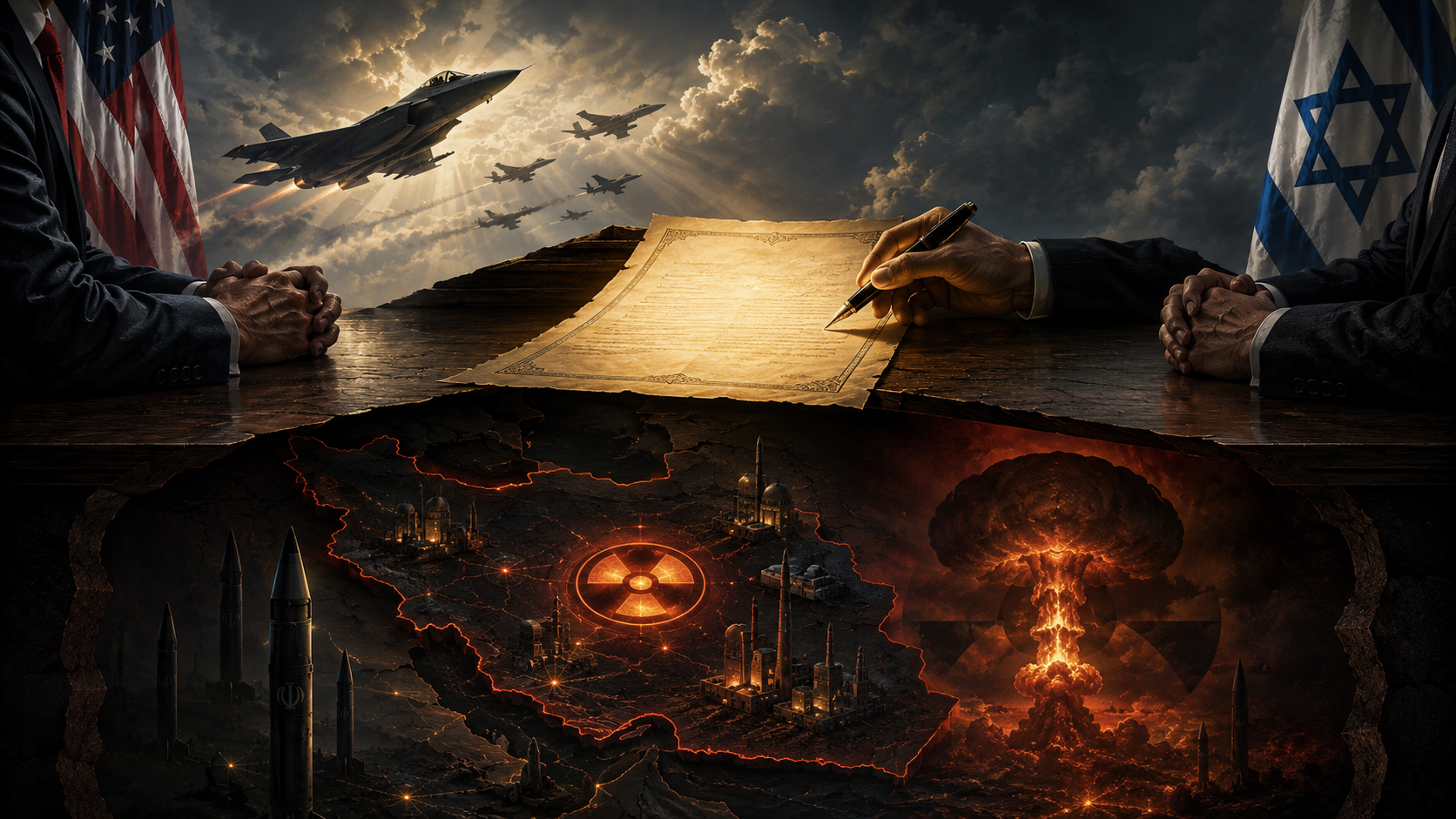
Recent reports about a possible agreement with Iran should be read with both relief and concern.
The relief is that President Donald Trump appears to understand the danger of haste. According to reports, he has delayed approval of a proposed memorandum of understanding with Iran and demanded stronger terms, especially regarding the fate of Iran’s highly enriched uranium stockpile. That is exactly the right instinct. A bad deal reached quickly would be worse than no deal at all.
The concern is that mediators and intermediaries may still try to turn an extraordinary military achievement into a diplomatic arrangement that gives Iran time, money, and legitimacy without truly ending the threat.
President Trump, together with Israel, has helped create a rare moment of strategic clarity. After years in which Iran’s nuclear ambitions were too often met with warnings, sanctions, and diplomatic delay, the United States and Israel demonstrated extraordinary force against Iran’s nuclear and military infrastructure. That action restored deterrence. It reminded Tehran that the free world is not powerless. It also showed the region that when the stakes are existential, Israel and the United States can act together with historic coordination and resolve.
That is precisely why the next step matters so much.
The danger now is not that President Trump does not understand Iran. He has long understood the threat posed by the regime in Tehran. He withdrew from the flawed 2015 nuclear deal because he recognized that it gave Iran money, time, and legitimacy without ending the danger. He has repeatedly said that Iran must never be allowed to obtain nuclear weapons.
The danger is that mediators, intermediaries, and regional go-betweens may now try to convert a military achievement into a diplomatic arrangement that gives Iran what it could not win on the battlefield.
The uranium stockpile is the test
The central issue is not language. It is not ceremony. It is not whether diplomats can produce a document all sides can describe as progress.
The central issue is the uranium.
Reports indicate that Washington is seeking the removal of roughly ten warheads’ worth of highly enriched uranium that Iran has accumulated. President Trump has reportedly asked for more specifics about how the United States would get that material and on what timetable. That is not a technical detail. It is the heart of the matter.
If Iran keeps the material, hides the material, delays access to the material, or places the material under a vague formula that allows future dispute, then the agreement will not end the crisis. It will merely rename it.
Iran has mastered the art of delay. It negotiates process when the world demands substance. It offers ambiguity when the world needs verification. It accepts wording that sounds reassuring, then argues over implementation while its scientists, commanders, and proxies adapt.
That must not happen again.
A serious agreement must include the physical removal, transfer, or verified neutralization of Iran’s highly enriched uranium. The timing must be clear. The chain of custody must be clear. The inspection mechanism must be clear. The consequences for violation must be clear.
Otherwise, the agreement will be another diplomatic curtain behind which danger continues to grow.
Munich’s warning
History does not repeat itself neatly. It rarely gives us exact copies. But it does offer warnings. One of the most enduring is Munich in 1938, when Britain and France mistook concession for peace and treated the ambitions of a dangerous regime as something that could be satisfied by paper guarantees.
Neville Chamberlain did not believe he was betraying Europe. He believed he was preventing war. That was the tragedy. The desire for peace became so powerful that it blinded leaders to the nature of the threat in front of them.
The question now is whether mediators around the Iranian file are again confusing a pause with peace.
The concern is not about diplomacy itself. Diplomacy is necessary. The concern is about diplomacy detached from reality. A document that produces quiet headlines but leaves Iran’s nuclear foundation intact would not be peace. It would be an illusion with signatures.
President Trump’s reported refusal to rush is therefore encouraging. His insistence that Iran must not develop or purchase nuclear weapons is important. But those words must be matched by mechanisms that cannot be evaded.
A promise from Tehran is not enough.
The danger of rewarding survival
A military campaign can degrade capabilities. It can restore deterrence. It can buy time. But if the diplomatic agreement that follows allows Iran to preserve the foundations of its nuclear program, receive billions in sanctions relief, and claim that it withstood the combined pressure of the United States and Israel, then the campaign’s strategic achievement may be squandered.
Iran does not need a parade to declare victory.
Survival may be enough.
If Tehran emerges with its nuclear infrastructure substantially intact, its economy rescued, and its proxies reassured, the message to the region will be clear: Iran can absorb punishment, wait out pressure, and still receive concessions.
That would be a dangerous lesson.
This is why the current mediation effort must be examined with great caution. Pakistan and Qatar may present themselves as useful channels. In some circumstances, channels can be useful. But channels are not strategy. Mediators are not neutral simply because they speak to both sides. Their interests, pressures, fears, and regional calculations shape the proposals they carry.
Reports that Qatari oil and liquefied natural gas tankers were allowed to pass through the Strait of Hormuz after Iranian approval, with some allegedly escorted by the U.S. Navy, underscore how quickly tactical arrangements can become strategic concessions if not handled carefully. If Iran can tax, approve, obstruct, or selectively permit passage through one of the world’s most important waterways, then the issue is not merely maritime traffic. It is sovereignty, deterrence, and the precedent being set.
The United States must not allow any intermediary, however polished or well-connected, to turn President Trump’s successful use of force into an agreement that leaves the Iranian regime with the ability to rebuild under diplomatic cover.
The Strait of Hormuz must not become a bargaining chip
The Strait of Hormuz matters not only because of oil, gas, and global prices. It matters because control over passage has become part of Iran’s pressure campaign.
If Iran imposes a blockade, then later receives concessions for reopening what it had no right to close, the wrong lesson will be learned. Tehran will see maritime blackmail as a successful instrument. Other regimes will see the same.
President Trump is right to want language on reopening the strait changed if the current draft is insufficient. The strait must be open as a matter of international security, not as a favor granted by Iran in exchange for rewards.
There is a profound difference between Iran ceasing an unlawful blockade and Iran being compensated for lifting pressure it created.
The first restores order.
The second encourages future coercion.
What an acceptable agreement must include
The issue is not whether diplomacy is good or bad. Diplomacy is a tool. The question is whether it serves reality or hides from it.
Any agreement worthy of the name must dismantle Iran’s nuclear weapons path, remove or neutralize enriched uranium stockpiles, impose intrusive inspections, restrict missile development, and prevent sanctions relief from funding terror proxies.
It must not leave Iran with the capacity to rebuild. It must not reward Tehran merely for surviving. And it must not restrain Israel more than it restrains Iran.
A bad agreement would not prevent war. It would postpone it under worse conditions.
The greatest risk is that mediators will focus on the appearance of calm rather than the removal of danger. They will seek language that all sides can accept, formulas that sound balanced, and timetables that reduce immediate pressure. But a formula that satisfies diplomats while preserving Iran’s nuclear path is not peace. It is a delay mechanism.
And delay has always been one of Tehran’s most effective weapons.
The regional message matters
The Gulf states, Saudi Arabia, the United Arab Emirates, Qatar, and others are not reading the situation through Western slogans. They are reading power.
If they conclude that Iran survived the campaign and extracted major concessions afterward, they will adjust. Some will hedge. Some will move closer to Tehran. Some will distance themselves from Israel. None will necessarily say so with dramatic speeches. They will simply recalculate.
That is how regional order changes.
For years, Israel and pragmatic Arab states have shared a basic understanding: Iran’s ambitions threaten all of them. The Abraham Accords reflected that reality. So did the quiet strategic cooperation that developed beneath the surface.
But if Iran is seen as the winner of the postwar settlement, the architecture of deterrence will weaken. Countries that privately fear Iran may decide they cannot afford to be seen standing too close to Israel or too far from Tehran.
This is why the details of any agreement matter.
They are not technicalities.
They are the regional message.
War fatigue is real. So is the danger.
Americans are understandably weary of Middle Eastern wars. Israelis should not dismiss that fatigue. The United States has spent blood, treasure, and political capital in the region for decades. Many Americans want fewer commitments abroad, not more.
That sentiment should be respected.
President Trump has often given voice to that instinct. He understands that America should not be dragged into endless conflicts without clear purpose or victory. That is one of the reasons his approach has resonated with so many Americans.
But there is a difference between avoiding unnecessary wars and accepting a settlement that makes the next war more likely.
The purpose of pressure on Iran should not be endless conflict. It should be preventing a nuclear crisis that would be far more dangerous later.
Mediators often want agreements because agreements create the appearance of control. They produce ceremonies, statements, signatures, and relief in financial markets. They allow leaders to say that escalation has been avoided.
But avoiding escalation is not the same as removing danger.
A deal that leaves Iran with a viable path to nuclear weapons is not peace. A deal that funds the regime while failing to dismantle its nuclear capacity is not stability. A deal that allows Iran’s proxies to recover is not de-escalation.
It is preparation for the next round.
Iran’s rulers have not hidden their intentions
Iran’s rulers have not hidden their intentions. They have armed proxies across the region, threatened Israel openly, destabilized Arab states, and invested enormous national resources in nuclear and missile capabilities.
Their ideology is not a misunderstanding. Their strategy is not a negotiating tactic. It is the organizing principle of the regime.
To treat such a regime as if it merely needs economic incentives is not realism.
It is wishful thinking wearing a diplomatic suit.
That is why the role of mediators is so sensitive. Those who have relationships with Tehran may be useful for transmitting messages, but they must not be allowed to define the terms of success. Those terms must be set by the countries that paid the price, took the risks, and face the consequences if the agreement fails.
In this case, that means the United States and Israel.
Trump’s caution can strengthen his legacy
President Trump has an opportunity to turn a successful military operation into a lasting strategic achievement.
The latest reports suggest he understands that opportunity. By refusing to approve vague language, by demanding clarity on the uranium stockpile, and by insisting that Iran cannot develop or purchase nuclear weapons, he is asking the right questions.
Now the answers must be made enforceable.
If he insists that any agreement must dismantle Iran’s nuclear weapons path, end the regime’s ability to rebuild under cover of diplomacy, and prevent sanctions relief from funding missiles, terror, and regional subversion, he will have strengthened his legacy.
He will have shown that force and diplomacy can work together when diplomacy is grounded in reality.
But if mediators succeed in producing a deal that allows Iran to recover economically while preserving the core of its nuclear program, history will not remember the bombing campaign as the decisive moment.
It will remember the concessions that followed.
Churchill’s lesson was not that war is always preferable to diplomacy. It was that diplomacy detached from reality can make war more likely.
Israel cannot outsource survival
Israel deeply values its alliance with the United States. No Israeli should minimize the importance of American support, military cooperation, intelligence sharing, and diplomatic backing. The United States is Israel’s most important ally.
But alliance is not the same as dependence.
Israel cannot outsource its survival. No responsible Israeli government can allow another country, even its closest friend, to decide whether the Iranian nuclear threat remains tolerable.
For Americans, Iran is a major strategic challenge.
For Israelis, a nuclear Iran is an existential threat.
That difference matters.
Israel must continue to work with Washington wherever possible. It must support every serious American effort to permanently end Iran’s nuclear weapons program. But if the choice becomes accepting a dangerous agreement or acting to prevent an existential threat, Israel’s duty is clear.
The security of our children and grandchildren cannot depend on illusions.
The choice before the West
The West now faces a familiar test. It can choose a false calm, hoping that signatures and sanctions relief will moderate a regime built on extremism. Or it can insist that military pressure be translated into strategic victory.
A good agreement would dismantle Iran’s nuclear weapons path, remove or neutralize its enriched uranium stockpile, restrict its missile program, prevent the financing of terror proxies, guarantee free passage through the Strait of Hormuz, and include intrusive verification with real consequences for violation.
A bad agreement would reward Iran for surviving, fund its recovery, divide Israel from its regional partners, and leave the nuclear threat for the next war.
That would not be peace.
It would be Munich’s old illusion in modern dress.
The free world still has time to avoid that mistake. President Trump’s caution is welcome. His insistence on stronger terms is necessary. The mediators and intermediaries now circling the process must not be allowed to turn pressure into retreat, or deterrence into diplomatic theater.
Israel must do everything it can, with the United States if possible and by itself if necessary, to ensure that Iran never becomes a nuclear power.
History will not ask whether an agreement produced a few months of quiet.
It will ask whether leaders had the courage to prevent the next catastrophe.