
An Insiders’ Club: The Path to the Irish Presidency
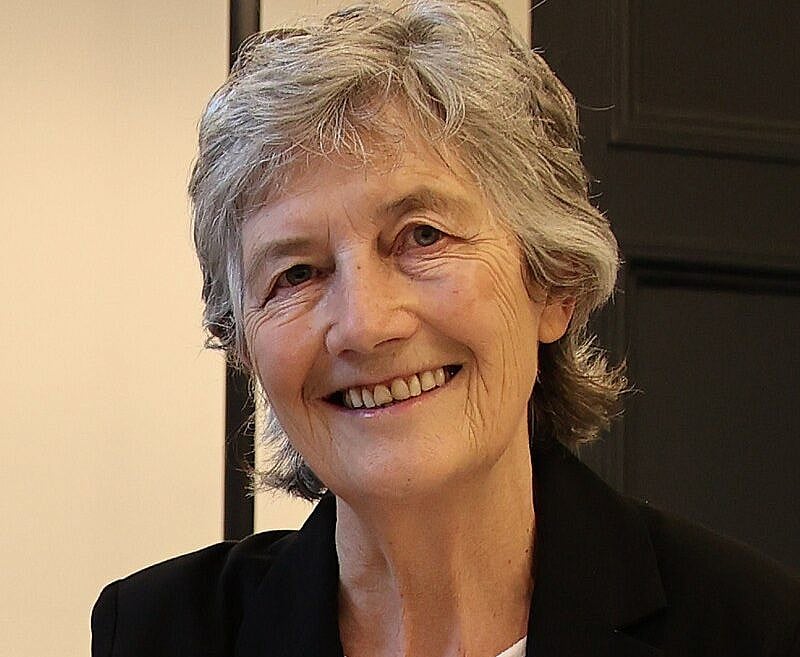
On October 24, 2025, the candidate of a united Irish Left—Catherine Connolly—convincingly won (with 63 percent of the vote) the presidential election. This will ensure that the legacy of the arch-socialist incumbent, Michael D Higgins, will be secure for another seven year presidential term. However, all is not well in the Emerald Isle. Less than 50 percent of the electorate deigned to turn out and vote. Furthermore, there was a record number of spoiled votes cast—213,738 votes or 13% of the vote—which was more votes than that received by, Jim Gavin, the candidate nominated by Fianna Fáil, the leading party in the current government. Indeed, much of the debate surrounding this election focused, not on the candidates, their biographies, and their political positions, but on whether the presidential nomination and election process is fit for the modern age.
To quickly summarize: this is what happened. There were officially three candidates on the ballot. Two candidates were affiliated with each of the two major parties in the governing parliamentary coalition. The third candidate, Catherine Connolly, a left-wing independent candidate, was broadly supported by the primary opposition parties. One of the two government-affiliated candidates, Jim Gavin, called off his campaign a mere 27 days after being nominated due to a decades-old rental dispute over approximately $3,500. It is alleged that Gavin, a landlord, failed to repay a deposit owed his tenant. Beyond mere commercial dishonesty, any overreach by a landlord against a tenant has deep resonance with the Irish public in connection with the national narrative of the natives’ being displaced by foreign (that is, English) landlords. Despite withdrawing his name, Gavin remained on the ballot.
The other major party in the governing parliamentary coalition, Fine Gael, nominated Heather Humphreys. Although Humphreys had a long vitae, she struggled to explain her and her party’s recent political achievements and her and her party’s vision for the future. In contrast to the two government-affiliated candidates, the Irish left and parliamentary opposition was united in its support of a single independent candidate. By American or British standards, there was no conservative candidate on the ballot. Why? As we explain, the Irish presidential election process is a closely guarded process: an agreed contest of sorts between candidates already within the political “beltway” of acceptable opinion. And this presidential contest was no different, but finally the rules of the game have come under scrutiny.
To provide a little context, there are three paths to being placed on the presidential ballot. First, you are the current or a former President of Ireland, and you have only served one term. Second, you secure the support of at least twenty serving members of the Irish national parliament (the “Oireachtas”). Third, you secure the nomination of at least four local authorities: city or county councils. Even a cursory glance at these pathways confirms one common denominator—any candidate must have significant political support from within the existing national and local elected bodies to secure a party-affiliated nomination or a place on the ballot as an independent. Indeed, the threshold of Oireachtas support, that is, twenty members, would preclude all but the three largest or dominant parties of Fianna Fáil (in government), Fine Gael (in government), and Sinn Féin (the largest opposition party), from nominating a candidate outright. All other parties have fewer than twenty seats in the current parliament. Furthermore, there are few local authorities whereby any single party has an outright majority. As a result, this pathway is also weighted towards candidates with the support of the parties within the governing coalition in the local authority. More importantly, where a national party has chosen a presidential candidate through the support of its Oireachtas faction, the national party will direct its whips to stymie other candidates’ efforts to gain support through the local government pathway. City and county councillors who intend to advance up from local government towards a seat in the Oireachtas have every incentive to obey direction from their party’s whips.
At present, the parliament is dominated by three parties (Fianna Fáil, Fine Gael and Sinn Féin)—two of which, Fianna Fáil and Fine Gael are the primary parties in the current government. Of the 174 members of the lower house (the “Dáil”), 125 members hail from one of these three parties. The Dáil elects the Taoiseach—the head of government or prime minister. All this power in the lower house affords these parties substantial power to shape the political agenda and the public political narrative, and to narrowly define the Overton window for acceptable opinion and policy. Elected by a system using the transferable vote (as used in Alaska’s most recent congressional contest) and proportional representation, the lower house is comprised of members from 43 constituencies from across the country, where each constituency elects three to five members.
The upper house (the “Seanad” or senate) is comprised of 60 members. Six members are elected by graduates of certain Irish universities. 43 members are elected by five vocational panels, in which members of the Oireachtas and local councillors are entitled to vote. And 11 members are chosen by the Taoiseach. The privilege of designating these 11 members to the Seanad has the effect of strengthening (or salvaging) the government’s majority in Seanad.
For any of the remaining, smaller parties and independents outside of the three dominant parties, agreement with ideological allies on a consensus presidential candidate would be the only concrete path forward for a candidate seeking a position on the ballot. For more conservative or center-right voters, that is, center-right by something approximating American standards, within the 174 members of the Dáil and the 60 members of the Seanad, there are just maybe ten solid members and perhaps another ten squishes. A valiant effort was launched to place a conservative candidate, Maria Steen, onto the ballot at the eleventh hour. Despite support from the entirety of the center-right or conservative bloc in the Oireachtas, Steen was two signatures short of the 20 members needed for a nomination . . . having failed to persuade two independent Senators to support her inclusion on the ballot—even in the interests of wider democratic choice.
There are two lessons which can be drawn from the inability of conservative Ireland to field a candidate. One is that conservative Ireland, as measured by electoral power, is weak—so weak that it lacks the pull, under the established rules of the game, to put forward a candidate absent the cooperation of others (who are not likely to cooperate). Second, the members and smaller parties within the Oireachtas most likely to disrupt the status quo, and to use the Presidency as a means to do so, are heavily impeded by a political process designed to produce the least disruptive outcome.
Indeed, on three occasions, in 1952, in 1983, and in 2004, the incumbent President was the only candidate nominated for a place on the ballot. With only one candidate on the ballot paper, no actual election was held, and the incumbent was declared the winner by operation of law. As a result, on each of these three occasions, the electorate would go over a decade before getting the opportunity to choose a president in a contested election. Indeed, the matter had become so serious, and meaningfully contested elections so infrequent, that, in 2018, one Senator declared he would become a candidate for the presidency if only to ensure a contest took place. The office of President is undermined when even holding an election is a serious question for debate.
Perhaps this speaks to the fatal flaw at the heart of the Irish presidency. For the President is best understood as a largely ceremonial head of state or figurehead. Nevertheless, the presidency does have several powers conferred upon it by the Irish Constitution and by statute. For example, one of the powers conferred upon the President is to refer a piece of legislation to the Supreme Court to determine its constitutionality—although this power has been seldom used. Indeed, Article 13.9 of the Irish Constitution stipulates that the powers and duties of the Presidency “shall be exercisable and performable by him only on the advice of the Government.” In other words, the presidency is closely constrained, or is supposed to be constrained, by the government of the day. Still, one might argue that the President’s most significant power or role is not one expressly granted in the Irish Constitution. The President’s voice, his bully pulpit, can shape the domestic narrative and shift the Overton window for acceptable opinion and politics.
In the exceptional case whereby a President moves beyond his head of state role and actively injects his views into public debate, the political system will work to accommodate his views. Nowhere is this better illustrated than with incumbent President Michael D Higgins. A lifelong socialist and darling of the Left, in Ireland and abroad. As Ireland’s President, Higgins received a lavish annual salary of approximately $288,000 a year (without accounting for generous expense allowances) and has amassed a property portfolio in the millions. At the end of his time in office, he will be in receipt of no less than three state pensions. Quite the lifestyle for someone who once described the free market as “the most sinister violence of our times.” It is also worth mentioning that in June 1984, Higgins traveled to Shannon Airport, to Galway, and to the Irish Parliament to protest then-President Ronald Reagan, and, after the Iraq War, Higgins told President George W Bush that he was not welcome in Ireland. In stark contrast, in May 1989, Higgins welcomed into his home the Nicaraguan ‘revolutionary’ leader Daniel Ortega. At that time, Ortega lacked any semblance of democratic bona fides. A year later, when elections were finally held, the voters removed Ortega and his party. Since then, Higgins has remained true to form—he has tenderly eulogised every dearly-departed revolutionary from Arafat to Castro.
In 2018, reneging upon his campaign promise to only serve one seven-year term, Higgins announced he would seek re-election. Notwithstanding fundamental and irreconcilable differences between Higgins and the government parties on a plethora of issues from economics to foreign policy, his candidacy was endorsed by nearly every party in the Parliament. In his second term, Higgins used his bully pulpit to evangelise his socialist theology. He has called for the UN to assemble a force of other countries’ troops to march on Israel. He has suggested climate change was to blame for the slaughter of Nigerian Christians. He has lambasted NATO—at a time when Ireland’s military security (such as it is) is provided, in substantial party, by the UK’s air force and by France’s navy. In short, Higgins has used his platform to full advantage—often with the endorsement of the government, which enjoys the benefit of appearing moderate by Higgins’ lack of moderation.
Indeed, the left-wing parties within the Irish parliament have chosen their ‘heir’ to succeed Higgins: Catherine Connolly, a former Irish Labour Party politician, who now sits as independent member of the Dáil. Cut from the same cloth as Higgins, Connolly has a controversial record—particularly on international relations, which had involved arguing against sanctions on the former Assad regime in Syria and warning against “Jewish control” in the Middle East. With Connolly due to officially succeed Higgins on November 11, 2025, we believe the government will swiftly move to remove any daylight between the new President and the sitting governing parliamentary coalition. Regardless of the candidate, the process for electing the President serves to uphold the status quo—however unpopular it may have become.
Jim Gavin having self-destructed, Connolly’s remaining opponent was—Heather Humphreys—who had been a long-serving minister in successive Fine Gael governments, including some in coalition with Fianna Fáil. Humphreys, a protestant hailing from Northern Ireland (U.K.), has had a political career more noteworthy for its absence of scandal and for its obedience to party whips, than for the presence of any noticeable achievements. Humphreys has been a willing passenger on Fine Gael’s downward spiral, from a responsible center-right party to yet another hollow, ‘progressive’ centrist party. It vies for left-of-center voters believing its traditional right-of-center supporters have no place to go. Of course—all voters have a place to go—they can stay home, or they can go to the polls and spoil their ballot. Indeed, this election set the national record for spoiled ballots. For many, her candidacy reaffirmed that contemporary Ireland is one with no destination for those of traditional or conservative politics and cultural temperaments. And so that itself becomes just another reason for the natives to migrate elsewhere—to Britain, other member states of the European Union, Australia, and to the United States (if they can secure a work permit).
What is the way forward? First and foremost, there needs to be a mechanism for candidates who may command considerable public support, but who do not have the sufficient political connections to force their way onto the presidential ballot under the current rules of the game. For example, this could be via a petition of a certain number of voters, or by open primaries for each political party which wishes to nominate a candidate. Secondly, remove the criteria that the President (or a former President) can be nominated for simply having held the office. This is little more than a reward for credentialism, and it affords the incumbent President an undue advantage over their fellow candidates. It is not a level playing field. Ireland fought against the coronation of its leaders in centuries past, it should not be allowed creep back in as a matter of political convenience. Finally, what is needed is a wholesale culture change in how Irish presidential elections are approached both by the political classes, the media, and the public. Today, there is a lively debate if the right to vote in Irish elections, including presidential elections, should be extended to Irish nationals living in Northern Ireland and, perhaps, elsewhere abroad. We suggest the focus should instead be on reforming the process for nominating candidates. This should be a time for serious debate on ideas which often get lost in the more parochial aspects of general elections. What is needed is reflection. Instead, this year’s Irish presidential election followed the tried and tested pattern—electing a well-established, politically connected candidate out of a small pool of predetermined candidates. In other words, an insiders’ club.
—
This piece was co-authored by:
Daniel Epstein-O’Dowd, Government Relations Consultant, former Political Advisor within the Irish Parliament
Seth Barrett Tillman, Associate Professor, Maynooth University School of Law and Criminology, Ireland / Scoil an Dlí agus na Coireolaíochta Ollscoil Mhá Nuad