
An Unlikely Yom Kippur
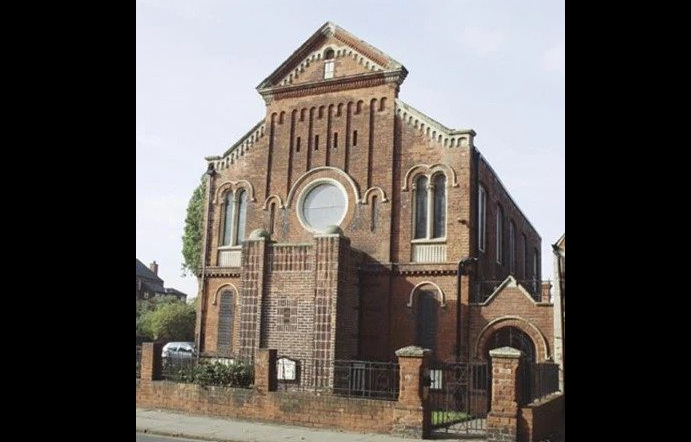
If you are looking for somewhere to spend Yom Kippur, you are unlikely to be thinking of Grimsby. So why does a small but determined band from across the United Kingdom and beyond head there year after year for the holiest day in the Jewish calendar? It is a small miracle of Jewish survival.
If you are not British, you may have never heard of the place. Even if you come from Britain, you will probably know little about it. Grimsby is a port at the far north-eastern edge of the largely rural county of Lincolnshire. It is at least 3 hours’ drive from London and has a population of less than 90,000. Among them are fewer than 20 Jews living in the town and its surrounding villages. Some have local roots and others are incomers. They are all that is left of the small, but at one time thriving Grimsby Hebrew Congregation.
There are records of Jews living in Grimsby in medieval times. They may well have been connected to the important city of Lincoln, some 50 miles away, which has the dubious distinction of being the site of one of the first blood libels. In 1255, the death of a boy named Hugh was falsely attributed to Jews, resulting in severe persecution and violence against the Jewish community. King Henry III ordered the arrest of 100 Lincoln Jews and had 18 of them sent to the Tower of London, where they were put to death. The agitation against Jews fostered by the Church continued, leading to the expulsion of all Jews from England in 1290. It took almost 300 years before Jews were officially permitted to live in England again.
The more recent settlement of Jews in Grimsby also began with persecution, this time in Russia and other parts of Eastern Europe. Nearly 3 million Jews fled, mainly to America, but also to other parts of Europe, of whom a quarter of a million settled in Britain. Ships from Poland carried the refugees to ports up and down Britain’s east coast, of which Grimsby was the third largest centre of Jewish immigration after London and Hull, with over 100,000 landing there in the peak years between 1881 and 1914. Most took the train to Liverpool and from there the boat to America, but some stayed. Tales abound of Jews being swindled at their ports of embarkation, told they were buying passage to New York, and disembarking at Grimsby thinking they were in America.
Most arrived destitute, but they had neither forgotten nor forsaken their faith. After many battles and appeals to the chief rabbi and Anglo-Jewry, the foundation stone of Grimsby synagogue was laid in 1885. Finally, in 1888 the building was consecrated by Chief Rabbi Dr Adler. It is named after Sir Moses Montefiore, who gifted a sefer Torah. Built of red brick in Victorian style, the shul is handsome and distinctive. Its features include original wood panelling and pews, slender interior pillars and splendid historic stained-glass windows. In keeping with the style of the time, the ladies’ section (or “gallery” as we called it in England) is upstairs.
The Jews of Grimsby gradually settled into their new country. They built and maintained a functional community for the next 100 years and more. “The story of the Grimsby Jewish Community” by Daphne and Leon Gerlis relates its history beautifully. There you will read of the community’s august personalities, including some who became mayors, Chief Magistrates and Aldermen of the town, alongside some less reputable characters and some who feuded within the community.
The feature of the latter years is decline, as younger Jews went to larger communities or emigrated, including making aliyah. No doubt outmarriage contributed. The story is repeated with almost every community along the length of England’s east coast. The synagogues of South Shields, North Shields, Stockton, Hartlepool, Whitley Bay and Middlesborough have all closed. Even Sunderland, which had two shuls and a yeshiva, no longer has a community. Hull’s congregation, once much larger than Grimsby, is now very diminished.
But Grimsby is clinging on, although few Jews in England have heard of its shul. There are occasional services on Friday night and chagim, and the members look out for each other. Yom Kippur is the major event of the year, when the congregation consists largely of Jews who grew up in Grimsby returning to re-live their childhood experiences, respect the memory of their parents, make up the minyan and refresh the distinctive tradition of Grimsby shul. It encompasses people of all backgrounds, including John Bowers, a highly distinguished King’s Counsel who has just stepped down as Principal of an Oxford college. His family ran the town’s old-fashioned ironmongers’ store and he quietly supports the community in many ways. Also present – not for the first time – will be two families specially travelling from Israel whose grandparents came from Grimsby.
I come merely by invitation, but I have had the privilege of leading the Yom Kippur service virtually every year for 50 years and this year will be the 51st. We will be heading there again in a few days’ time to sing the tunes unique to Grimsby (they are distinctive if not always melodious!) alongside traditional nusach and contemporary Israeli niggunim. The shul remains under the authority of Britain’s Chief Rabbi and the service is orthodox minhag Anglia. We may be a congregation of fewer than 20 men and 10 women, but together we create a tangible and special ruach in which everyone joins in and plays a part. We prefer it to larger shuls and embrace a Yom Kippur that feels more spiritual, special and meaningful than what we are used to at home. Should anyone reading this feel that they would like to be part of the experience, they will be made very welcome.
It feels wrong to allow a historic shul to lie cold and empty on Yom Kippur. We are determined to bring it to life afresh on the holiest day in the Jewish year. Happily, our efforts have not gone unnoticed. Heritage Lincolnshire, a charity with responsibility for conserving the county’s rich history, appreciates that Grimsby shul is the only remaining synagogue in Lincolnshire and South Humberside and has initiated a programme of grant aid to restore the building, which includes a historic mikveh, to structural integrity. There are ambitious plans for the synagogue to house a museum of immigration.
All this is for the future. Younger people must step forward as my generation ages. For now, we feel a quiet satisfaction that a 140-year-old shul on England’s remote east coast still lives and breathes Jewish life and tradition, especially on Yom Kippur.
We Jews are a stubborn lot, clinging to our faith and tradition wherever we may be found. Even in Grimsby.