And yet: A cry of conscience in a time of war
As a rabbi, as a proud Zionist, as the father of a soldier who has served in combat during this war, and as someone whose love for Israel is unambivalent and unshakable—I write today with a heart mixed with clarity, complexity, and anguish.
Since October 7, we have witnessed horror after horror. I have no illusions about who started this war or who bears ultimate responsibility for the devastation in Gaza: Hamas. A terrorist regime that brought catastrophe upon its own people in the service of its genocidal ideology. I say this without hesitation.
And yet.
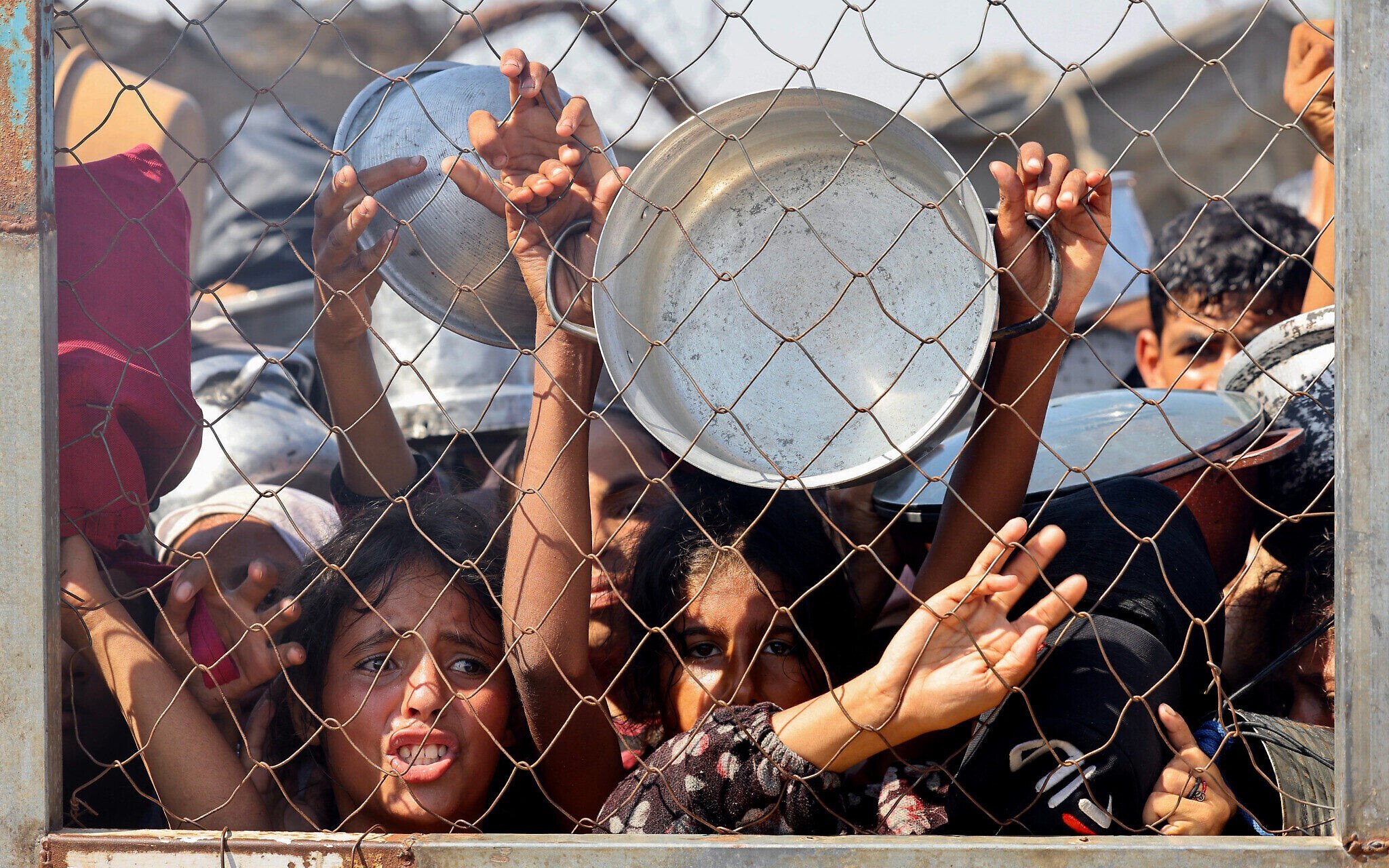
In these past weeks, reports of severe hunger in Gaza have pierced even the hardened consciousness of the Israeli public, thanks to trusted voices like Ohad Hemo (the Palestinian affairs reporter for Channel 12 News) and David Horovitz (the founding editor of The Times of Israel), who have spoken not in propaganda but in pained honesty: There is hunger in Gaza, and we need to say it loud and clear.
Part of the anguish of this moment is that we don’t know exactly how widespread it is. We don’t know how close it is to famine. As journalist Matti Friedman writes, “In a blizzard of ideological fiction, how are sane citizens in Israel, or anywhere else, supposed to know what’s true and to do the right thing?”
We’ve lived through enough manufactured headlines, false accusations, and blood libels dressed up as journalism to be cautious, even cynical. The Al-Ahli hospital “massacre” that wasn’t. The image of a malnourished Gazan child that turned out to be a child with cerebral palsy. The Gaza Health Ministry, which answers to Hamas. UN agencies like UNRWA, entangled with terrorists.
Friedman says it plainly: Nearly no information coming out of Gaza can be trusted at face value—not from Hamas, not from most international press, not even always from our own government. And yet that does not mean there is no truth. Nor does it absolve us from seeking it.
That’s why when David Horovitz writes that the hunger is real, we pay attention. When Ohad Hemo reports that he has spoken with people who haven’t eaten in days, we listen. When senior Israeli officers admit that food distribution is failing in places, that some hospitals are down to one meal a day, that chaos is obstructing even the best of intentions, we take notice. These are not enemies of Israel. These are Israelis. These are people like us—committed to the safety of our people and the moral vision of our tradition.
So what are we to do with all this?
For me, the answer begins not in politics, but in the words of our sacred tradition.
On Tisha B’Av, we read from Eicha—Lamentations. We read of a city brought low, where infants faint from hunger at every street corner. We hear the raw cry:
“Arise, cry out in the night … Pour out your heart like water … For the life of your infants, who faint for hunger at every street corner.” (Eicha 2:19)
We do not read these verses only to remember what was. We read them because we are a people of memory—and memory brings moral obligation. To feel the pain of others does not require us to abdicate responsibility or to fall prey to lies. But it does require us to remain human.
And we have.
John Spencer, a senior military strategist, reminds us that no military in history has delivered as much aid to an enemy population, while the war rages, as the IDF has to Gaza. This is not normal. This is unprecedented. This is something no one has done before.
And still—it is not enough. Not enough to stop pockets of real hunger. Not enough to prevent the suffering of civilians trapped between Hamas’s barbarity and a war they did not start. Not enough to live up to our own standard—not the standard of the UN, or the hypocritical chorus of Israel’s detractors, but our Jewish standard, born of memory and morality.
Throughout our history, there has always been a sense of Jewish particularism—a belief in the distinctiveness of the Jewish people and the need to preserve our religious and ethnic identity. But alongside that is a parallel truth: that we live in a larger world and that the moral obligations we cherish apply not only to Jews but to all human beings. The Talmud teaches that we are commanded to sustain the non-Jewish poor just as we sustain the Jewish poor, to visit the sick who are not Jewish, and to bury the non-Jewish dead—mipnei darkhei shalom—for the sake of peace, dignity, and shared humanity (Babylonian Talmud, Gittin 61a). These people, too, are our neighbors. These lives, too, matter.
Judaism teaches us to live with complexity, to fight for our people, and still to ask: Is there someone, somewhere, whose blood we might save?
While we don’t rely on the world to understand us, we must never forget who we are.
We must continue to deliver aid to civilians in Gaza, not because the world demands it, but because our tradition does. We must partner with those who are helping—like the United Arab Emirates, American-led groups like the World Food Program, and the Gaza Humanitarian Foundation. We must support their work, rethink what’s not working, and act urgently before the situation deteriorates further.
To act in this way is not a sign of weakness—it is a sign of moral courage. It is strength of the highest kind: the strength to remain human even in war, to shield our people and still open our hands to the suffering of others. It is the strength to hold fast to our identity and to our ethics. It is the strength to live—and to lead—as Jews.
May Tisha B’Av be a meaningful and reflective fast for us all.