
Anti-Zionism Has No Legitimacy in Reform Judaism
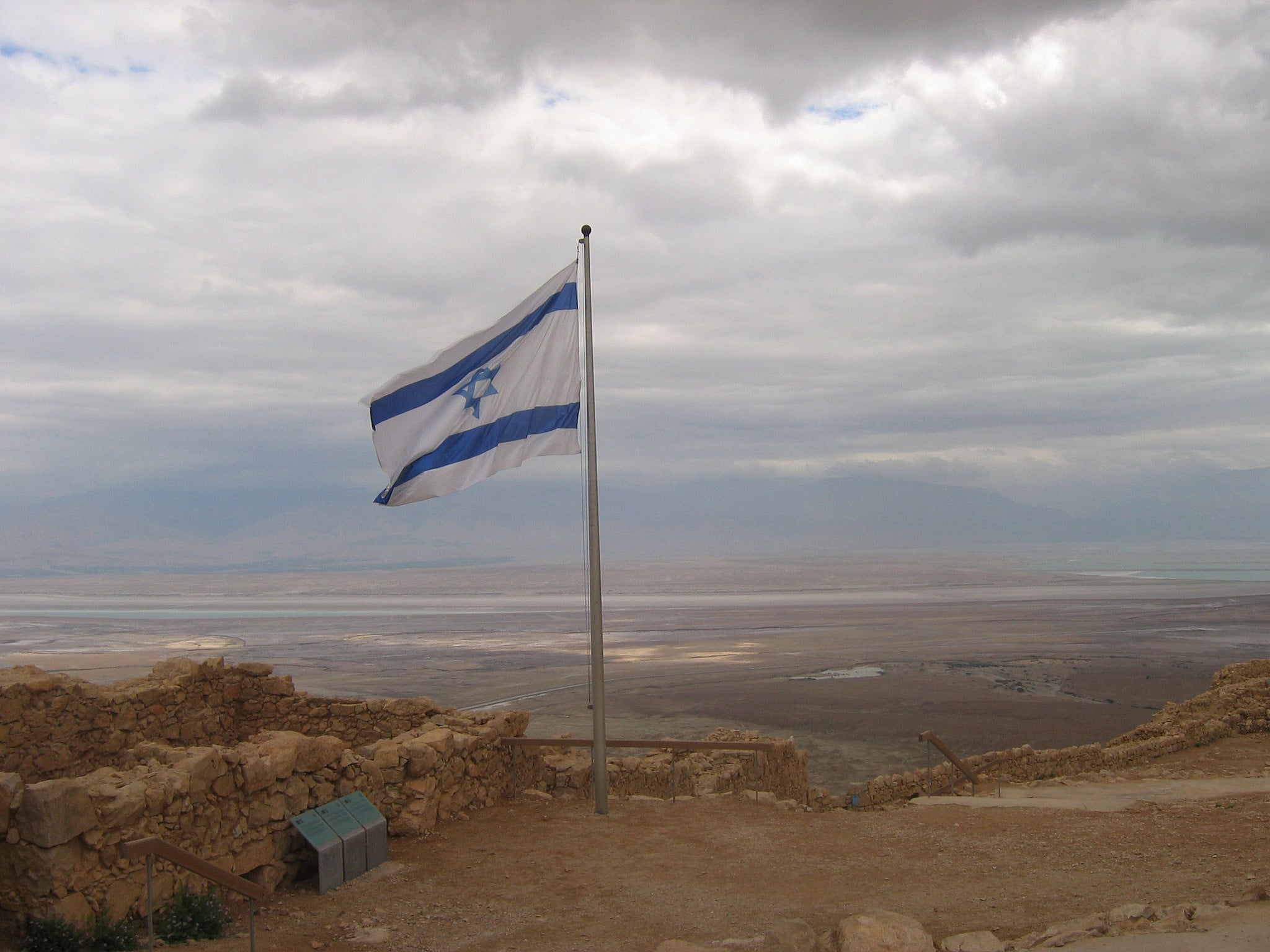
In recent times, even within the Reform Jewish movement, a fortunately very small fringe of non-Zionist or openly anti-Zionist Jews has become more vocal. This is a phenomenon that must be named clearly, without ambiguity and without fear: it is a position incompatible not only with the historical, spiritual, and collective trajectory of contemporary Judaism, but also with belonging to Reform Judaism.
Reform Judaism today is a Zionist movement because Judaism, in its living and responsible form, cannot be separated from its bond with the Jewish people, with its history, with its land, and with the State of Israel. Zionism is not a marginal political current and it is not a decorative element of Jewish identity. It is the modern expression of the right of the Jewish people to live as a historical, free, sovereign, and responsible subject in its own land.
For this reason, Zionism is an integral part of Jewish identity. It is also an integral part of the identity of the Reform movement, as its positive and necessary evolution. If Reform Judaism has truly managed to move beyond a purely diasporic, religious, and privatized vision of Jewish identity, and has affirmed that Judaism is not only individual faith, liturgy, ethics, or memory, but also belonging to a people, then a people has a language, a history, a destiny, a collective responsibility, and a bond with a land.
Zionism represents precisely this passage: the return of the Jews to history as protagonists, not merely as a minority tolerated by others. It was, and remains, one of the greatest progressive transformations of modern Judaism, because it restored to Jews agency, political dignity, self-determination, and responsibility. After centuries in which Jewish life depended on the goodwill, instability, or hostility of non-Jewish majorities, Zionism affirmed a revolutionary principle: Jews must not exist only if someone else grants them space.
For this reason, it is difficult to understand why an anti-Zionist would want to feel “at home” in the Reform Jewish movement. A community can welcome questions, doubts, criticism, even discomfort. But it cannot turn into a legitimate internal position something that denies a pillar of contemporary Jewish identity. Those who criticize an Israeli government remain fully within the Jewish debate. Those who challenge an Israeli policy do not place themselves outside the Jewish field.
But anti-Zionism is something else. Anti-Zionism questions the very right of the Jewish people to have a state. It does not ask what kind of Israel should exist; it asks whether Israel should exist. And this is not a secondary difference. It is the difference between criticism and negation.
Diasporism, too, when transformed into an ideological alternative to Zionism, belongs to an old world. For almost two thousand years, the Diaspora was a fundamental dimension of Jewish life. Diasporic Jewish communities produced culture, thought, spirituality, pluralism, and creativity, and they preserved Judaism as an identity across the centuries. But one thing is to value the Diaspora; another is to turn it into a political project against Israel. Anti-Zionist diasporism is ghetto-nostalgia disguised as radicalism. It seeks to return Judaism to a condition of permanent minority status, as though dependence on others were morally superior to sovereignty.
And it is not.
Jewish sovereignty is not an accident of history. It is a historical, moral, and political realization of Jewish civilization. If one has an authentic commitment to the Jewish people, one cannot ignore Israel. Today, Israel is the main Jewish reality in the world: demographically, culturally, linguistically, politically, and spiritually.
How can one claim to be committed to the Jewish people and have no bond with the greatest collective expression of contemporary Jewish life? How can one speak of a Jewish future while removing Israel from it? How can one invoke justice, continuity, memory, and responsibility, and then deny precisely the space in which these words today assume their most concrete form?
Jewish anti-Zionism often likes to present itself as the critical conscience of Judaism. But it is a flight from responsibility. It is easier to judge Israel from afar than to assume the real weight of sovereignty. It is easier to idealize the Diaspora than to confront the complexity of a Jewish state surrounded by threats, marked by conflicts, and required every day to balance security, democracy, identity, pluralism, and justice. But Judaism has never been a tradition of escape from reality. It is a tradition that demands entry into history, not observation of it from a morally comfortable position.
For this reason, clarity is needed. Within the Reform movement there is room for pluralism, for dissent, for criticism, and for discussion. But there is no room for the negation of Jewish national existence as though it were a position equivalent to all others. A community exists because the values at its foundation, its non-negotiable values, are shared and stronger than what divides it.
If Reform Judaism affirms Zionism as part of Jewish identity, then anti-Zionism constitutes a position that cannot be reconciled with its basic values. Just as “Messianic Judaism” constitutes an irreparable theological rupture with Judaism, anti-Zionism constitutes a historical and national rupture.
Those who want to live within the Reform movement must seriously confront this reality, and cannot expect anti-Zionism to be normalized as a mere internal sensibility within the movement. Clear questions require clear answers. And if the question is: “Should Reform Judaism accept anti-Zionist voices within it as legitimate?”, the answer should be: in no movement is there room for every opinion, and this must be stated clearly.
It is true: Zionism is not the entirety of Judaism. But without Zionism, today, every discourse on Jewish identity remains mutilated. The bond with Israel is not optional for those who take the destiny of the Jewish people seriously.