
CEO of Time to Stand Up for Israel
Arab Sovereignty Accepted, Jewish Sovereignty Denied
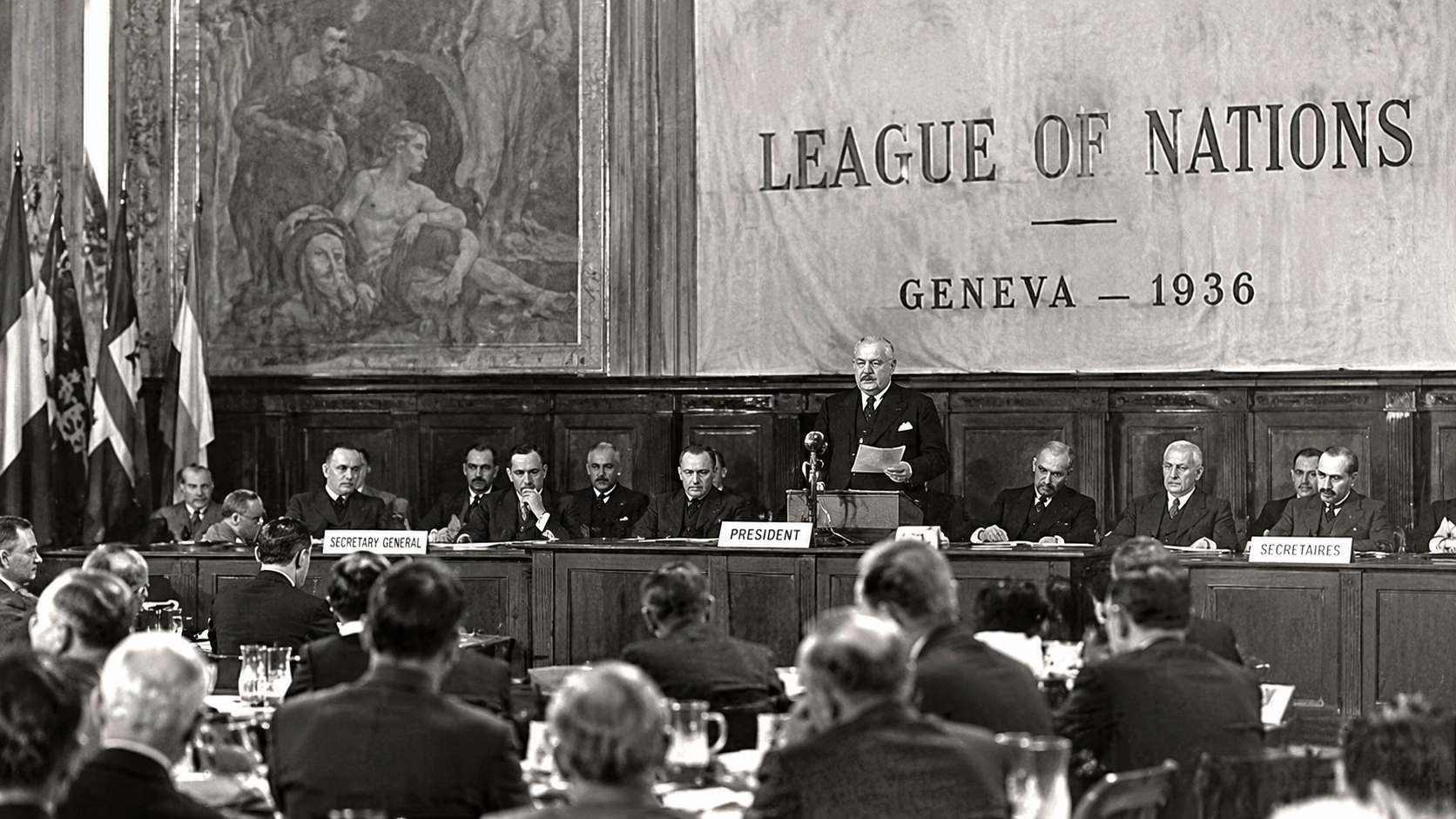
Photo Credits: Sabine Sterk ( AI )
The inconvenient truth about borders, independence, colonialism, and the selective outrage surrounding the Jewish State.
Why is the establishment of Syria, Lebanon, Jordan, and other Middle Eastern states generally accepted as legitimate, while Israel’s independence is still portrayed as a historical crime? Why are borders shaped by European powers acceptable when they create Arab states, yet suddenly evidence of colonial injustice when the result is a sovereign Jewish state?
Following the collapse of the Ottoman Empire after the First World War, Britain and France administered much of the region under League of Nations mandates. The modern Middle East emerged through imperial agreements, nationalist movements, international decisions, and independence struggles. None of these countries appeared through some miraculous expression of ancient, uncontested sovereignty.
Syria came under French administration and achieved independence in 1946. Lebanon emerged from the same mandate system, proclaiming independence in 1943, with French troops departing in 1946. Transjordan was established under British administration in 1921, with Abdullah installed as ruler, and became independent in 1946. Its territory had previously formed part of the Ottoman domains and the wider area addressed by the British Mandate for Palestine.
Their modern borders were profoundly influenced by European imperial decisions. Yet their sovereignty is not dismissed because foreign powers helped shape their creation.
And then there is Israel.
Unlike its modern Arab neighbours, the Jewish people possessed an ancient national connection to their land, supported by archaeology, historical records, language, religious literature, and an uninterrupted Jewish presence spanning centuries. Jerusalem was the political and spiritual centre of Jewish civilisation long before Islam existed. Jewish national aspirations did not begin with the Holocaust. Modern Zionism emerged in the nineteenth century, building upon a connection that survived exile and persecution.
In 1922, the League of Nations approved the Mandate for Palestine, recognising the Jewish people’s historical connection and supporting a Jewish national home. In 1947, United Nations Resolution 181 recommended partition into Jewish and Arab states. Jewish leaders accepted the proposal despite reservations. Arab leaders rejected it.
On May 14, 1948, David Ben Gurion declared Israel’s independence. The following day, neighbouring Arab armies entered the war against the newly established state.
Israel was not simply handed sovereignty by the United Nations. Its leadership declared independence, its institutions were functioning, and its people defended their state at enormous human cost. International recognition followed, and Israel joined the United Nations in 1949.
Yet Israel is repeatedly singled out as the artificial state, the colonial project, the country whose existence supposedly requires endless justification.
Nobody seriously demands Jordan’s disappearance because its monarchy emerged under British influence. Nobody calls for Lebanon’s dissolution because France shaped its borders. Syria’s sovereignty is not automatically invalidated because its modern statehood developed under European administration.
Their governments and policies can be criticised without denying their fundamental right to exist.
Israel, however, faces movements that openly challenge Jewish sovereignty itself.
The history of 1948 also includes the displacement and suffering of hundreds of thousands of Palestinian Arabs. That history deserves acknowledgement, as does the displacement of hundreds of thousands of Jews from Arab and Muslim countries during the years surrounding Israel’s establishment. Historical suffering cannot become an eternal veto against Jewish independence.
And this is where my patience ends.
I refuse to accept a narrative in which Arab independence represents liberation while Jewish independence represents colonialism. I refuse to accept that European involvement supposedly invalidates Israel while leaving every neighbouring state’s legitimacy untouched.
I certainly refuse to apologise for a nation whose people rebuilt their national home, established democratic institutions, defended their independence, and transformed a vulnerable country into a centre of innovation, science, medicine, and culture.
The Middle East was reshaped by empires, wars, mandates, and nationalist movements. Israel emerged through that same historical transformation, with an ancient national connection that cannot simply be erased.
The question is not why Israel became sovereign. The question is why Jewish sovereignty remains unacceptable to people who have no difficulty recognising the sovereignty of its neighbours.
Perhaps it is time to stop putting Israel’s existence on trial and start examining the prejudice behind that demand.
 Support our work: Donate and/or subscribe at:
https://timetostandupforisrael.com/
Related Topics