
Archeology from the Future
Jerusalem, December 2387, Kislev 6148
The Times of Israel was founded in 2012. To celebrate our Trecentiseptuagintaquinquennial anniversary, we are excited to share the final clarification of a mystery that has baffled the Urban Archeology profession for 355 years.
Way back in 2062, a team of urban archeologists from Lo Mushlam College began digging in Jerusalem in what had once been the Katamon neighborhood. City digging was hard, because all the old buildings had been replaced by 55-story towers. The only dirt to dig in was found in small gardens between the skyscrapers, where diggers had to fight off angry Va’adei Bayit gardeners.

What they dug out looked like a piece of tile:

None of the members of their department could decipher the significance of the cross-hatching. Two other artifacts found nearby indicated that there had been a synagogue nearby.
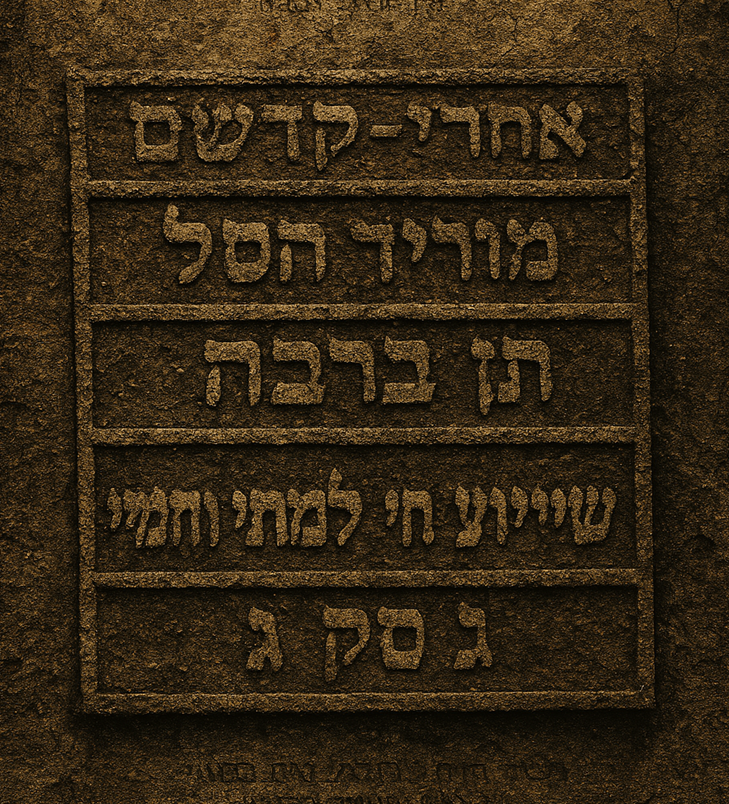
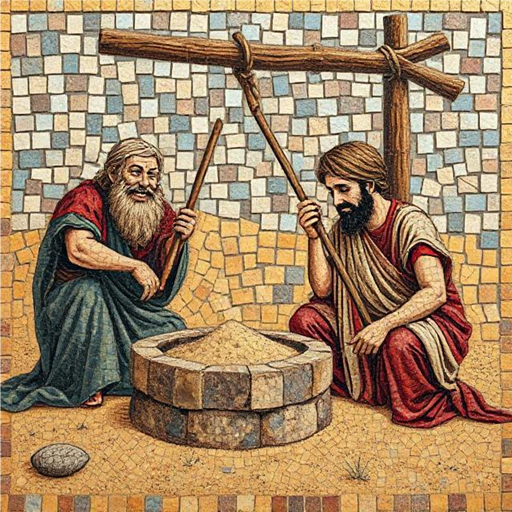
Some archeologists thought that the cross-hatched fragment was part of a floor mosaic, like the famous one found in the ancient synagogue at Durasel-Apotropos, which showed Isaac weeping over one his father Abraham’s wells that had been filled up with dirt, as he sat across from the laughing Philistine who had filled it up. (See Bereshit 26:18 )
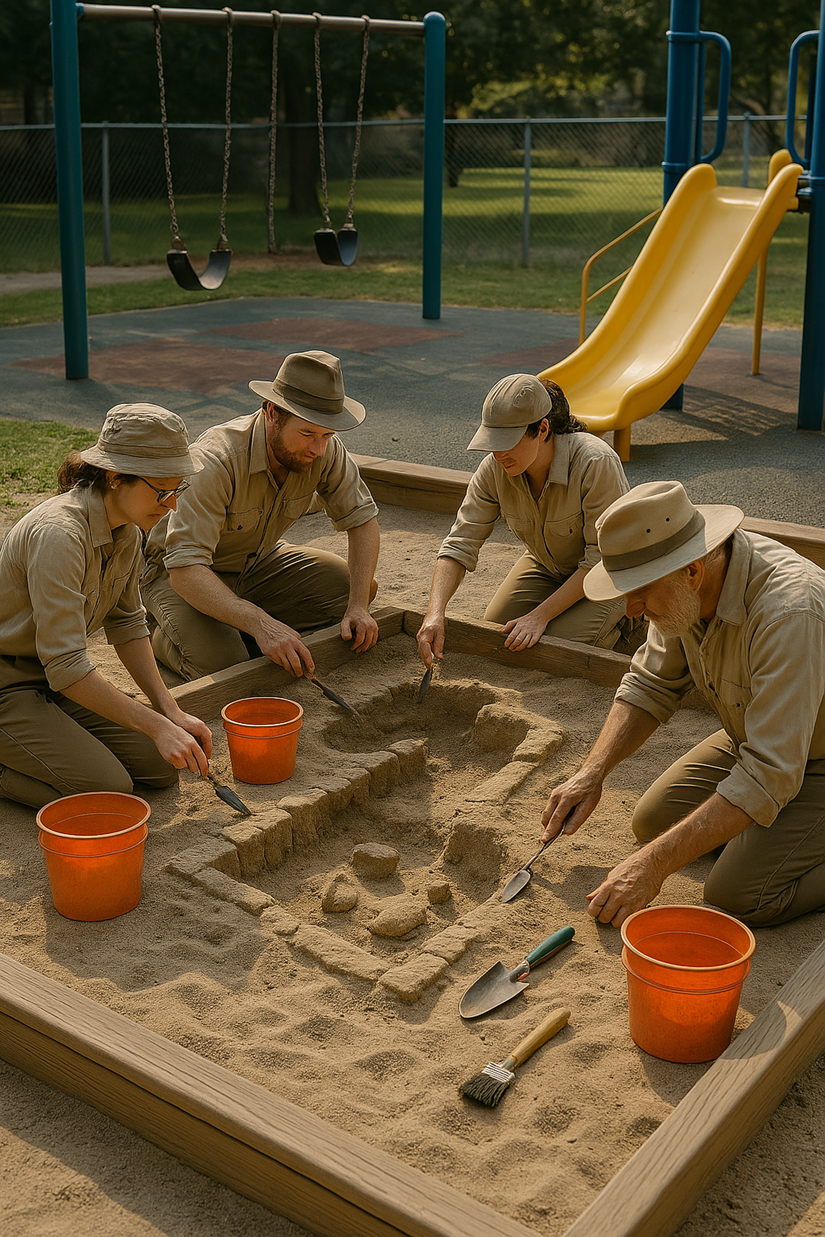
Matters stood still for another 175 years. By that time Jerusalem skyscrapers were zoned for no fewer than 85 stories, and archeologic digging could only be done in sandboxes in children’s playgrounds. By that time Palopavimentologists–experts in ancient flooring–had identified the makeup of the fragments as being “linoleum,” an archaic, oil-based flooring, once available in many attractive primary colors.
When the new fragments were assembled around the original, they showed, to everyone’s amazement, that the cross-hatches were laces on archaic footwear known as snikkerim. Philologists judged this to be a loan word from a non-Semitic language.
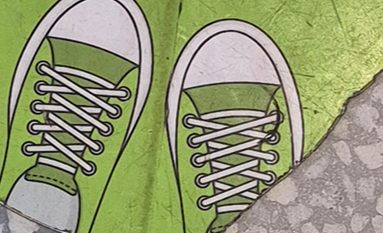
As the now-expanded floor pattern made the rounds of interested urban archeologists, Mavis McDavis, Adjunct Lecturer in This and That at the University of Northern South Dakota at Froople, had an audacious insight while at her day job managing a laundromat in downtown Froople, She suggested that these snikkerim were related to those found on a puzzling prehistoric wall painting found in Belgium, in a cave at Moulin Bruges.

However, none of her colleagues could think of any Jewish cultic significance for a five-legged ox wearing green snikkerim. Mavis was therefore turned down for a full-time position at the University. She stayed on at the laundromat, which had health benefits.
Fast forward 178 years to the true hero of this tale, Haim-Yehuda Kabtzan, a wandering peripatetic itinerant.
Kabtzan was walking through the ancient Jerusalem shuk and passed one of its timeless attractions: Malchut HaHalvah, Halvah Kingdom, the world-famous emporium featuring 127 flavors of this classic sesame paste confection.
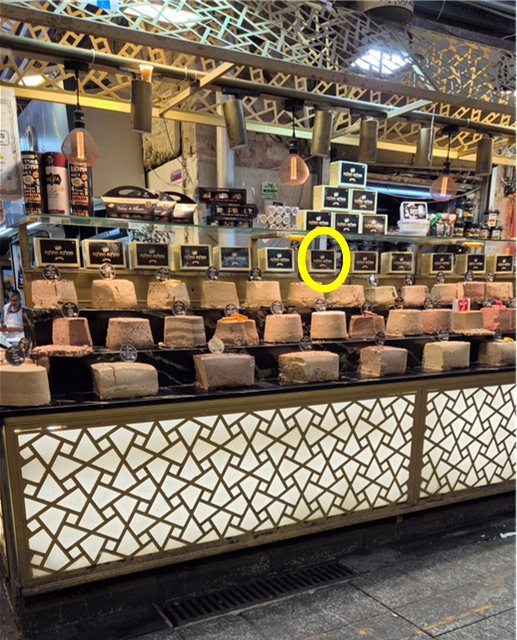
Kabtzan’s eagle eyes noted that one of the signs looked odd. This was the sign for smoked-salmon halvah, a flavor which no one had ever purchased. He took a closer look.

Knowing a bargain when he saw one, Kabtzan took out a banknote worth 100 NNRNTTIRMNIS (NEWNEWREALLYNEWTHISTIMEIREALLYMEANNEW Israeli Shekels). This bought him a trove of credit card receipts, unclaimed Chinese laundry tickets—and a pile of small linoleum fragments.
Kabtzan grasped at once the value of what he got. He sold the lot to the Department of Pavimentology at Ariel University for ten times what he paid. He celebrated by making a party for his friends featuring 11 flavors of halvah. (Buy 10, get one free.)
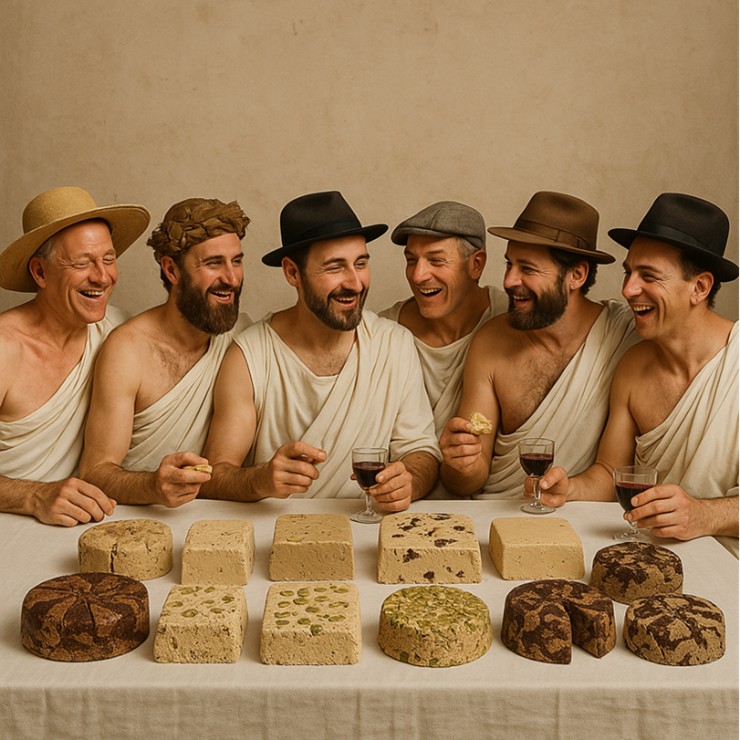
When the paleopavimentologists assembled all the fragments, the results were astonishing.
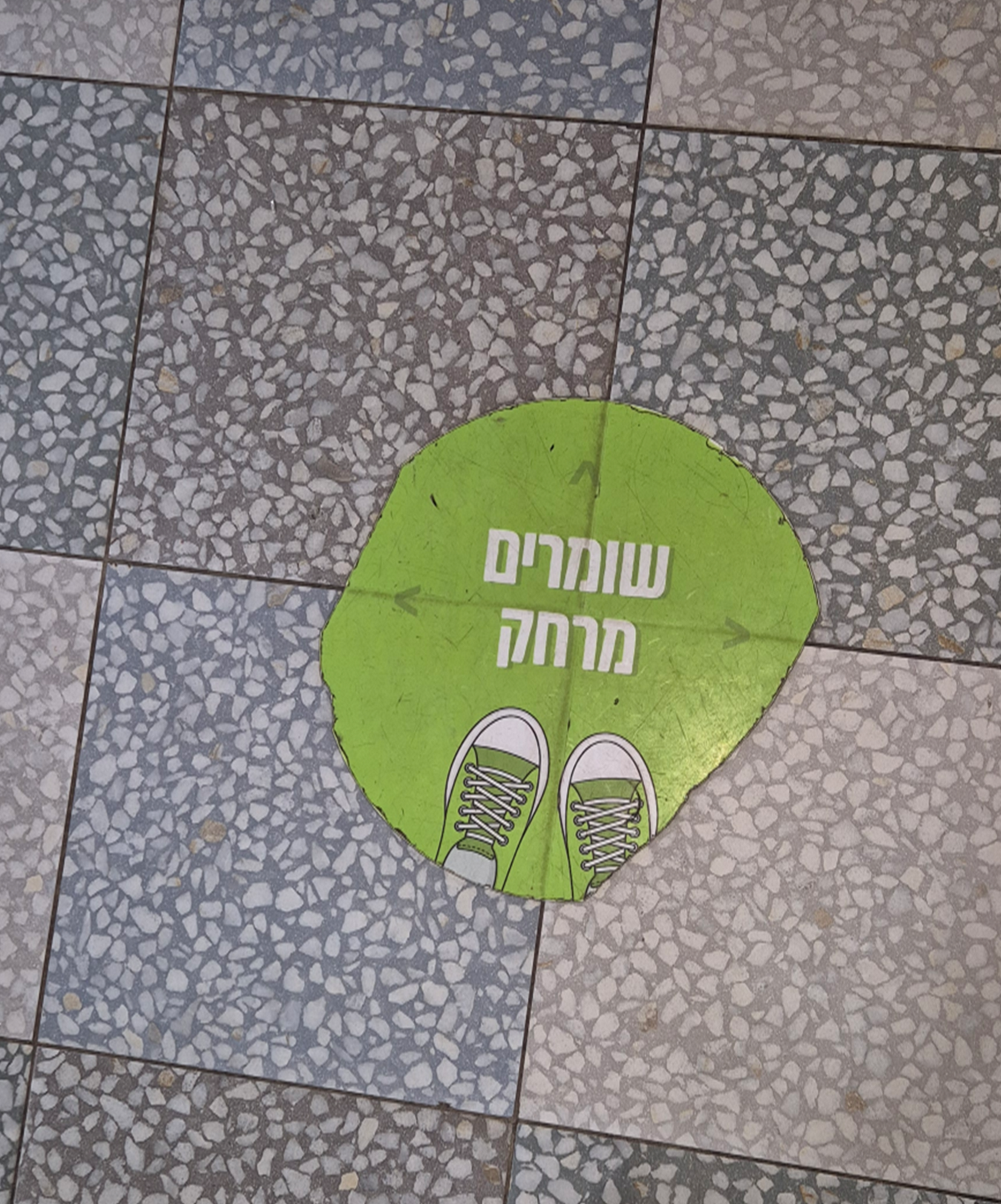
The only problem was deciphering the two proto-Hebrew words: Shomrim Merchak. Ariel’s in-house philologist, Phil, suggested the simple meaning: “There are guards far away.” No one thought this made any sense.
He turned to his secretary, Syl, who had mistakenly joined Philology because she collected stamps. Syl suggested rearranging the letters of the first word, a technique she learned by following daf yomi. The words now read, Shimurim Merchak, or, “The preservation cannery is far away.” Syl noted that in ancient times, prompt food preservation was essential.
Syl checked with Golda, an archivist at the Israel Museum who oversaw the Archive of Unintelligible Paintings. Golda was thrilled because no one had consulted her in decades, and she was nearing retirement.
Golda held a press conference to show one of the archived paintings, which had been stored for a century on the 122nd floor of the Archive building in Givat Ram. Only one journalist showed up, from Yisrael Etmol.
“This has finally explained one our inscrutable paintings,” said Golda. “Since vegetables could spoil, couriers had to put on their green snikkerim and run like hell.”

Her work done, Golda went home and retired.
***
We at Times of Israel planned a parade in honor of our anniversary but canceled it because pretty much no one goes out onto the street anymore.
Now that Jerusalem is zoned for structures no fewer than 200 stories, each building is self-contained: shuls, schools, banks, restaurants, stationery stores, supermarkets. And of course 38% of units are reserved for people who live overseas and just stop by for the occasional holiday. So there is almost no foot traffic, and few vehicles other than sleek, empty light rail cars.
The only thing many buildings lack is miklatim, safe rooms. A government report on this matter is due in 75 years.
We therefore asked the Va’ad in each 200-story building to display an anniversary message for TOI on their building, so people in other buildings could see it from their windows.