
Are October 7 Patterns Emerging Again?
Observation soldiers report daily suspicious activity near the Gaza border, raising questions over whether Israel is seeing familiar warning signs — while facing mounting pressure on multiple fronts.
In less than two months, Israel will once again mark one of the darkest days in its modern history: October 7, 2023, the Saturday of Simchat Torah, a Jewish holiday traditionally associated with celebration and joy. What began as a day of celebration was transformed into a massacre, leaving thousands dead, wounded, or taken hostage.
Disturbing testimonies from female observation soldiers serving in two different sectors along the Gaza border are raising concerns about difficulties in neutralizing threats developing around the so-called “Yellow Line.” According to their accounts, soldiers identify suspicious individuals on a daily basis, including indivi comments published by Channel 12:
“I feel like it’s October 6. The only difference is that we’re identifying this at the Yellow Line and not at the fence. The Gazans aren’t stupid; ultimately, they’re constantly testing us and seeing whether or not we respond. It’s really just like before October 7.”
A former observer from Nahal Oz reportedly estimated that she had identified approximately 50 Nukhba terrorists operating near the Gaza-Israel border, describing what she perceived as continued hostile activity in the area. If verified, such activity could raise concerns because similar patterns of observation, probing, and testing of Israeli responses were reported in the period preceding October 7.
The concern extends beyond Gaza
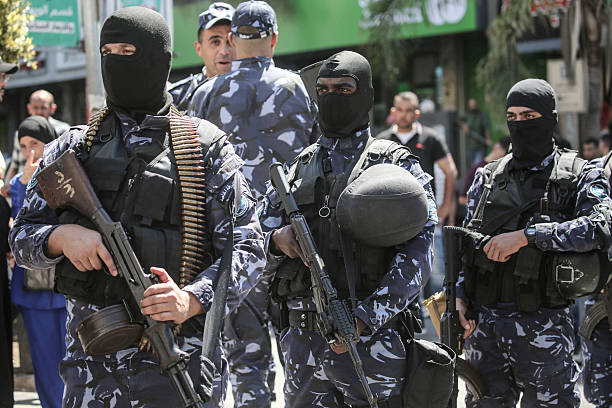
In Judea and Samaria, tensions have also continued to rise, with reports of deliberate arson, shooting attacks and other forms of violence. At the same time, footage circulating on Palestinian social media has shown members of Palestinian Police forces (PPF) participating in military-style exercises involving weapons, armored vehicles, and intensive training.
Israel faces pressure on multiple fronts
Israel is also confronting threats on multiple fronts, including Hezbollah in Lebanon and Iran and its Islamic Revolutionary Guard Corps (IRGC). The accumulation of these challenges creates a complex security environment in which threats may develop simultaneously along several fronts.
The central question, therefore, is not simply whether Israel can identify individual threats. It is whether the country can recognize a broader pattern before it develops into something far more dangerous.
The warnings coming from soldiers along the Gaza border are particularly difficult to ignore because they evoke memories of October 6 — a day when warning signs existed, but the scale of the coming attack was not fully understood.
The lesson of October 7 was not only that threats can emerge unexpectedly. It was that seemingly isolated signs can become devastating when they are not connected, understood, and acted upon in time.