Are the People Around Us Better Because We Were Here?
Growing up in the Soviet Union, I never needed a rabbi to tell me I was Jewish. The state took care of that. It was stamped in your passport, whispered by neighbors, broadcast in the way certain doors closed when you approached them. Jewish identity wasn’t a choice or a lifestyle or a set of High Holiday habits. It was a fact of your existence — reinforced daily by a system that wanted you to feel it as a weight.
That weight was not abstract. It followed you into school, where certain paths closed before you reached them. It followed you into the workplace, where certain promotions went to others without explanation. It followed you into conversations that fell silent when you entered the room. The Soviet state did not need to say the word “Jew” out loud. It had subtler instruments. And those instruments worked precisely because they were constant — a pressure so steady you eventually stopped noticing it, the way you stop noticing the cold when you’ve been outside long enough.
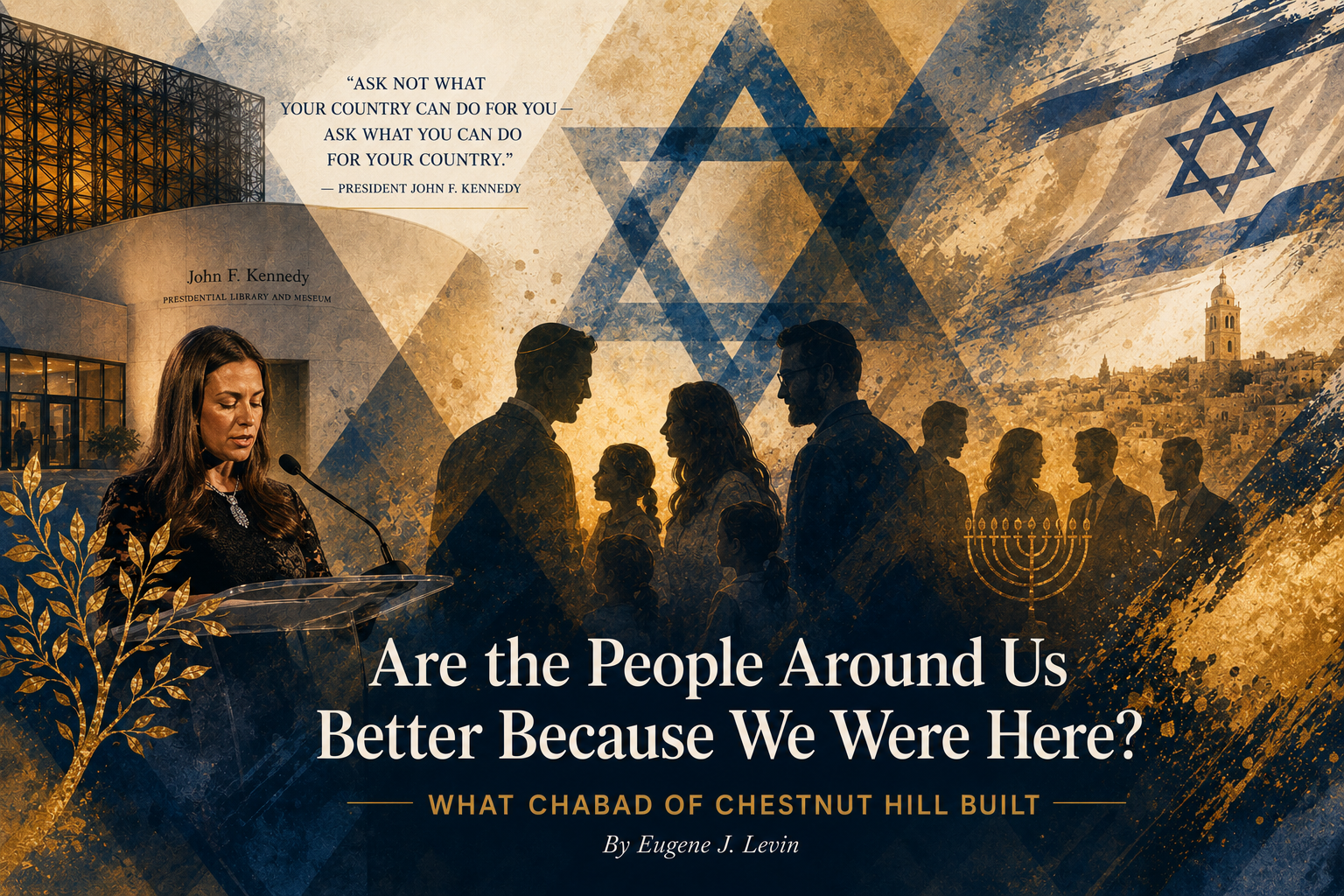
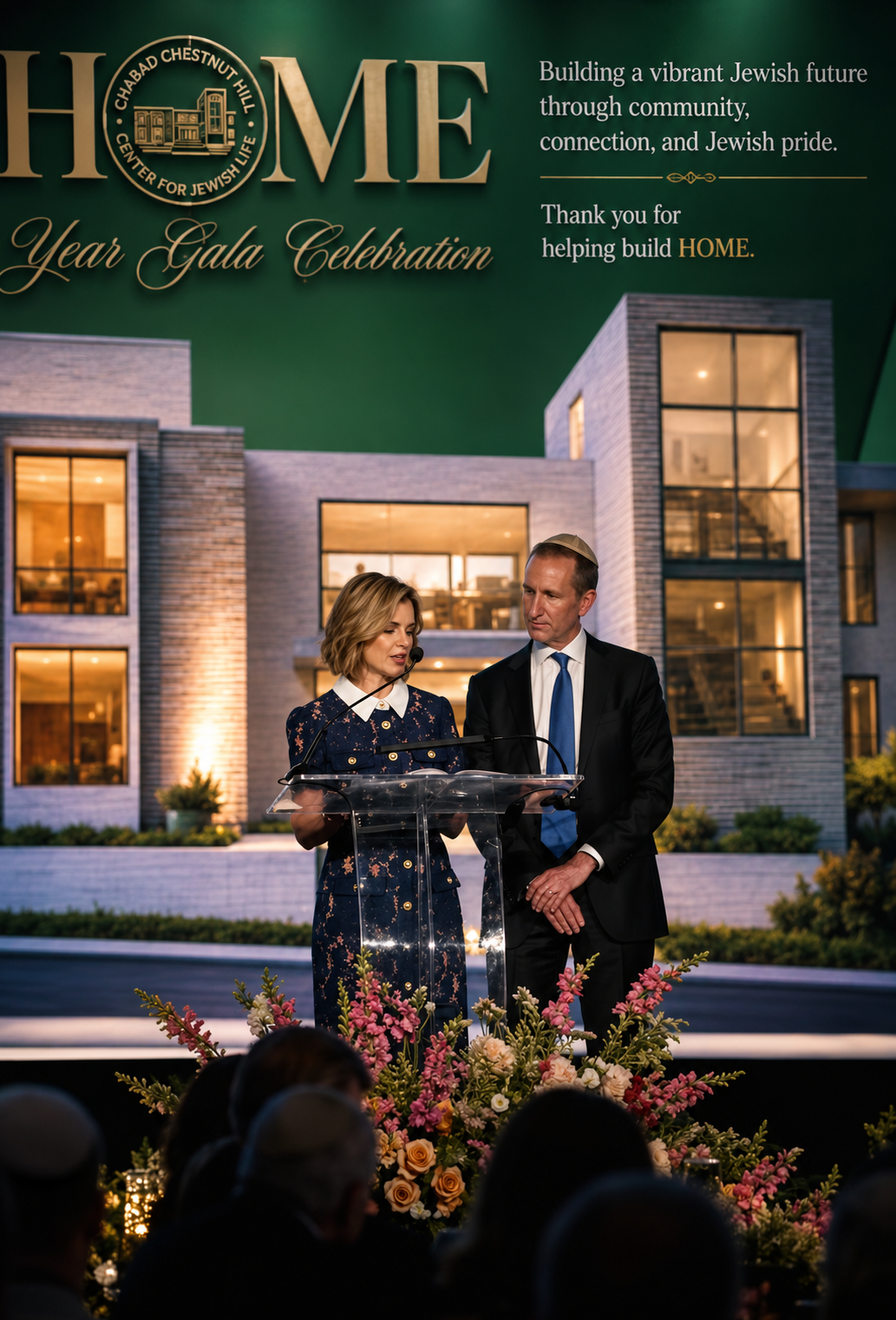
I thought about that weight recently, standing in the John F. Kennedy Presidential Library and Museum at a gala celebrating 25 years of Chabad of Chestnut Hill. I thought about how strange and magnificent it was — Jews gathered openly, proudly, without apology, in one of America’s most storied civic spaces, at a moment when Jewish identity across universities, media, and even parts of the Jewish world itself is once again under pressure.
The venue was not incidental. Kennedy’s words still inhabit that building: “Ask not what your country can do for you — ask what you can do for your country.” Rabbi Mendy Uminer and his wife Grunie have spent 25 years answering that question — not for America alone, but for the Jewish people.
What they built at Chabad of Chestnut Hill was not inherited. There was no founding endowment, no established congregation handed down from a predecessor. There was a couple, a mission, and the stubborn belief that Jewish belonging could be offered without conditions. Over a quarter century they built something rare: a community that holds space for the fully observant and the barely affiliated alike — for Jews who light Shabbat candles every week and for Jews who walk through the door for the first time in years and aren’t sure why they came. That open door is not a small theological gesture. In a moment when Jewish communal life is contracting in many places — when institutions are merging, congregations shrinking, young Jews drifting — building a community that grows by refusing to turn anyone away is an act of genuine moral imagination.
That is not a small thing. Especially now.
Jewish identity in America is fracturing along lines that would have bewildered earlier generations. Antisemitism has returned openly to university campuses, cultural institutions, and mainstream discourse. We are watching coordinated efforts to sever Jews from their historical connection to Israel — as though Jewish identity can be neatly extracted from Jewish history and memory. And in the face of this, a portion of American Jewry has gone quiet, calculating the social and professional cost of speaking plainly about who they are and what they believe.
This silence takes different forms. Sometimes it is the person who removes the mezuzah from their dormitory door. Sometimes it is the professional who declines to mention Israel in a room where the topic has become radioactive. Sometimes it is the parent who tells their child not to wear the Star of David on the subway. Each individual decision is understandable. Accumulated across a community, they amount to something that should alarm us.
From where I stand — shaped by a country that reminded me I was Jewish whether I wanted to think about it or not — that silence is genuinely difficult to understand.
The evening honored people for whom silence was never an option.
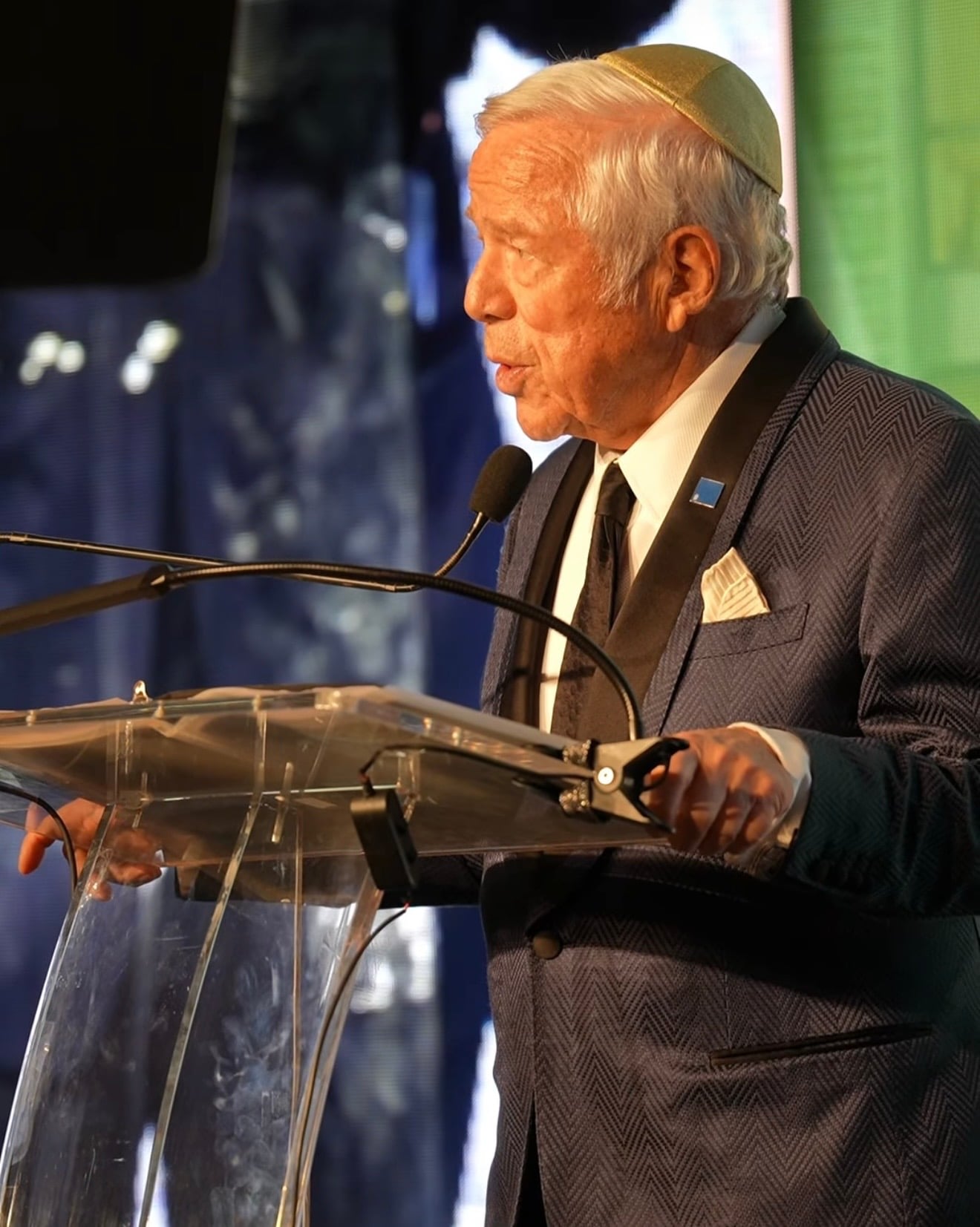
Robert Kraft, who has spent decades as one of American Jewry’s most visible and unapologetic advocates, arrived at that evening with a record that speaks before he does and framed the night with a question simple enough to fit in a single sentence and weighty enough to carry a lifetime:
“Are the people I’ve touched today richer and better for having known me?”
That question is, in the deepest sense, a Jewish question. Judaism has never been a private transaction between an individual and God. It is a covenant that runs sideways through community and forward through generations. You are answerable not only for your own soul but for what you leave behind in other people. The Hebrew word for it is achrayut/אחריות — responsibility — and it is not a suggestion. It is the architecture of Jewish communal life, the reason Jewish communities have outlasted every empire that tried to destroy them.
Inessa and Viktor Rifkin understand this. They arrived from the Soviet Union in 1988 with the specific knowledge that freedom is not permanent and identity is not guaranteed. What they built — Russian School of Mathematics, now one of the most respected math education institutions in the country, recently expanded into Israel — is only the visible surface. Beneath it runs something harder to quantify: camps, educational programs, deep support for the Israeli city of Sderot, a sustained investment in the proposition that Jewish resilience is worth funding.
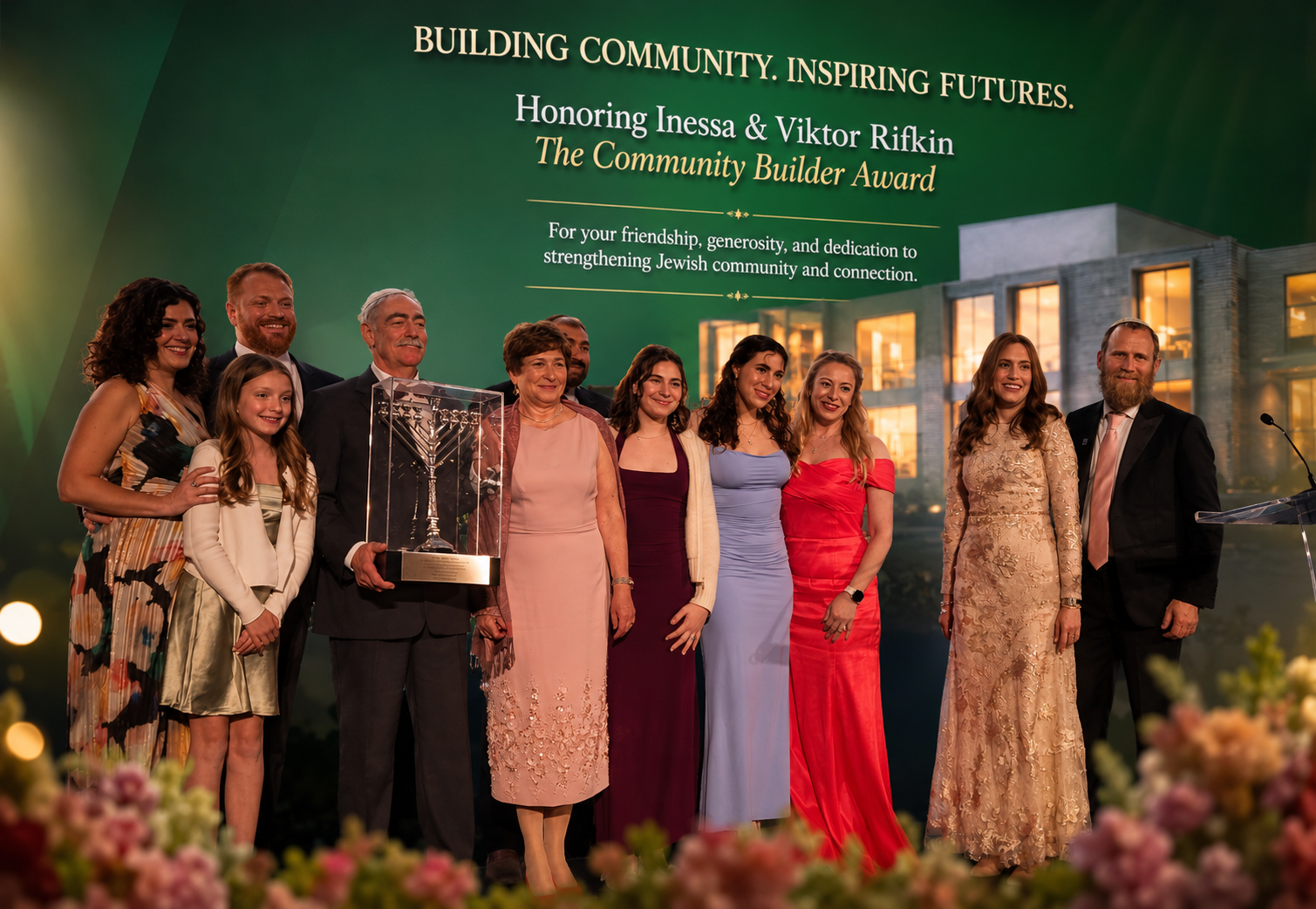
When Inessa was asked that evening how you know whether someone is truly Jewish, she didn’t reach for theology or sociology. She said:
“Ask them if their grandchildren are Jewish.”
Four words. The entire argument for continuity, compressed.
Jewish identity is not measured by the intensity of feeling at any single moment — not by the tears at a Yom HaShoah ceremony or the surge of solidarity after October 7th. It is measured by transmission. By whether what was handed to you gets handed forward. The Rifkins know this not as an abstraction but as a lived conviction, forged in a country that tried to make Jewish memory expire.
David and Tracey Frenkel embody the same principle through different means. David Frenkel, co-founder of Founder Collective and a veteran of the Midas List of top venture capital investors, has operated at the highest levels of American business. But what defines the Frenkels within the Jewish community is not the achievement itself — it is the choice of what to do with it. Their philanthropy, including the establishment of the Tracey and David Frenkel Chair in Urologic Oncology at Beth Israel Deaconess Medical Center, reflects an understanding that success in a free society is not merely personal. It carries an obligation.
I want to return to the silence, because I think it is the central challenge of this moment.
Many American Jews grew up in a country where Jewish identity was not just tolerated but celebrated — where synagogues stood openly on main streets, where Jewish institutions flourished, where the question “are you comfortable being Jewish here?” had an obvious answer. That freedom is genuinely extraordinary. I do not say what follows to diminish it.
But freedom, over time, can produce a particular kind of forgetting. When your identity has never been a source of danger, it becomes easier to treat it as optional. When you have never had it threatened, you may not notice when it needs defending. Some of the most intense assimilation pressure in American Jewish life comes not from hostile outsiders but from the internal logic of a society that offers Jews the unprecedented option of disappearing into it.
Soviet Jews, by contrast, were never offered that option. Jewishness was assigned to us externally, permanently, and often painfully. We could not set it down. And so, paradoxically, many of us arrived in America with a more durable sense of Jewish identity than some whose families had lived freely here for generations — not because we were more devout, but because we had never been permitted to forget.
This is not a reproach. It is an observation about how identity works under pressure versus how it works in comfort.
What distinguished the room at the Kennedy Library that evening was not wealth or prestige — though both were present. It was confidence. Unguarded, unqualified Jewish confidence. No one calibrated their support for Israel to the sensitivities of the room. No one softened their Jewish pride into something more socially palatable. The atmosphere was one that Chabad, to its lasting credit, has always managed to create: Jewish identity as something to inhabit fully, not manage carefully.
That spirit is increasingly countercultural. And increasingly necessary.
The Jewish people did not survive several thousand years of history by being cautious about who they were. They survived because generation after generation, under conditions far worse than today’s campus controversies or social media pile-ons, chose to remain connected — to each other, to memory, to the obligation of transmission. That choice was never easy. It is not easy now. But it is still a choice, and it is still ours to make.
Robert Kraft’s question deserves to outlast the evening that produced it. Every Jewish community, every Jewish institution, every Jewish family ought to sit with it seriously:
Are the people around us stronger, prouder, more connected, and more Jewish because we were here?
That question will not be answered by policy papers or demographic studies. It will be answered — or not — by what happens at dinner tables, in classrooms, in the accumulated weight of small choices made across generations.
The gathering at Chabad of Chestnut Hill was a reminder that the answer, at its best, is yes. That Jews who invest in one another, refuse fragmentation, and stand visibly as themselves are doing something that matters — not only for their own communities, but for the longer story of a people that has always survived by choosing not to disappear.
The question now is who else will choose the same.