Executive Director, Shomer Collective
Are we ready “when the time comes?”
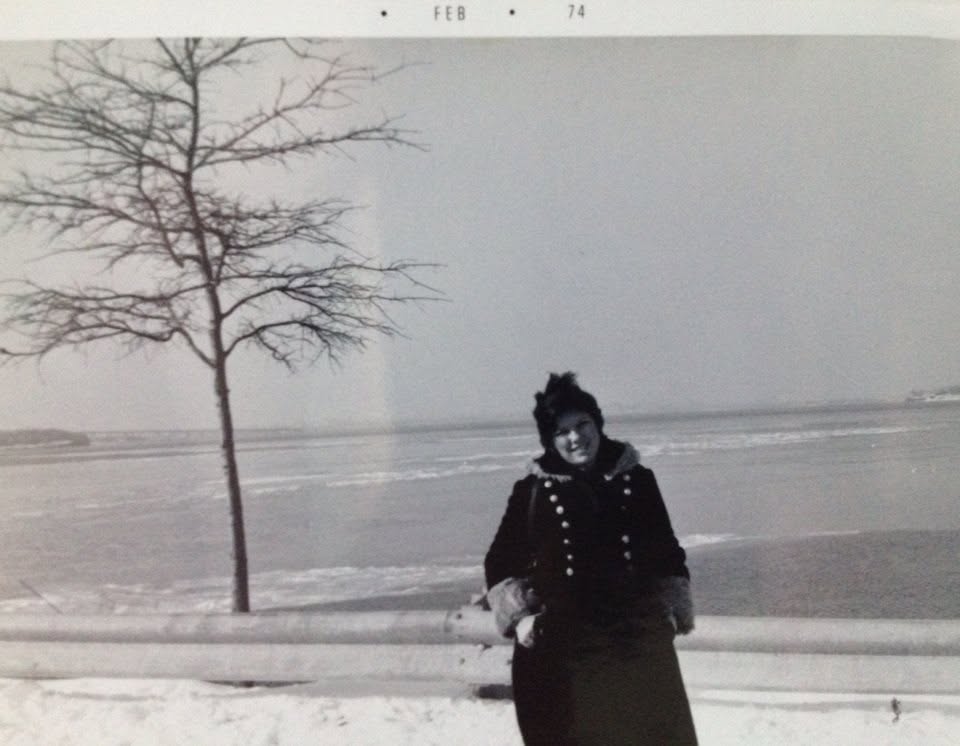
Kohler, 1974
My mom died in April. Her name was Nan. She was 75 years old, and her love for a good game of “Jewish Geography” could make you think she hadn’t spent her whole life in New York.
She’d been living with metastatic cancer for several months when it became clear that her body could no longer tolerate treatment. In the days before she died, I found myself saying something to my father that surprised even me.
“When the time comes,” I told him, “I’ve already called the funeral home and the cemetery. You don’t need to worry about those things.”
I noticed the phrase as soon as it left my mouth. When the time comes. Not “when mom dies.” Not “after her death.” A soft landing for a hard truth, which is the kind of euphemism I spend my professional life gently dismantling. I talk about death for a living. I say the word out loud, on purpose, because I know what it costs people when we don’t.
And there I was, in the hospital, reaching for the softest language I could find.
My mom died less than 48 hours after that conversation.
There were still decisions to make at the height of our grief: when the funeral would take place, who would officiate, and where we would sit shiva. But the funeral location and the cemetery were already settled. The grave in the family plot was already arranged. In the fog of those first hours, that felt like something solid to hold on to.
Then there was the money. Funeral costs are one of the great unspoken shocks of loss — most families encounter them for the first time at the moment they are least equipped to comparison shop. Thanks to my work, I was keenly aware of how much the financial piece would matter. In the weeks before my mother died, I had quietly called several local Jewish funeral homes. I knew there were price differences. I wanted to know what they were before I needed to know urgently. When the time came to confirm the arrangements, that research had already been done. One less thing.
When my sister texted me, “she’s gone,” I called the funeral director. And then I called my father and my sister, who had rushed to be at her side when the doctor called — and I said: Stay with her as long as you want. There’s nowhere you need to be. You can stay until the funeral home comes.
They didn’t know that was an option. Most people don’t. The hours immediately after death can be bureaucratic and rushed, as though the body needs to be somewhere else quickly. It doesn’t. Staying and sitting with someone you love after they have died can be one of the most profound acts of accompaniment available to us. Jewish tradition has always known the value of not leaving our dead alone between death and burial; we just don’t talk about it enough before we need it.
One evening during shiva, a visitor asked whether my family’s experience had been made any easier because of my work as a “death rabbi.” The question caught me off guard — not because it was intrusive, but because I genuinely hadn’t stopped to ask myself. I smiled and did the only thing I could think to do.
“Dad,” I said, turning to where he was sitting in the middle of my living room. “Do you think any of this was easier because of what I do?”
He looked at me. He nodded.
No words. Just that.
I’ve been sitting with that nod ever since.
Here is what I keep returning to: I reached for a euphemism. When the time comes. And it helped.
Not because soft language is better; I still believe that saying death out loud is one of the most useful things a person can do for themselves and the people they love. But because in that particular moment, with my father, the gentle phrase opened a door that a harder word might have closed. It gave us both just enough distance to have a necessary conversation we might otherwise have avoided entirely.
Getting past the resistance – the fear, the superstition, the sense that planning for death invites it – can make all the difference in what a family actually experiences when death arrives. The plans don’t have to be perfect. The conversations don’t have to be complete. They just have to happen.
Rabbi Eliezer taught in the Talmud: “Repent one day before your death.” His students pushed back: how could anyone know which day that would be? Exactly, he said. That’s the point. We prepare not because we know when, but because we don’t.
The time will come for all of us. The question isn’t whether we’re ready for death – most of us probably aren’t. The question is whether the people we love will have something solid to hold on to when it does.
That’s the work. It starts with a conversation – even an imperfect one, even one that reaches for softer words than it should.
If this resonated, Shomer Collective offers resources, programs, and community for Jews navigating death and dying – before the time comes. Find us at shomercollective.org.
Related Topics
Related Posts