


Arming the Luftwaffe: The German Aviation Industry during WWII
Daniel Uziel worked at the Yad Vashem Holocaust Memorial and for the Israeli Air Force and the German Foreign Office. He spent a year as a research fellow with the U.S. National Air and Space Museum. He published Arming the Luftwaffe: The German Aviation Industry during WWII in 2011.
German Exploitation of the French Aviation Industry, 1941–1944
Among the occupied countries that fell under German control after 1940, France stood out as the most important source of outsourced aviation production. Its aircraft industry was large, technically capable, and already well developed before the war, and once the Vichy government and the German authorities reached an understanding in the spring of 1941, French firms became deeply entangled in the German war effort — producing complete aircraft, components, and design work for firms such as Focke-Wulf, Messerschmitt, Junkers, and BMW. What follows traces how that relationship developed, the firms and personalities involved, and why, despite years of effort, the overall results fell far short of German expectations.
From Neglect to Full Cooperation
In the first months after the conquest of France, German aero-engine manufacturers showed only limited interest in exploiting the country’s industrial base directly, largely because of the practical difficulties of running branch operations so far from their established centers in Germany. Jumo, the engine division of Junkers, was an exception: within months of the armistice it opened an engine plant near Strasbourg in Alsace, installing its own machinery in an abandoned Ford car factory. The plant, staffed initially by local Alsatian workers considered politically reliable, eventually reached a monthly output of hundreds of overhauled and newly built engines, and later drew on Soviet prisoners of war as additional labor.
Airframe manufacturers took a different approach, generally preferring to contract existing French companies rather than establish their own branch plants. The decisive turn came with a speech Erhard Milch gave in Paris in January 1941, which signaled a shift from lukewarm German interest to a policy of full industrial cooperation — always, of course, on German terms. By spring 1941 Berlin and Vichy had agreed in principle to revive French aviation production, with France permitted to retain a modest share of output (around one-sixth) for its own use, and only for aircraft of French design. Orders soon began flowing from the German air ministry (RLM) and from individual German firms to French plants. By the end of June 1941, French aviation companies had received contracts worth some 765 million Reichsmarks, work that employed roughly 63,000 French workers. Some factories initially kept producing French-designed aircraft and engines using components already in stock, with the Germans requisitioning much of this output for secondary duties or handing it to allies such as Vichy France itself; French Gnôme et Rhône engines even found their way into German designs like the Me 323 transporter and the Hs 129 attack aircraft.
Contracting, Not Partnership
The pattern that emerged was one of controlled dependency rather than genuine partnership. German firms typically limited French subcontractors to manufacturing specific components, supplying only the blueprints and raw materials necessary for that single task — enough to get the job done, but not enough to allow the French companies to develop independent technical capacity. This same logic of controlled reliance was applied to French design talent, which several German firms found highly attractive. By November 1941, Focke-Wulf, Junkers, Messerschmitt, Fieseler, and Heinkel had all opened design offices staffed largely by French engineers and draftsmen inside occupied France. Demand was so strong that the German firms began competing with one another for scarce design talent, driving up wages and improving contract terms in the process — to the point that, as one Focke-Wulf representative in Paris noted at the time, unemployed aircraft designers had essentially disappeared from France.
In a smaller number of cases, French firms were licensed to build complete German aircraft. Messerschmitt was among the first to pursue this route, licensing SNCAN at Les Mureaux in early 1941 to manufacture the Me 108 liaison aircraft — a deal that let Messerschmitt end production of that older type at Regensburg and free up capacity there for the Me 109 fighter and the new Me 210 heavy fighter.
Focke-Wulf’s Deep Investment in France
No German firm exploited French industrial capacity for complete-aircraft production more thoroughly than Focke-Wulf. As early as late 1940 it had helped the French company Technique de Chatillon, near Paris, refurbish its facilities, and soon came to regard the firm as fully equivalent to a German subcontractor. Focke-Wulf transferred design work and production of several projects to Chatillon, including plans (never realized due to wartime priorities) to have the firm design its FW 206 and FW 300 airliners — aircraft conceived with an eye toward Focke-Wulf’s postwar commercial ambitions in partnership with Lufthansa. Because military production took precedence during the war itself, it suited Focke-Wulf to let its French partners handle these civilian-oriented projects, a pattern of long-term corporate planning that was in fact typical of much of the German armaments industry.
Focke-Wulf also planned to have another major French firm, Société Nationale de Constructions Aéronautiques du Sud-Ouest (SNCASO), manufacture these same civilian designs, and arranged for the reinstatement of a confiscated Paris factory for that purpose. When production chief Ernst Udet ordered work on the civilian aircraft halted in August 1941, he simultaneously approved a Focke-Wulf contract with Technique de Chatillon to produce parts for the new FW 190 fighter instead — work that satisfied the German customer well enough that Focke-Wulf’s chief executive, the designer Kurt Tank, recommended at the end of 1941 that the firm expand its contracting with French companies generally.
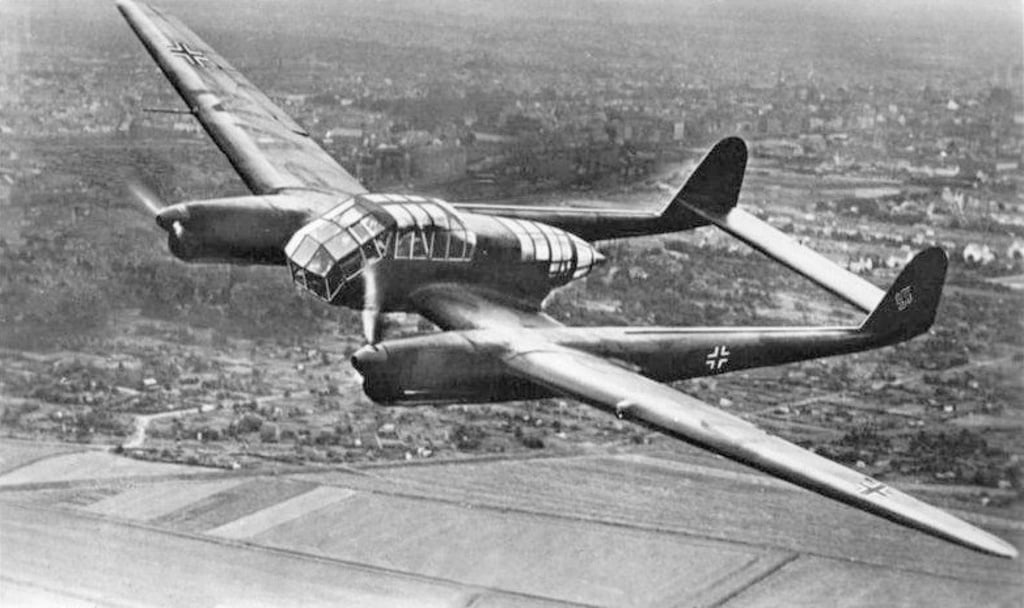
Focke-Wulf’s cooperation with SNCASO deepened in the military sphere as well. From February 1941 a German delegation was permanently stationed at SNCASO’s main factory in Bordeaux, and the firm soon received an order for several hundred FW 189 tactical reconnaissance aircraft (ultimately reduced to 334), completed by April 1943; SNCASO’s Bordeaux and Paris plants also produced components for the FW 200 maritime patrol aircraft. From 1943 the firm took on further FW 190 parts work and helped develop the Ta 152 high-altitude fighter. Progress was slow, however, and in May 1943 the USAAF heavily bombed the Bordeaux plant just as it was shifting toward FW 190 production. The Germans and French subsequently relocated much of the affected work to an underground facility at nearby St. Astier, a move that dragged on well into 1944. SNCASO’s Chatillon plant, meanwhile, experienced labor unrest typical of occupied France — a December 1943 strike over wages was resolved within half an hour by French management, but not before German security forces detained eighteen workers, an episode Focke-Wulf’s Paris office regarded as a disciplinary success even though overall output told a different story. Messerschmitt’s parallel experience with SNCAN was similarly marked by inefficiency, passive resistance, and sabotage that delayed even the relatively simple Me 108 program.
As Allied bombing damaged German factories in late 1943 and early 1944, complete-aircraft outsourcing to France actually increased. Focke-Wulf, for instance, handed final assembly of FW 190 fighters to the French firm Morane-Saulnier in early 1944, though the arrangement proved so slow that almost no aircraft were finished before liberation. Not every senior German official shared Focke-Wulf’s faith in French capacity: Milch and Karl Otto Saur, head of the Jägerstab production authority, were openly skeptical, and Milch predicted in June 1944 that French workers would simply stop working once the Allies invaded — a judgment that led to plans, never fully carried out because of Allied disruption of French transport, to evacuate machinery and workers back to Germany.
Ambitious Projects, Little to Show
Focke-Wulf’s long-running FW 300 project illustrates both the scale of its commitment to French capacity and how little it ultimately delivered. Begun in 1941 as an enlarged version of the FW 200 Condor, the design evolved by 1943 into an entirely new long-range aircraft, renamed the FW 300A, or Ta 400 in honor of Kurt Tank. Focke-Wulf hoped to fly a prototype in early 1945 and enter service the following year, and for a time still hoped to develop a parallel civilian airliner version with SNCASO. As the project grew more complex, roughly four-fifths of the design work was contracted to Technique de Chatillon, with SNCASO later becoming the lead contractor. In an unusual arrangement approved by the RLM in August 1943, French designers working on the project were actually relocated to Germany, first to Focke-Wulf’s design center at Bad Eilsen and later to offices at Lage — a scheme that required negotiating employment terms with both the French Ministry of Production and Germany’s labor-mobilization authority, and one that also raised German security concerns about foreign designers working so closely on sensitive projects.
Despite repeated setbacks and an internal recommendation in mid-1943 that the program be cancelled, the RLM allowed it to continue. By the time of the Normandy landings, not even a prototype existed, yet Focke-Wulf representatives still traveled to Paris on 10 June 1944 — four days after D-Day — to discuss fuel-tank design with SNCASO engineers. Not a single FW 300A/Ta 400 was ever completed. Equally telling of the disconnect between wartime reality and continued planning, Focke-Wulf submitted detailed plans as late as 20 June 1944 for SNCASO’s Chatillon plant to produce wings for the Ta 152, and Saur himself spoke in early July of shifting Ju 388 bomber production to France even as the military situation there collapsed.
Other, smaller research and development projects were farmed out to French firms from 1942 onward, including light trainers and larger aircraft such as the He 274 and Ju 488 heavy bombers, none of which was completed during the war (though the French did finish two He 274 prototypes afterward for pressurized-cabin research). Blohm & Voss similarly contracted the Breguet firm to build prototypes of a variable-incidence-wing civilian transport, the BV 144, supplying some tooling while Breguet built the rest; only one incomplete prototype ever resulted. BMW pursued a comparable strategy in the engine sector, hoping to free up capacity for its new BMW 801 by outsourcing its older BMW 132 engine to Gnôme et Rhône, the largest French engine maker — a plan management was never fully satisfied with — while separately taking over Alsatian firms to produce tooling and machinery.
A Disappointing Balance Sheet
Taken as a whole, the campaign to mobilize French industry for German aviation needs produced modest results relative to the effort invested. The most significant aircraft actually delivered were 334 FW 189 reconnaissance planes, 784 Fi 156 Storch light aircraft, 516 Ju 52 transports, 175 Si 204 liaison aircraft, and 107 Me 108 liaison planes. Output peaked in 1943 at 1,285 aircraft before collapsing to just 502 in 1944. The reasons were consistent across firms: Germany’s relatively slow and late mobilization of French capacity, chronic inefficiency in French factories, low worker motivation, and various forms of resistance, from strikes to outright sabotage.
Ironically, this troubled wartime collaboration left a lasting postwar legacy. Retreating Germans left behind not just production facilities but blueprints and technical know-how, allowing French manufacturers to keep building German-designed aircraft for years afterward — 64 French-built FW 190 fighters briefly served the postwar French air force, Ju 52 transports flew with the air force and with Air France (as the “Toucan”) into the 1950s, and Fi 156 light planes remained in use as well. Some unfinished German-sponsored projects were even completed after liberation, such as SIPA’s version of the Arado Ar 296 trainer and SNCAN’s Me 208, produced alongside its Me 108 predecessor. In this sense, the German exploitation of French aviation industry — for all its friction, delay, and ultimately modest wartime output — quietly reshaped the postwar rebuilding of French aircraft manufacturing.