


Buying, renovating and managing Israeli property from anywhere
August: Developers sold 6% more, resale fell 7%
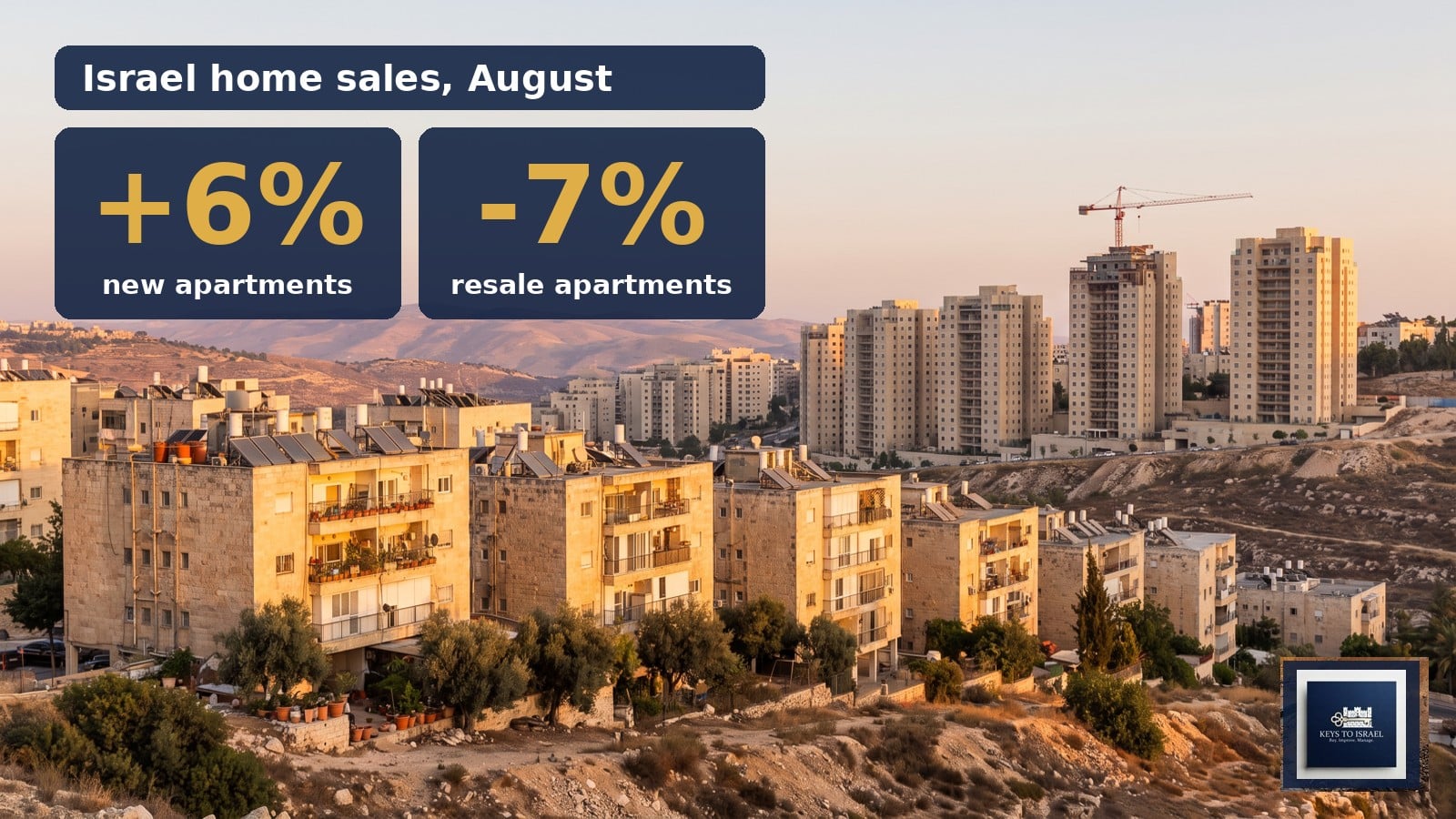
Illustrative image (AI-generated). Data: Finance Ministry Chief Economist, August 2026 vs August 2025.
Israel’s August housing numbers point in two directions at once.
According to the Finance Ministry’s chief economist, developers sold 3,362 new apartments in August, 6% more than in August 2025. Owners selling second-hand apartments closed 4,170 deals, 7% fewer (Ynet). Total sales came to 7,532, which the ministry described as one of the weakest Augusts since the early 2000s (Calcalist).
I have bought and renovated property in Israel for 20 years, and I live in Mazkeret Batya. When buyers abroad ask me whether to go new or second-hand, I used to answer with the usual trade-offs. This year the data adds something: both sides of the market are working hard to find buyers.
Look under the developer number
The 6% rise in new-home sales is not quite what it seems. It includes 1,290 apartments sold through government-subsidized programs, a category that grew 22% (Calcalist). Take those out and developers sold 2,072 apartments on the open market, about 2% fewer than a year earlier (Bizportal).
To keep sales moving, many developers are paying for them. In the five tax regions the ministry surveys, 30% of open-market deals for apartments delivered a year or more after signing came with a financing benefit in August. In May it was 20% (Ynet). These are the 20/80 payment plans, developer-subsidized loans and deferred payments that fill the ads.
The share differs a lot by area. In Hadera it was 73%. It was about 38% in the Center region, 24% in Netanya and about 21% in Tel Aviv (Calcalist, Bizportal).
Who stopped buying
The resale market leans on two groups: upgraders, who sell one home to buy a bigger one, and investors. Both pulled back. Upgraders bought 1,616 apartments in August, about 27% fewer than a year earlier. Investors bought 1,077 apartments, 2% fewer, and sold 1,171, so as a group they shrank their holdings (Ynet).
This fits the picture from my two earlier pieces here. At the end of August about 85,680 new apartments were still unsold (Bizportal). The Central Bureau of Statistics reported that prices for July and August were 1.8% lower than a year earlier, with the Central district down 2.7% (Times of Israel).
What this means if you are buying from abroad
When fewer people are bidding, a buyer who is ready to act has more room. That room looks different on each side of the market.
- On a resale apartment, ask how long it has been listed and what the seller needs. When offers are scarce, timing, a later handover or the furniture can matter to a seller as much as the price.
- On a new build, ask for two prices: one with the financing benefit and one without it. The gap is what the benefit really costs you, and you can only negotiate what you can see.
- Check what actually sold on that street at nadlan.gov.il, the government’s sales database, not the asking prices on listing sites.
- Match the deal to your move. A payment plan ties you to the developer’s delivery date, which can be two or three years away. A resale apartment can be yours within months, which matters if you are timing an aliyah or a school year.
None of this says where prices go next. What it does say is that the market has stopped being one-sided, and that the details of a deal now matter as much as the headline price.
If you are looking from New York, London, Paris or Toronto, the numbers are a good reason to slow down, ask more questions and compare both kinds of property before you commit.
–
David Bitton is the founder of Keys to Israel, which helps people abroad buy, renovate and manage property in Israel.
Related Topics
Related Posts
