

Azadeh Thiriez-Arjangi Interview | Alexandre Gilbert #340.2
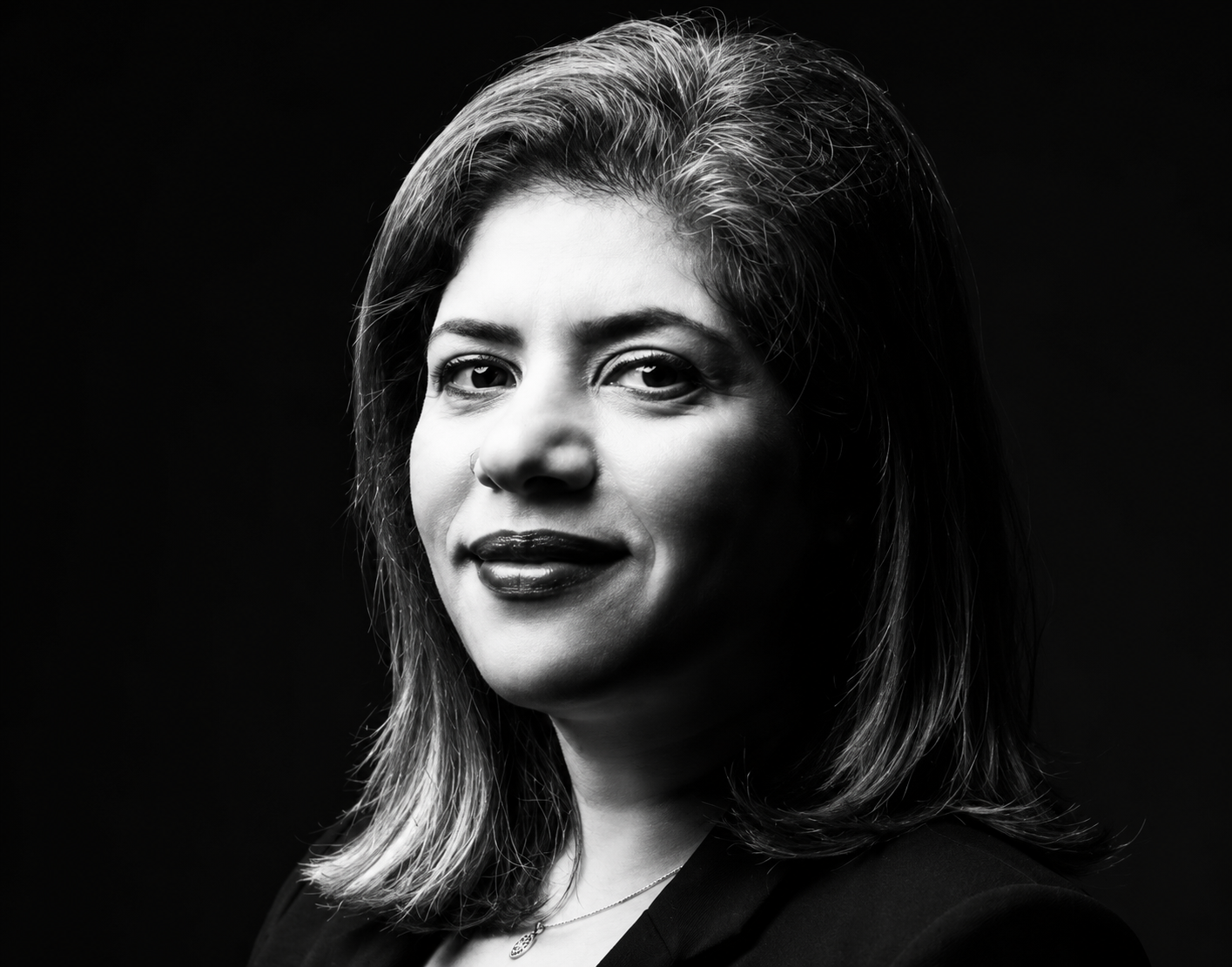
Azadeh Thiriez-Arjangi, doctor of Philosophy – researcher and teacher, elected official of the 16th arrondissement of Paris in charge of higher education.
Tragic wisdom, in Ricœur, reminds us precisely that human action often unfolds in situations of irreducible conflict, where the abstract application of a rule is no longer sufficient and where one must learn to exercise concrete judgment. It is this idea that I transpose into the Iranian context.
The lie of reform, carried out from within the regime itself, is for me one of the greatest tragedies experienced by Iranians. Indeed, the arrival of the era of reforms, with the ruse of installing—disguised as an election—President Khatami on the throne, was decisive for the continuity of the ideological rule of the Islamic Republic.
It was precisely at that moment that they began producing their own celebrities, developing increasingly sophisticated scenarios to influence public opinion beyond Iran’s borders, sending their journalists or artists abroad in the name of the opposition so that they could, when the time came, convey their message, even creating protest movements in the name of civic action or women’s conditions—but also accelerating their nuclear and ballistic programs, and above all, disorienting Iranians’ gaze by directing it toward a mirage.
But once this illusion dissipated, a great many Iranians understood that they themselves had the responsibility to act and to redirect their action, of course at their own risk and their own expense. And Ricœur’s tragic wisdom, in the Iranian context, is precisely this. It speaks to the painful passage from an abstract belief in the possibility of reform to a concrete judgment: that of putting an end to this regime and its ideology—a judgment formed at the end of a profoundly painful experience.
This experience destroyed the simplistic certainties regarding the possibility of reforming the regime. It also made clear that the price to pay to put an end to this system would be extremely high. The political judgment that Iranians have reached is that this regime cannot be reformed and that the only real way out remains regime change. This judgment has become increasingly visible since the killing of Mahsa Amini in 2022.
The Iranian tragedy also lies in the gap between this concrete judgment, formed by those who live daily under the Islamic Republic, and certain Western discourses that continue to reason from abstract categories, as if reform or moderation of the regime were still possible.
To finally answer your question: yes, religious totalitarianism carried Iranian secularization in spite of itself. By seeking to fully identify religion with power, it made religion bear the responsibility for the violence, the lies, and the failures of the state. It wanted to re-enchant the world under the authority of the sacred; it produced disenchantment toward official religion instead.
And when I speak here of a deadly ideology, I obviously do not mean Shiism as a religious tradition in all its diversity. I mean the state ideology developed by the Islamic Republic through a political and totalizing instrumentalization of Shiism.
How do Arendt and her thinking on political evil shed light on the violence specific to the regime, without reducing it to a mere bureaucratic “banality of evil”?
ATA: Arendt’s distinction between power and violence is very illuminating here. It allows us to avoid reducing political evil to mere “banality of evil.” In a totalitarian regime, violence does not result solely from the routine obedience of those who carry out orders. Violence also destroys common space, plurality, and individuals’ capacity to act together.
Ricœur puts this distinction into dialogue with the Weberian conception of the state, defined by the claim to a monopoly on legitimate violence. But very quickly, we understand that, in the state form taken by the Islamic Republic, the violence exercised by the regime cannot be considered legitimate, since it serves its totalitarian system.
In 2025, Corine Pelluchon published a book that I find quite remarkable: La démocratie sans emprise ou la puissance du féminin (Democracy Without a Grip, or the Power of the Feminine). In one of the last chapters of the book, she writes: “Power [puissance] is not force; it is its opposite. ‘Force is that which turns anyone subjected to it into a thing,’ either by killing them or by depriving them of any inner life. This is how war, little by little, erases the goals of war and even the idea of putting an end to war,” writes S. Weil in her commentary on the Iliad, whose greatness, in her view, consists in showing the subordination of the soul to force, without disdaining any of those who succumb to it, and bearing painful witness to what miraculously escapes its grip.
The distinction Pelluchon makes between power [puissance] and force can, in my view, be seen as an extension of the distinction between power [pouvoir] and violence—and, in this case, between power and illegitimate violence.
When I read these lines, what struck me, ultimately, was that the power of the Iranian will to put an end to the Islamic Republic’s regime might, in the end, prevail over its ideological, repressive, and totalitarian force.
Does Shayegan’s “time of distress” — a category borrowed from Heidegger via Hölderlin — designate, for you, a specifically Iranian temporality, or a more general figure of the crisis of the sacred?
ATA: Yes, both, but on two different levels. In Shayegan, “the time of distress” designates a more general figure of the crisis of the sacred, that of traditional civilizations confronted with modernity. But in the reading I propose, this structure takes on a specifically Iranian temporality.
I think the beginning of this time corresponds fully to the years preceding the advent of the 1979 revolution. All the reforms carried out by the Shah, and especially the White Revolution, perfectly illustrate the historical and spiritual situation of traditional Iranian society at the time, which saw its old symbolic world coming undone, one way or another—or rather, which was forced to leave that world without being ready and without having received the necessary preparation to assimilate the modernity that Mohammad Reza Shah Pahlavi was offering it.
“The time of distress,” in Heidegger, in his reading of Hölderlin, designates precisely that interval separating a “no longer” and a “not yet”… the “no longer” of the fled gods and the “not yet” of the god who is slow to come. That’s the whole point: the sacred collapses, and the advent of a new relationship to being remains uncertain.
Man is lost between a time that no longer resembles the past and a gray, anguishing horizon of the future. I’m very fond of the popular films of the era before the revolution, which we commonly call film farsi. They show this disorientation of being, this transformation of society in the fog, through beings often lost and adrift amid the upheavals of modernity.
In an article published in 2023 in the Revue des deux cités, I explain, in a way, this time of distress through the words of the Shah’s prime minister, Amir-Abbas Hoveida, in an editorial written for Le Monde diplomatique: “En route vers le progrès” (“On the Road to Progress”), published in December 1965. (Hoveida remains, for me, the embodiment of a true statesman—a man whose political and governing competence Iranian history has simply never acknowledged.) In this editorial, Hoveida discusses the philosophy of Iranian modernization and the Shah’s reforms. He insists in particular on the idea that underdevelopment is not merely a matter of material backwardness, but also constitutes, in his view, “a state of mind” and “an outdated conception of existence.” He thus asserts that modernization requires transforming not only social structures but also mentalities.
And the Islamic Revolution exploited the existing tensions by offering an alternative founded on a return to traditional and radically conservative Islamic values, in opposition to the modern project represented by Mohammad Reza Shah Pahlavi.
To return to our initial question: in Heidegger’s formula, modern man arrives “too late” for the old gods and “too early” for whatever might succeed them. Shayegan transposes this structure onto the historical experience of traditional civilizations confronted with modernity. He describes their situation as an in-between—between an order that is crumbling without being able to renew itself in its original form, and a new event that is being prepared without having yet clearly declared itself. I think this analysis can be explicitly applied to the Iranian case and to the demand for a resurrected Islamic world.
What interests me most in the expression “the time of distress” is the introduction of a certain tragic form, wedged between a past that is no more and a future for which we are not prepared. In the Iranian case, this in-between gave rise to a religious revolution whose succession of tragedies we have been experiencing for nearly half a century.
Ref: Thiriez-Arjangi, Azadeh, “La république islamique en Iran : les contours d’une idéologie religieuse,” in Revue des deux cités — Société, Droit, Politique et Religion, Presses Universitaires de Louvain, issue 12, 2023, pp. 271–293.
Does your articulation of Shayegan and Ricœur around distress and ideology presuppose a continuity between the two thinkers, or are you yourself building this bridge?
I would say it’s both: a real closeness between the two thinkers, but also a bridge that I myself construct. Shayegan was very interested in Ricœur, particularly in the hermeneutic circle as Ricœur took it up and reformulated it. References to Ricœur’s philosophy are very present in Shayegan’s work.
It should also be said that Henry Corbin’s thought stands between the two. Corbin profoundly shaped Shayegan’s philosophical formation and his way of approaching hermeneutics. Corbin, too, like Ricœur, belonged to an intellectual world strongly marked by Protestantism.
Once, Olivier Abel spoke to me briefly about the exchanges that took place between Corbin and Ricœur. I really must ask him more about this. In any case, the archives attest to the existence of exchanges between them, including a letter sent by Corbin to Ricœur in 1969.
Ricœur is known as a philosopher of dialogue. But Shayegan also builds a quite interesting dialogue with Ricœurian thought. I think this is a very fruitful aspect that we can discover in reading Shayegan.
But above all, I must add that the connection between the “time of distress” and Ricœur’s theory of ideology does not come from Shayegan. This connection is one that I construct myself. I draw on a real hermeneutic closeness between the two thinkers, but I bring them into dialogue starting from the Iranian situation and the problems it poses for me.