

Azadeh Thiriez-Arjangi Interview | Alexandre Gilbert #340.3
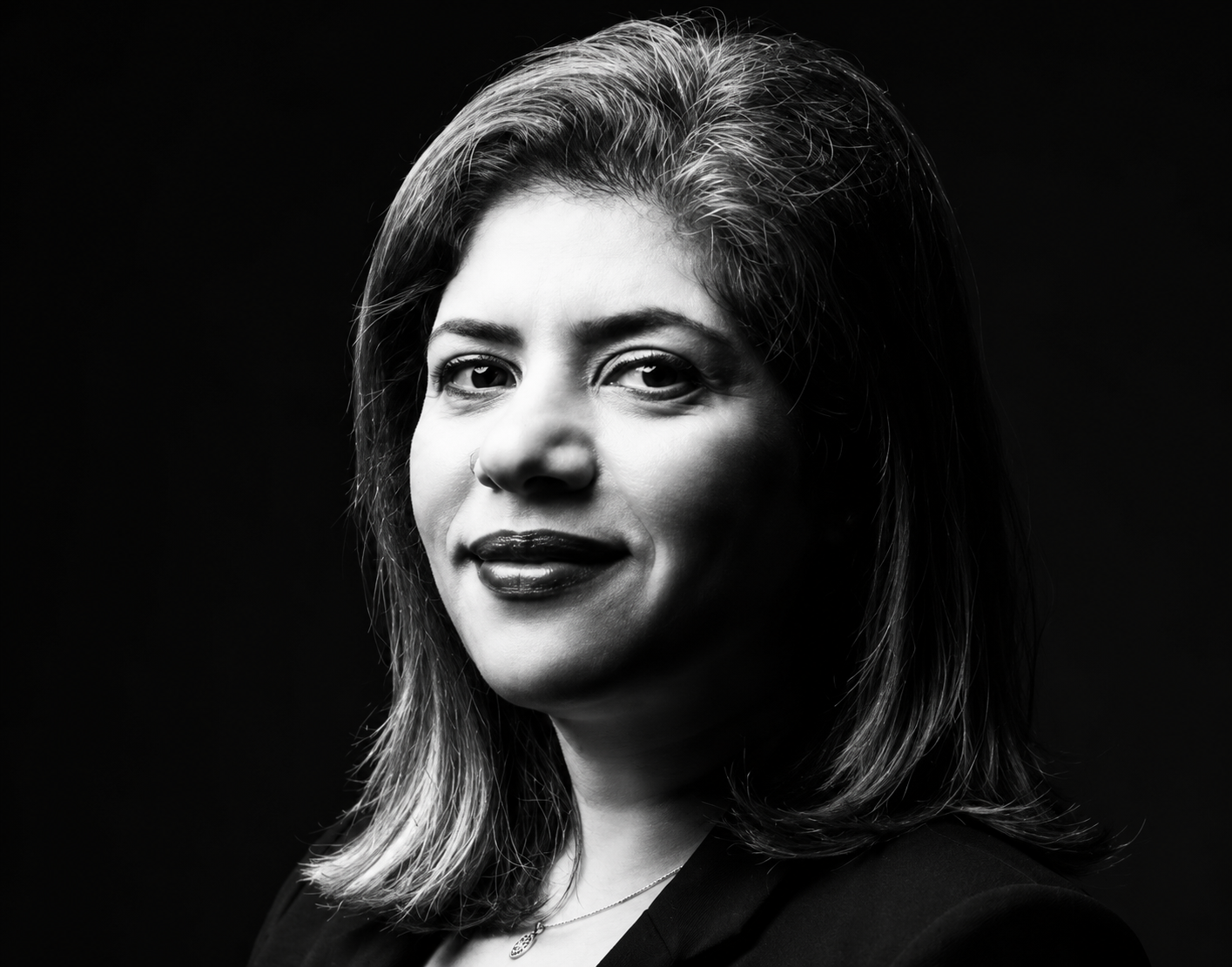
Azadeh Thiriez-Arjangi, doctor of Philosophy – researcher and teacher, elected official of the 16th arrondissement of Paris in charge of higher education.
Is the collective responsibility you’re highlighting conceived along Ricœurian lines of forgiveness and promise, or rather along an Arendtian model of political responsibility without individual fault?
ATA: Both, but not exactly at the same level. The Arendtian model seems essential to me first of all for thinking about political responsibility. Arendt rigorously distinguishes individual guilt, tied to acts actually committed by a person, from political responsibility, which can be collective. We can thus be called upon to answer for what was done in the name of the political community to which we belong, without having to declare ourselves personally guilty in place of those who actually committed the crimes.
This distinction is fundamental, even necessary, in the Iranian context. Collective responsibility does not mean that all Iranians are guilty of the Islamic Republic or of the 1979 Revolution. Let me give you an example: like many Iranians, I suffered a great deal from this guilt that the world, in a way, placed on our shoulders. I still remember, like a deep wound, Mahmoud Ahmadinejad’s despicable speech at the UN podium about Israel. As soon as I went outside, people would talk to me about it saying, “Your president,” as if he represented me, even though I had never voted at all, and he truly made me ashamed!
Indeed, such an idea would even dissolve the real guilt of all those who directly participated in the destruction of Iran and in the repression and terror carried out. As Arendt says, when everyone is declared guilty, no one truly is anymore.
Earlier we spoke about the eclipse of utopia caused by the reign of ideology. This thesis is also a response to an accusation I often hear in the Iranian context: how could this regime have stayed in power so long? It must have supporters. Some friends even go so far as to show me manipulated images circulated by the regime to tell me, “This regime has supporters, that’s exactly why it’s still there!” In recent years, this way of seeing things has fortunately softened. And when I’m still asked these questions, they’re asked in a more empathetic than accusatory tone.
Let’s return to the Ricœurian model, which comes into play, it seems to me, at the moment of emerging from violence and rebuilding a shared world. Ricœur himself borrows from Arendt the pairing of forgiveness and promise. Forgiveness responds to the irreversibility of past action, while promise responds to the unpredictability of the future. Forgiveness would allow the agent to be released, under certain conditions, from their act; promise would allow trust to be rebuilt and shared action to become possible again.
But I’m convinced it would be very difficult to bring the Ricœurian model of forgiveness into the Iranian context, even though for Ricœur it is never a question of easy forgiveness — he speaks precisely of “difficult forgiveness,” meaning neither forgetting, nor general amnesty, nor erasing responsibility, nor abandoning justice. In the Iranian context, before even speaking of forgiveness, the crimes would need to be acknowledged, the truth established, the guilty parties identified, and justice served.
To complicate things further: the conception of forgiveness passed down to us through the compulsory religious education we received in Iran seems, to me, very far removed from what I would call, to some extent, a Christian conception. I’m interested in the texts of Saint Francis of Assisi, particularly this remarkable idea of the humility of God. In Saint Francis, God is not only power; he is also the one who lowers himself, gives himself, and does not manifest his power in the form of domination. Saint Francis goes so far as to say to God, “You are humility,” and he invites his brothers to contemplate “the humility of God.”
This representation of a God who lowers himself, takes on vulnerability, and does not manifest through domination did not exist, at least not in this form, in the compulsory religious education we received in Iran, on the school benches. This has pushed me to read Ricœur’s philosophical anthropology differently, and to see just how difficult it would be to find bridges between the different models of forgiveness.
In today’s Iranian context, a promise centered on rejecting any new domination that would reproduce the old one, on preserving the memory of the victims, and on building institutions capable of preventing the return of arbitrary rule seems to me more immediately conceivable than a perspective grounded in forgiveness.
At the moment I’m speaking to you, after so many crimes committed by the Islamic Republic regime, and faced with the executions following one another at an even more frightening pace these days, I don’t see how it would be possible to speak of forgiveness, nor even to envisage forgiveness after a period of truth and justice.
That said, all these reflections around the hypothesis I’ve just put forward are still very new for me. I haven’t fully matured them yet, and I still have a great deal of work to do on them.
In 2010-2011, you presented a paper on Iran in Olivier Abel’s seminar, and he later encouraged you to return to your work on this country. How did he shape the way you read Islamic religious texts and the Shiite corpus — or have the two approaches remained separate for you?
ATA: Actually, Olivier Abel gave me a great deal! In a way, he shaped my whole way of thinking. I owe him my entire reading of Greek tragedy. He’s also the one who pointed me toward Freud and toward Ricœur’s philosophical interpretation of psychoanalysis.
At one point in my thesis on Ricœur and Freud, I had to address the theme of religion. I admit I found it very difficult, as if I were entering forbidden territory, the source of every misfortune. I told him so, and he understood my difficulty. In the end, I incorporated that section into my thesis, and it remains one of the only parts of my thesis I’ve published — in the journal Études ricœuriennes / Ricœur Studies, in an issue coordinated by Maureen Junker-Kenney.
For the Shiite corpus, I started reading Daryush Shayegan’s book, Henry Corbin. Penseur de l’islam spirituel, published by Albin Michel in 2011 — a new edition of his book originally published in 1990 under the title Henry Corbin. La topographie spirituelle de l’islam iranien. I haven’t actually finished it yet. But for now, my work has stayed limited to the question of ideology, without undertaking a genuine exegesis of the Shiite corpus.
So the answer is: the two approaches have indeed remained separate.
Ref: Thiriez-Arjangi, Azadeh, “Freud, Moïse et la religion. Une lecture de Paul Ricœur,” in Études Ricœuriennes/Ricœur Studies, Vol. 13, no. 2 (2022), pp. 26-38
You detect a trace of Ricœurian thought in Emmanuel Macron‘s memorial politics. Could you elaborate on this?
ATA: Of course. I believe there is, without a doubt, a real closeness between the President’s memorial politics and Paul Ricœur’s philosophy, particularly La Mémoire, l’Histoire, l’Oubli (Seuil, 2000). In the foreword to that book, Ricœur actually thanks Emmanuel Macron for his contribution to editing the text and shaping its critical apparatus. That same year, Macron also published an article in the journal Esprit titled “La lumière blanche du passé. Lecture de La Mémoire, l’Histoire, l’Oubli, de Paul Ricœur.”
For my part, I think the President’s intellectual fidelity to Ricœur’s philosophy in this domain is undeniable.
I notice in the President an intense concern for respecting both the work of political recognition — which must be preceded and accompanied by historical work on archives — and the demands and limits of “just memory.” We obviously find these same concerns in Ricœur’s philosophy.
For example, Macron entrusted Vincent Duclert with chairing a commission tasked with examining France’s role and involvement in Rwanda between 1990 and 1994. He also asked Benjamin Stora to work on the memory of colonization and the Algerian War.
On a more concrete note, I am a newly elected municipal councilor for the 16th arrondissement of Paris. Last May, I took part — alongside the mayor of the 16th, Jérémy Redler, and other Parisian elected officials — in a ceremony held at the Jacques-Martial garden in the Trocadéro gardens, in tribute to the victims of slavery. Associations and civil-society representatives involved in this memory work were also present.
I was struck by the satisfaction expressed by several association leaders regarding the President’s policy in this area. I recall clearly that one of them, in his speech, did not hesitate to praise the work the President has done on this issue.
On another level, I take a great interest in the speeches and language of political leaders. In Ricœurian terms, you could say I’m interested in a hermeneutics of political discourse. So I always listen with great interest to the President’s speeches.
During his first term, in October 2020, he gave a speech in Les Mureaux on the fight against separatism. For me, that speech remains one of those closest to the spirit of Ricœur’s philosophy (at least among those I’ve heard).
I remember being very struck when I heard the President say: “The Republic is both an order and a promise.” I thought to myself: “There it is — he’s giving us a speech built on Ricœur’s anthropology of capable man!”
That said, it’s impossible to say the President conducts his policy directly from Ricœur’s philosophy, even though we can easily find, in some of his approaches — particularly his attention to the plurality of memories, to the work of truth versus fake news — echoes of Ricœur’s thought.