Author, Educator and Father - Brother to All
Balancing Torah and Zionism
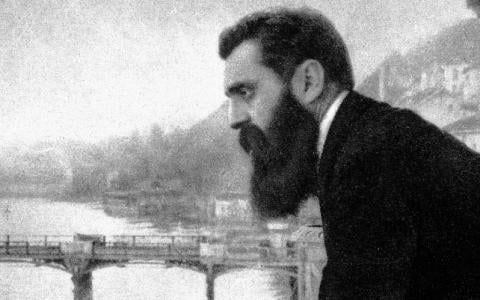
Theodore Herzl
Zionism has returned the Jewish people to the Land of Israel and restored Jewish sovereignty to the center of Jewish life, and Torah-observant Jews still argue over whether that return honors the covenant or wounds it.
Towards the end of the book of Bamidbar, God wrote that the people shall possess the Land and settle in it, for God gave them the land to possess it. In line with that command, the Sages taught that a person should always reside in Eretz Yisrael, even in a city that is mostly populated by gentiles, and that he should not reside outside of Eretz Yisrael even in a city that is mostly populated by Jews.
In his commentary on that verse, the Ramban wrote that the verse expresses one of the 613 mitzvot. We are commanded to settle and dwell in the land and we cannot reject the portion of God. Rabbi Moshe Feinstein maintained that living in Israel is a mitzvah one should strive to fulfill, a Jewish value even where authorities differ on the precise force of the obligation.
With that body of Biblical, rabbinic, and contemporary Torah literature urging Jews to live in the Land of Israel, and with Zionism’s goal of returning the Jewish people to that land, many Torah-observant Jews have aligned themselves with Zionism and treated the rebuilding of Jewish life here as a form of service. The standing question is why so many other Torah-observant Jews have rejected Zionism and continue to reject it. Is there merit to their position, and if so, should Torah observant Jews reject Zionism?
Torah-observant critics of Zionism argue that the movement has often made room for public life that violates the Torah. They see a state culture that treats Shabbat as ordinary time rather than a day of sanctity, opening shops, running industry, and staging civic events that ignore its limits. They object that political power, the army, and the ballot are treated as the last word, while God is pushed to the margins of national decision. They insist that the Torah is the Jewish people’s constitution, and that any Zionist value that sets aside its commandments, its Shabbat, or God’s authority cannot define Jewish life or Jewish sovereignty.
Zionist Torah-observant Jews answer that there is a mitzvah for the Jewish people to return and settle the Land of Israel, as the Ramban taught. The covenant attached the people to a particular soil, and the commandments of agriculture, pilgrimage, and communal judgment assume a Jewish presence there. A generation that rebuilds towns, raises children in Hebrew, and keeps Shabbat under Jewish sovereignty is answering that command.
Torah-observant Zionists answer that settling the Land of Israel is itself a mitzvah, and that Jewish sovereignty makes more of the Torah possible, not less. They point to communities that guard Shabbat with care, to courts and schools shaped by halacha, and to more daily Torah study in Israel, much of it with state support, than in any earlier age. They hold that God remains the ultimate power, and that political work is a tool placed in Jewish hands to protect life and keep the covenant on the soil where it was meant to be lived. For them the Torah is the constitution of the people, and Zionism is judged by how faithfully it serves that law.
Not only is Zionism consistent with Torah values, but it has also proven to enhance Torah study and observance. There are more people studying Torah daily in Israel today, many with Israeli government financial support, than at any previous point in Jewish history.
Zionism arose in a century of catastrophe and argued that Jewish power in the ancestral land would protect Jewish life. That argument has been vindicated in the survival of millions and in the open practice of Judaism after long vulnerability. The same movement also produced slogans and political doctrines that sit uneasily beside the Torah’s demand for justice, humility before God, and the sanctity of Jewish peoplehood as a covenantal fact. A serious Jew can love the return and still refuse to treat every Zionist fashion as Torah.
Those who object to Zionism rarely reject the Land of Israel or the ancient right of the Jewish people to that land. Their quarrel rests in the values of the Zionist movement and in their judgment that those values part company with the Torah. The argument is about the soul of the return, and it belongs inside the family. The opponents of Zionism see too many of Zionism’s values as inconsistent with the Torah.
The debate will not reach a conclusion any time soon. Both sides have been entrenched for more than a hundred years, and short of a prophetic message from God, little is likely to uproot either camp from its reading of history and halacha. The duty in the meantime is to keep the argument for the sake of Heaven and to refuse contempt, because love of a fellow Jew is itself a commandment.
What the present hour demands is clarity from those who teach. Zionist educators must learn to balance Torah and Zionist values. They must take the Zionist values that are consistent with the Torah and highlight them. Those values include the love of the land, the duty to settle it, the defense of Jewish life, the ingathering of exiles, and the rebuilding of a public Jewish culture in the language and landscape of our fathers. They must also explain, without apology and without confusion, that Zionist values that contradict the Torah’s values should not be incorporated into our personal values or into the values of the Jewish people.
A teacher who blurs that line leaves students with a patriotism detached from Torah. A teacher who draws the line well gives them a Zionism they can carry into prayer, into family, and into the long work of living as Jews in the land God gave them.
Related Topics
Related Posts