Battle on the bimah
On a blistering hot August Shabbat morning, during the reading of Parshat Eikev, two shul members stood on the bimah. Joe (fictionalized), who was to receive the fourth aliyah, was over 90 years old. Ted (fictionalized), waiting for his turn for the fifth aliyah, was in his early 70s.
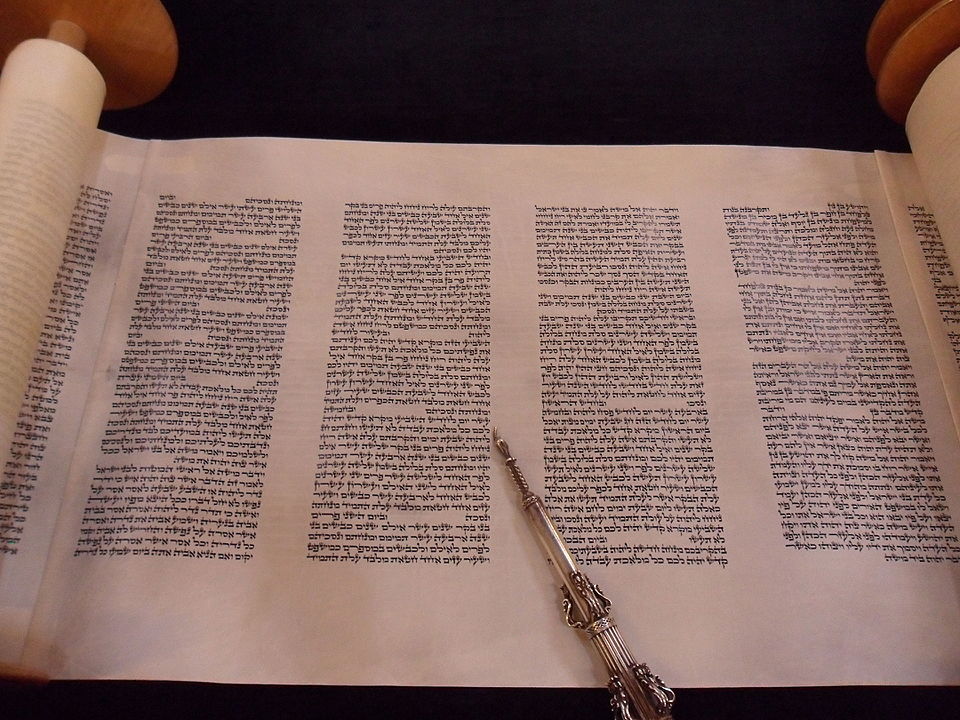
Along with the rabbi, they stood near the Holy Torah which was resting on the cloth covered altar. It was in this respectful setting, that the “battle on the bimah” took place.
Parshat Eikev from Deuteronomy is one of the 54 sections of the Torah read each year. The rabbi’s precise recitation would describe how Moses told the wandering, ancient Jews about their reward for fulfilling HaShem’s commandments. These soon to be Israelites were promised to prosper in Israel, the land they would soon conquer.
For many in the congregation, reference to Israel and its long-ago conquest, seemed all too contemporary as worries about the war that began after October 7th weighed heavily on their collective psyche. It was less than two years since this congregation had assembled for a joyous Simchat Torah celebration only to hear about the horrors taking place in southern Israel.
While Israel had achieved many victories since October 7th, the congregation ardently prayed for the rescue of the remaining hostages, the safety of the soldiers and the citizens, and the peace of Jerusalem. As part of all Shabbat services after October 7th the chazzan has led the singing of a prayer for the safety of the IDF soldiers ends with, “For it is the Lord your God, Who goes with you to battle your enemies…”
The rabbi completed the fourth portion of the Torah reading, and Joe touched the scroll with his tallit. Joe then recited the closing prayer.
As was the custom in the shul, Joe slowly pivoted to face the congregation. The rabbi called Joe’s wife to come forward and join with him in offering blessings. With the open Torah nearby, all personal prayers would have spiritual importance. In most cases, the honored congregants would bless some combination of family members, rabbis, the congregation, hostages, the IDF, or all Jews around the world.
Tradition also requires Ted, the next aliyot honoree, to stand quietly just the right of the altar and wait for continued recitation of the Torah reading. It is all part of the ritual’s solemnity.
So far, so good.
Joe began his oratory with a sweet call out to his wife of over 60years, and to their children, grandchildren and even one great-grandchild. Still, it all seemed familiar and appropriate.
But then Joe also blessed President Trump for his support for Israel. Afterall, it was just six weeks since the American Air Force B-2 bombers had supported Israel’s war against Iran by destroying the most protected nuclear bomb building facilities. He prefaced his call out to President Trump by stating that over his long time as an American voter no other president had acted so decisively to support Israel and the Jews.
Any quick calculation would have revealed that Joe had voted for almost all the past American presidents since Israel’s 1948 Declaration of Independence. He would have been too young to vote for Harry Truman, so Dwight Eisenhower versus Stevenson must have been his first. Joe had witnessed some presidents who supported Israel in a fashion, but had seen many broken promises, equivocating, and even betrayal.
It so happened that Ted was a staunch Democrat. He chose, with a loud fake cough and a smirking grimace, to interrupt Joe as he was finishing blessing the elected president of the United States. Ted then called out, loudly enough for all to hear, that there was to be no “politics” spoken from the bimah.
From the congregation several hummed that “politics” was off limits. However, many more enthusiastically piped-up in support of Joe. When Joe finished his blessing for President Trump, he was validated with louder than usual approving “amen.”
OK, the interaction was not really a “battle.” No geriatric fisticuffs, no direct insults, no walking away in a huff. Their respected rabbi’s counsel over the years for civility, unity, and respect among fellow Jews was mostly observed. Like a ripple in a pond, albeit an example of the nation’s fiercely divided opinion about Donald J. Trump, it soon smoothed out. Soon, the kiddush lunch would be enjoyed and families would travel home for a likely Shabbat nap.
Congregants can, on their own, decide if blessing an elected senior official of our country is or is not “politics.” Those who still suffer from Trump Derangement Syndrome might in a quiet moment look back across the years and consider Joe’s simple and irrefutable claim about President Trump’s faithful actions in support of Israel and the Jews. They might remember the Abraham Accords, the move of the Embassy, recognition of Golan, destruction of nuclear arms bunkers, and his fight against antisemitism raging at American universities.
The next time they sing prayers for IDF soldiers from the safety of their American neighborhood and in the comfort of their cozy shul, they might consider moderating their hatred for President Trump. They should acknowledge that President Trump has ensured America went into battle with the soldiers of Israel and Jewish students.
They might also ponder whether their religion is Judaism or is it politics.