View From the Diaspora
Becoming Israeli
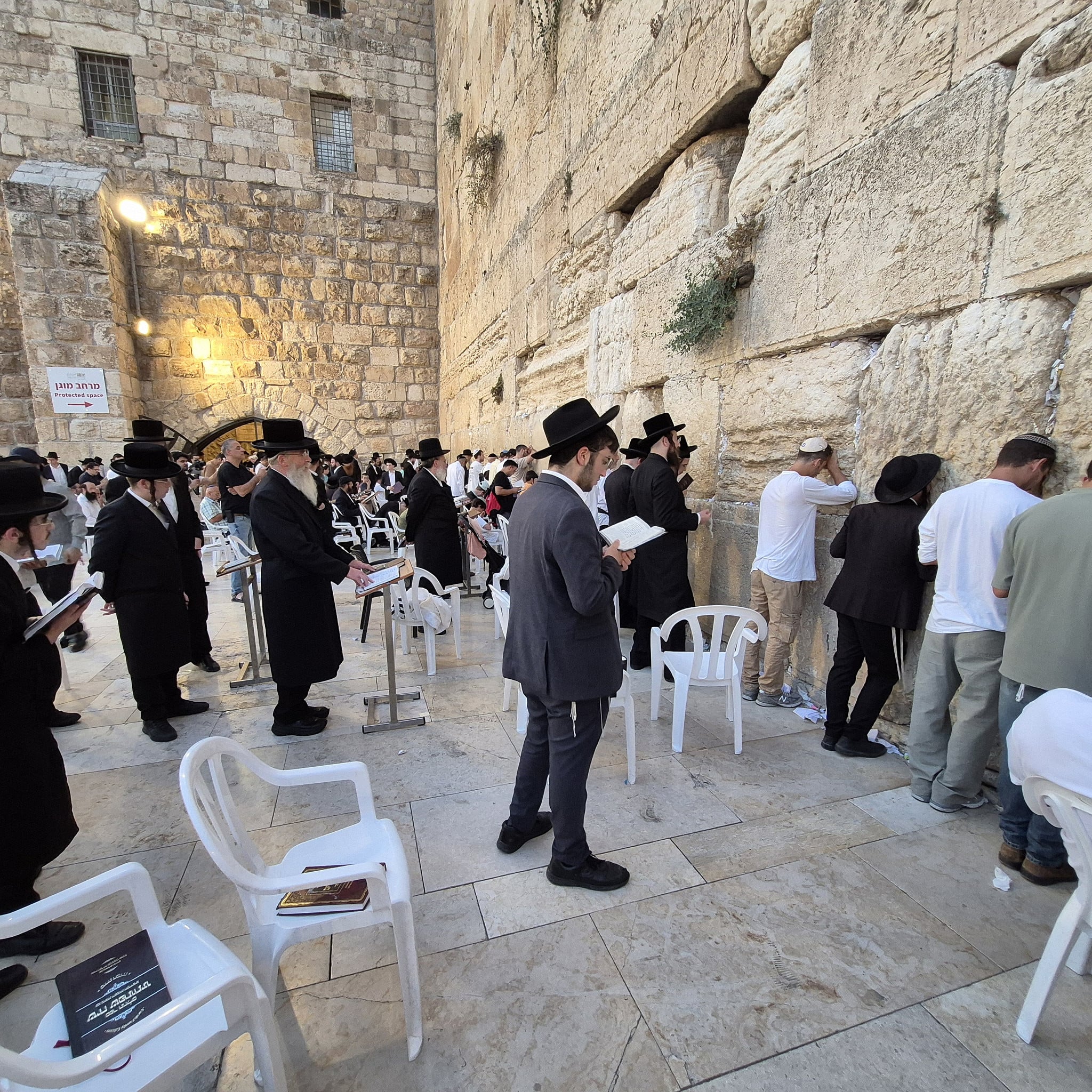
Photo by David Haldane
It was just last week, on Rosh Hashanah, that I finally decided.
A holiday that meant little to me growing up.
As a diaspora Jew raised in Southern California, being Jewish never seemed very important. Sure, my mother was a Holocaust survivor whose parents and brother had been murdered by the Nazis. And I vividly remember marching in a parade honoring Israel’s “Bar Mitzvah year” in 1961.
Being 12 at the time, I undoubtedly wondered about my own upcoming religious rite of passage. Alas, it never happened. Because my dad was an atheist raised by Methodists and my mom, well, she was still terrified of being Jewish.
That was driven home to me as a child one night by a knock on the door. It was the early 1950s, and Dad had set up an amateur ham radio station in the garage, inadvertently assaulting the classical music broadcast that regularly soothed a neighbor’s sleep. Annoyed at her inability to dream, she angrily called the police.
The resulting 10 pm rap-rap was loud enough to startle a horse. Glancing through the window at the dark uniforms outside, Mom gasped and held a hand to her heart. “Oh!” she barely managed to moan as her face grew deathly pale. Then, trembling, she turned and marched into the bedroom, where she remained for the next several hours.
Later, after regaining enough composure to cautiously re-emerge, she tried to explain what had happened. “When I was your age,” Mom began, “we lived in a country filled with very bad men.”
That country, I later learned, was Germany, and the bad men were Nazis. And if they ever came to the door of a Jewish family like hers, my mother explained, it probably meant that someone was about to get arrested or killed. Which, in that time and place, more-or-less meant the same thing.
As the years passed, her anxiety took fresh forms. During the Christmas season, we’d always have a gaily decorated, brightly lit tree set up strategically in front of the living room picture window for all to see. And yet, behind closed curtains, we secretly lit Hanukkah candles hidden inconspicuously in a clandestine menorah.
Though I grew up knowing I was Jewish, I had little concept of what that actually meant. Nor was I encouraged to discuss it or ask questions. So, though we lit those hidden candles annually, I never got bar mitzvahed, learned Hebrew, or regularly attended a synagogue.
Many decades passed. Then came Oct. 7th.
The revelation of its significance first hit me while lying trembling on the ground. Thirty seconds earlier, I’d been speeding home on my motorcycle, anticipating a hearty dinner. Now I lay sprawled beneath the vehicle, humbled by a slippery pavement, and thanking God for being alive. The revelation: that it might just as easily have gone the other way.
“Oh my God,” I thought, “I could have died.”
And that’s when I reflected on Israel. The place where, not long before, families enjoying leisurely breakfasts had been interrupted by terrorists who cut off their heads. The country wherein young people dancing their hearts out had suddenly been mowed down like overgrown grass.
And suddenly I made the connection between those events and the extreme tension I’d been feeling ever since.
A lot happened after that. A tsunami of antisemitism swept over the globe—including America—with astonishing force. On university campuses and in the media, the so-called “Free Palestine” movement became the loudest voice in the room. And last year I visited Israel for the first time as part of a media delegation from the Philippines, where I’m now based.
It was on that trip that another revelation presented itself; that Israel was the homeland I never knew I had. It happened at the Western Wall, which I’d approached with tremendous trepidation. Flanking me on both sides, bearded men in black coats mumbled hurried prayers I couldn’t understand while holding little black books, bowing methodically, and touching their foreheads to that cold stone wall.
What, I wondered, did it mean, and how was I supposed to feel?
Then, in an instant, everything changed. Something welled up inside me like an inflating balloon. Starting somewhere in the lower intestine, it slowly made its way up towards my heart. And suddenly I too was pressing my forehead to the wall as its power overwhelmed me. And then I started sobbing, not just in bafflement but in wonder. And realized with a start that I had become a cliché; someone literally wailing at the wailing wall.
I also realized something else: that had Israel existed in the 1930s, my relatives might well have survived. And that in a rapidly disintegrating world, maybe one day it would help me survive too. And finally, the heartwarming corollary: that by pledging my allegiance to this small country surrounded by enemies, I would in some tiny way be returning the favor.
Thus, within me a seed was born: the idea of becoming Israeli.
For a long time it simmered, slowly deepening its roots. There were many practical considerations. How would it affect the life of a 77-year-old like me? Would we actually move to the Holy Land, or just stay put, remaining dual citizens? And, most importantly, what would it mean for the new Filipino family I had created and loved so much?
It was this year’s just-concluded Rosh Hashanah that finally brought those sprouts into the sunlight. Though I have never regularly observed that day of spiritual renewal and repentance, this time I paid closer attention than ever before. “In Israel,” one of my favorite bloggers wrote, “you don’t merely celebrate Rosh Hashanah; you live it.”
And just like that, it all became real. We still have many decisions to make and lots more to do. We must gather our documents, pay for what’s needed, and submit our applications. We will need to get interviewed at the Israeli embassy in Manila. Then, if all goes well, we will travel abroad to pick up our new passports.
I pray that all goes well.
Bottom line: at the conclusion of this weekend’s Yom Kippur services, I shall say “next year in Jerusalem” with a whole new meaning.
It will be literal.
Related Topics
Related Posts