
Beer, Memory, and the ‘New German War Machine’
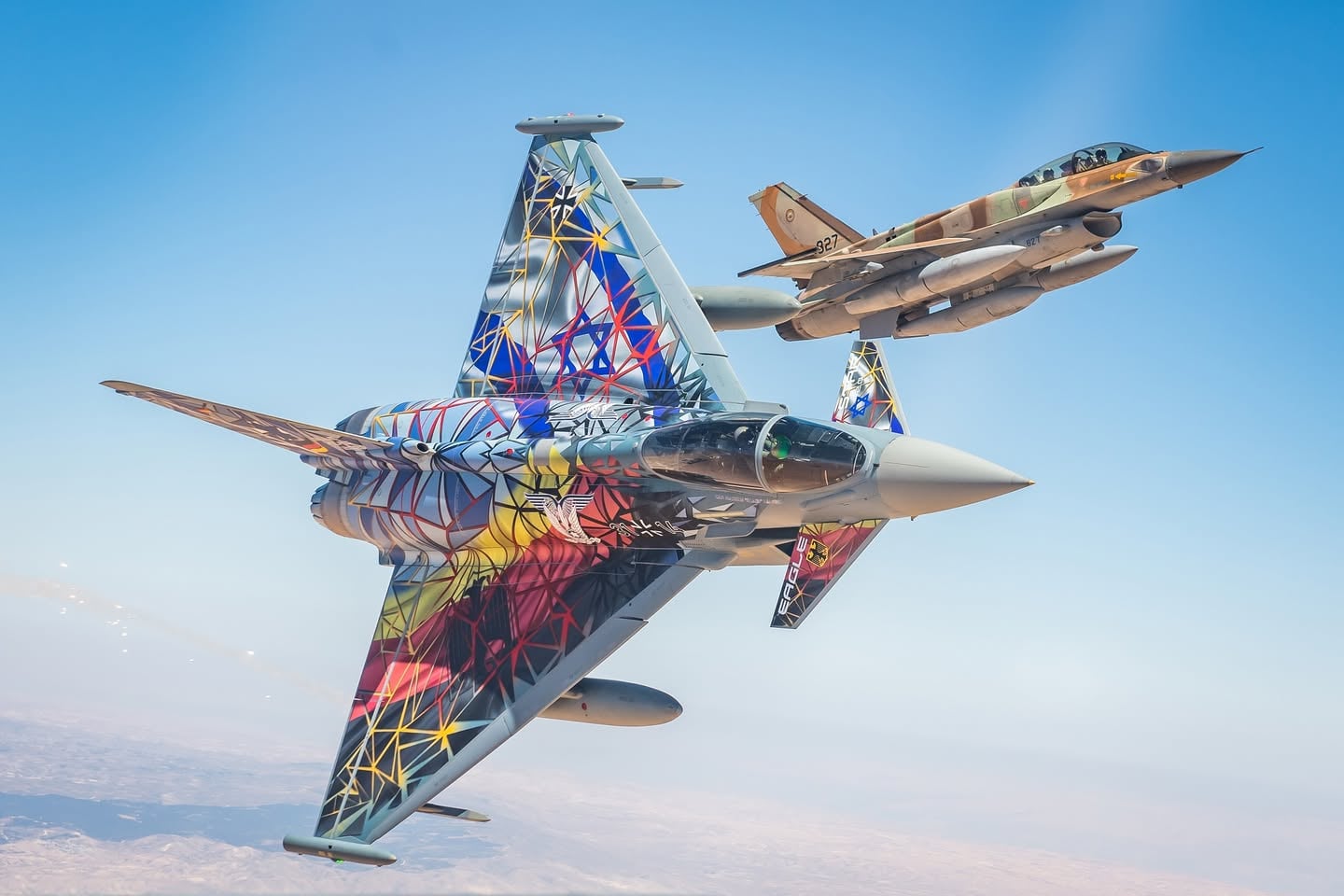
I was flipping through the January, 2026 edition of The Atlantic when I came across the headline: “The New German War Machine”. As the grandson of a Holocaust survivor, that title caught more than just my eye. It pulled me back to a moment I hadn’t thought about for a while.
As part of my role at the Blue Flag international air force exercise in 2021, I frequently moved between the hangars of the participating air forces. By far, the friendliest and most inviting space belonged to the Germans. Their hangar was designed so that soldiers could easily switch between work and downtime. There was a large Oktoberfest-feeling hangout area with a huge kitchen and fun bar games. It was almost as if they were trying to compensate for something.
They had even brought their own beer. They called it “Simcha Pils,” and labeled each bottle with Luftwaffe and Israeli Air Force symbols. Joint flags hung on the walls, the soldiers were warm and genuinely curious to get to know us beyond the professional setting, and everything about the space signaled camaraderie. It was just easy to talk to each other. And yet, the underlying tension was unmistakable, and certain details made me uneasy.
The discomfort didn’t come from distrust of the people in front of me. It came from history. I grew up very close to my grandmother, a Holocaust survivor, and though she was the most positive person I knew, her story shaped how I saw the world. Germany was never just another country. It was a warning about what happens when hatred becomes policy, and a reminder of our responsibility to prevent it. Seeing the name “Luftwaffe” in a modern military hangar carried a weight that did not disappear simply because the atmosphere was friendly. The cooperation felt right, but the space did not feel morally neutral.
For decades, Germany’s military restraint and its unprecedented support for Israel were understood largely as moral responsibilities predicated on the Holocaust. But Germany is now rearming quickly, and in a striking reversal, it is also turning to Israel for its own protection. Can a relationship built on atonement survive when it becomes strategically mutual? Does Israel’s role as Germany’s defender change the moral calculus? These questions sat with me long after I left that hangar.
Reading the Atlantic article by Isaac Stanley-Becker brought them back. The piece traces Germany’s long postwar commitment to non-belligerency and the growing sense that this posture may no longer be sustainable. As American security guarantees waver and Russia becomes more openly aggressive, Germany is being pushed back into a role it spent decades trying to avoid.
One development in Germany’s rearmament really stood out to me: Germany’s purchase of the Arrow 3 missile defense system from Israel. Over the past two years, that system has become a regular part of my life. I have sat in bomb shelters listening to interceptions of ballistic missiles fired from Iran and Yemen. Thanks to Arrow, the only physical damage I suffered was a shattered window from one of the few missiles that slipped through. Now, as Israel prepares for the possibility of an American attack on Iran, Arrow 3 is again at the center of our defense planning.

Thinking back to that hangar now, I understand my discomfort differently. Germany’s decision to buy Arrow 3 makes strategic sense. What struck me more was the symbolism. Now, in addition to supporting Israel, Germany is relying on Israeli defense to help protect its own cities. The country built as a refuge for Jews after the Holocaust is now part of the system protecting Europe.
This changes the emotional balance of cooperation. The relationship becomes more reciprocal in strategic terms, and more layered emotionally. Memory evolves, it doesn’t disappear. But I’d be lying if I said that shift doesn’t unsettle me. There’s a fear, one I feel in many parts of life, that by moving with an inevitably changing reality, I’m somehow throwing away the past. That adapting means forgetting. That if the Holocaust is no longer the organizing principle of this relationship, then we’ve failed to hold onto what matters most.
But maybe that fear misunderstands how memory works. The Holocaust doesn’t need to be the sole foundation of every interaction to remain present. Strategy, technology, and mutual threats now sit beside memory rather than under it. The bond between the two countries begins to resemble a normal alliance, yet it remains emotionally unlike any other. I think back to those bottles of Simcha Pils (“joy” in Hebrew) bearing both nations’ symbols. That uneasy partnership, that weight and warmth existing together, is the reality of a relationship still shaped by history, even as it moves into a different future.