
Before January 3, Trump Must Choose: Three More Humiliations or War With Iran
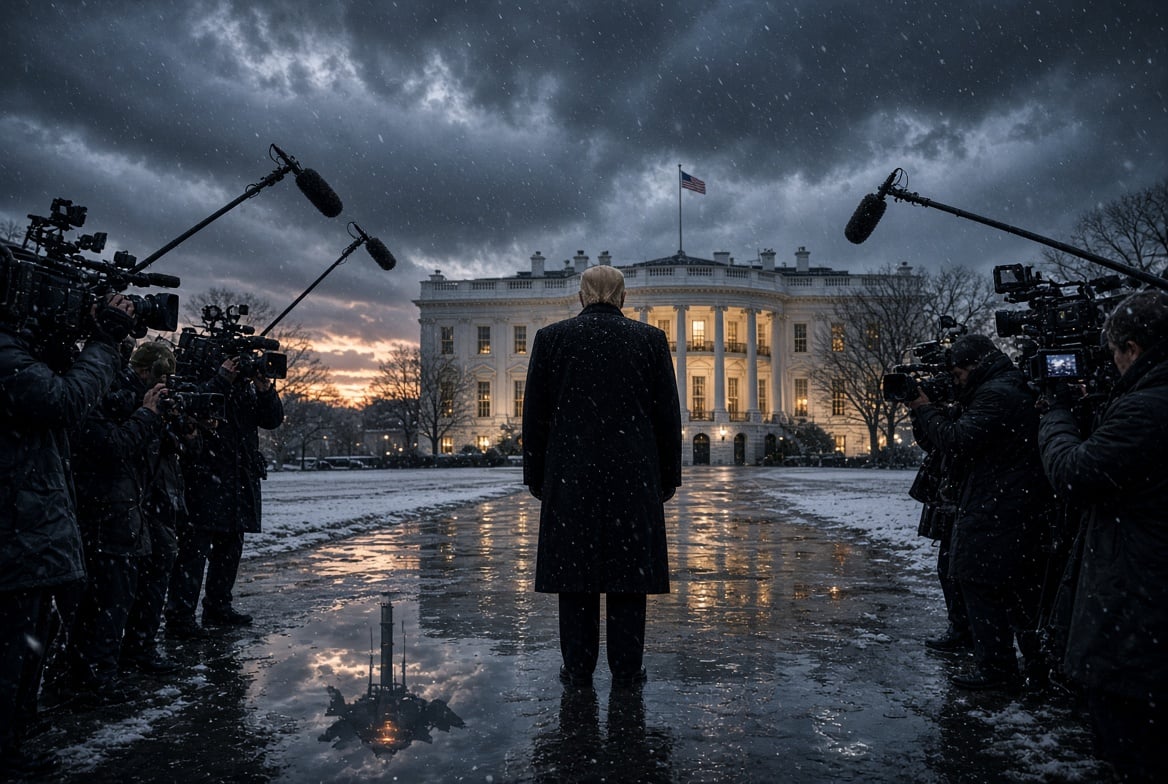
Donald Trump lost Congress on November 3. On January 3, he will lose something else: the political protection of a Republican-controlled legislature. Between those two dates lies a decision that could determine far more than the remainder of his presidency.
Losing midterm elections is common. Losing both chambers in the middle of an unfinished war, while the enemy remains defiant, is a different political predicament altogether. Democrats captured Congress and achieved victories in Republican strongholds that had resisted them for generations. Kansas elected its first Democratic senator since 1932, South Carolina its first since 1998, and Texas delivered its first Democratic statewide victories in 32 years. Frustration over the war with Iran, rising living costs, and Trump’s leadership contributed to the electoral backlash. Trump acknowledged that the war had hurt his party. Yet he defended the confrontation with Tehran, insisting that preventing Iran from acquiring nuclear weapons justified his decision. The election is over. The nuclear problem is not. Neither is the crisis in the Strait of Hormuz.
The first humiliation could come from Congress.
Beginning January 3, Democrats will control both the House of Representatives and the Senate, giving them the power to launch investigations, issue subpoenas, and scrutinize the administration’s conduct of the war. Democratic leaders have already signaled their intention to intensify congressional oversight.
On election night, Trump posted an image of a red baseball cap bearing a single word: “VETO.” The message was unmistakable. He intends to resist the incoming Democratic Congress. Yet presidential vetoes apply to legislation, not congressional investigations or subpoenas. Trump could challenge those subpoenas in court, but he could not simply veto them away.
And the questions could be devastating.
Why did Trump take the United States into a costly war that disrupted the global economy and helped turn the Strait of Hormuz into an international crisis, only to accept a settlement that might restore conditions that existed before the fighting began? What strategic objectives had actually been achieved? And was the Iranian regime still standing?
Democrats could spend much of Trump’s remaining presidency demanding answers, summoning officials, and examining decisions taken during the conflict. Even without impeachment proceedings or criminal charges, sustained investigations could leave him politically weakened and struggling to defend his legacy.
The second humiliation could come from within his own political movement.
Millions of Americans supported Trump believing his promise that Iran would never acquire nuclear weapons. But how could he claim to have fulfilled that promise if the fate of Iran’s enriched uranium remained unresolved?
Before the June 2025 strikes, the International Atomic Energy Agency reported that Iran possessed approximately 440.9 kilograms of uranium enriched to 60 percent. If further enriched, that amount could theoretically provide enough weapons-grade material for approximately ten nuclear weapons, according to the agency’s significant-quantity benchmark. The IAEA has since been unable to verify the stockpile’s current quantity, location, and status.
This does not establish that Iran possesses nuclear weapons. It does, however, leave a serious proliferation concern unresolved.
The uncertain status of Pickaxe Mountain, other potentially surviving nuclear infrastructure, and Iran’s ballistic missile program would further complicate any declaration of victory. If sanctions relief restored substantial revenues to Tehran, the regime might also gain resources to rebuild its military capabilities and potentially accelerate nuclear activities.
Some Trump supporters would welcome an end to the war. Others might see an agreement that left these questions unanswered as a betrayal of the promise that helped justify the confrontation.
Signs of political distancing have already appeared within the administration. On November 4, Vice President JD Vance attributed the Republican defeat partly to the war, questioned whether its political cost had been justified, and defended his earlier advice to end the conflict.
If Vance begins separating his political future from the war, Trump could find himself defending its outcome with diminishing support from within his own movement.
The third humiliation could be the most painful.
It would come from Tehran.
Imagine Iranian leaders celebrating the withdrawal of American forces while proclaiming that they had resisted the world’s most powerful military. Imagine them presenting the reopening of the Strait of Hormuz as a concession granted by Iran rather than the restoration of maritime conditions that existed before the confrontation.
Iran could proclaim victory.
Indeed, Iranian leaders have already portrayed the Democratic midterm victories as an American rejection of Trump’s war.
Such declarations would not establish that Iran had prevailed militarily. But political victories are sometimes constructed from the perception that an adversary failed to impose its will.
For a president who has repeatedly emphasized American strength and his ability to force adversaries into submission, watching Tehran celebrate its survival could be an especially bitter outcome.
Trump still has alternatives.
The most favorable would be an Iranian capitulation under sustained economic and naval pressure. Tehran would reopen the Strait of Hormuz, surrender its enriched uranium stockpile, and accept a verifiable nuclear settlement.
Trump could then claim a strategic victory without launching another major offensive.
But why would Iran surrender now?
Having endured the confrontation through November 3, Tehran may calculate that surviving another two months would improve its negotiating position. Even severe economic distress might not change that calculation if Iranian leaders believe the political balance in Washington is about to shift in their favor.
January 3 could therefore become as important to Tehran as it is to Trump.
The incoming Democratic Congress would not control American foreign policy or automatically prevent the president from ordering military operations. But its investigative authority, control over legislation, and ability to scrutinize expenditures could make sustaining the confrontation politically more difficult.
Iranian leaders might therefore conclude that time is on their side.
That assumption could prove dangerously mistaken.
The possibility of another American offensive predates the Republican electoral defeat. Before November 3, Trump had already left open the prospect of renewed military operations after the midterms. American officials reportedly warned regional allies to prepare for possible strikes and Iranian retaliation, while Pickaxe Mountain remained a potential target.
Trump was contemplating military action before knowing whether Republicans would retain Congress. The election results did not create that option. They changed the political circumstances in which he must decide whether to exercise it.
And the offensive could extend far beyond Pickaxe Mountain.
In April, Trump threatened to bomb Iran back to the Stone Age. He spoke of destroying the country’s bridges, power plants, and other critical infrastructure if Tehran refused to meet his demands. These were the president’s own words.
Having failed to compel Iran’s capitulation through previous operations and economic pressure, Trump might conclude that carrying out those threats offers his best remaining chance of forcing a decisive outcome.
Allies and adversaries alike would then have to reassess the credibility of his warnings.
A broader conflict would not be inevitable. American military power could achieve substantial results, possibly compelling concessions that diplomacy and economic pressure had failed to secure. But neither Washington nor Tehran could guarantee how the other would respond.
That is the danger of the coming weeks.
Iran may believe Trump cannot afford another major escalation after losing Congress. Trump may believe Iran cannot withstand one.
Both calculations could prove wrong.
November 3 delivered an electoral defeat.
January 3 will bring a new political reality.
Between those dates, Trump may decide that the only way to avoid three more humiliations is to pursue the decisive victory he has promised.