London based entrepreneur, cybersecurity analyst doing a PhD in AI
Before the Final Horn
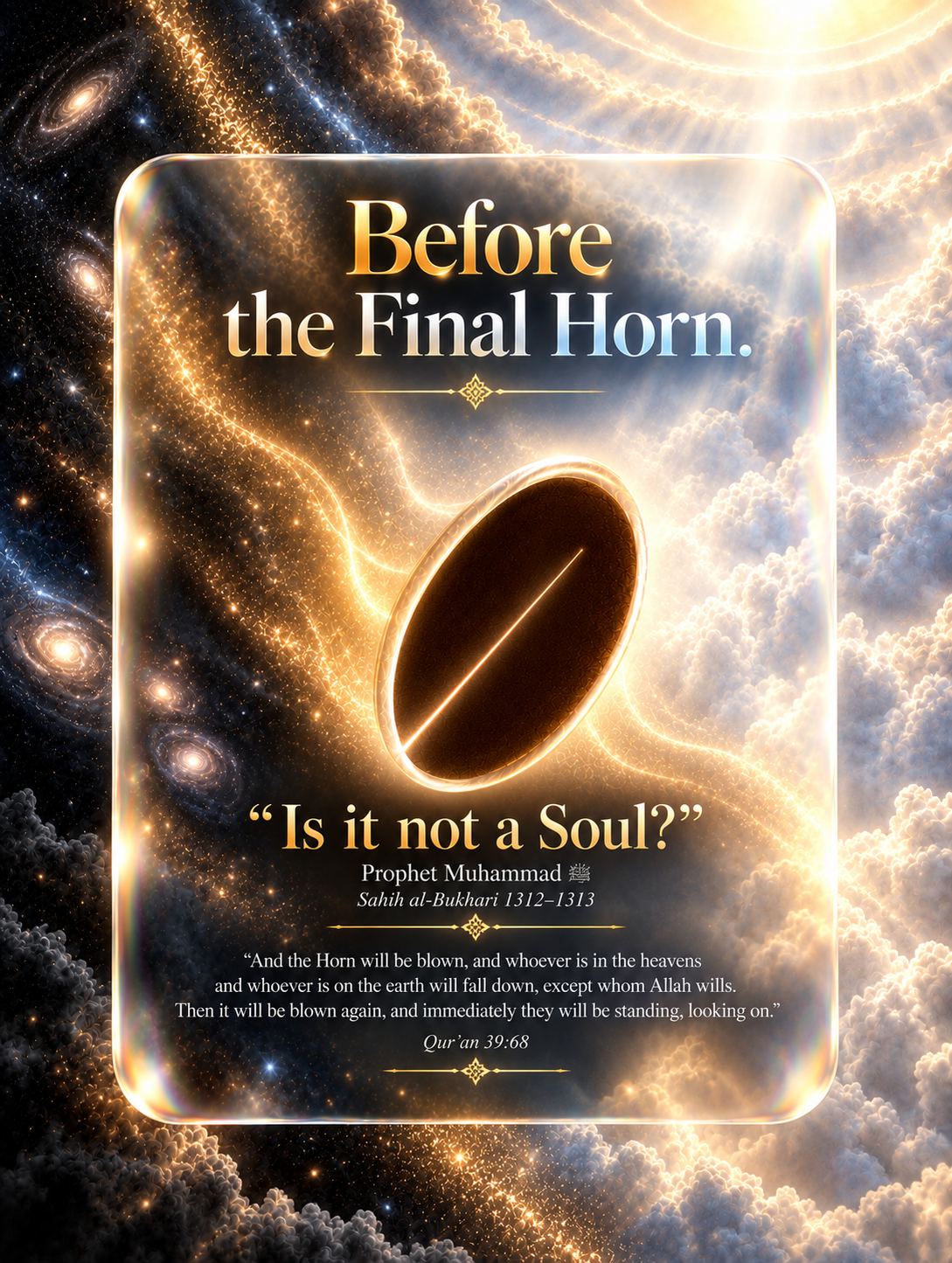
Before the Final Horn
Before our kingdoms learned to rise,
Before a crown adorned a head,
A man of clay first opened eyes,
And walked where all his children tread.
He knew the names that he was taught,
He knew the Garden and the fall;
He turned repentant to his Lord,
The first of us, the first of all.
Then came one who walked in truth and grace,
A prophet through the ancient years;
His Lord then raised him high in place,
Beyond this world of hopes and fears.
Then came the Builder, mocked by men,
Who built where water could not flow;
They laughed as timber rose—and then
The skies released the flood below.
Then came the Friend who watched the stars,
The moon, the sun, each fade from sight;
He broke the idols made by men,
And walked unharmed from blazing fire.
Then came the one who spoke with God,
With Pharaoh’s armies drawing near;
He struck the sea with his staff,
And walked between its waters clear.
Then came the shepherd with his sling,
Whose praise the hills and birds would share;
A king whose voice remembered God,
And filled with psalms the morning air.
Then came his son who ruled the wind,
And heard the birds and ant below;
Though jinn and men stood in his ranks,
He knew from Whom all kingdoms flow.
Then came the Word who was sent,
Man, Messiah and sign;
He healed the blind by God’s command,
And called mankind to the Divine.
No father held him at his birth,
Yet by God’s leave the dead could rise;
His enemies could not prevail,
For God raised him beyond their eyes.
Then came the Cloaked One ﷺ with the word “read” in the night,
His people mocked the truth he bore;
Some heirs of earlier Books turned too,
As others turned from messengers before.
You yearn for temples made of stone,
While truth stands outside your door;
The man God loved stood there and warned,
And billions heed his words once more.
Then generations came and went,
And mighty kingdoms turned to dust;
Their palaces became our ruins,
Their iron swords dissolved to rust.
The ancient shofar called the living,
Its cry once carried through the morn;
But every earthly trumpet fades,
Before the sound of the one last Horn.
The Hour remains concealed from man,
No king can make it come or stay;
No wealth can purchase one more breath,
When God commands the end of Day.
The Horn is blown; the heavens fall,
The earth relinquishes its claim;
The thrones and crowns that ruled the world,
Are dust without a king or name.
Then silence covers all that was,
No marching feet, no battle cry;
The age of human pride has passed,
Beneath an emptied earth and sky.
And then the Horn is blown once more,
The graves release the ones they sealed;
The earth gives back what it received,
And every hidden thing is revealed.
The man of clay shall rise again,
And the one from his station high;
The Builder leaves the dust behind,
The Friend stands underneath the sky.
The Cloaked One, ﷺ, shall rise,
The final Messenger to warn;
The first and final generations,
Stand gathered at the sounding Horn.
The borders drawn across the earth,
For which so many fought and died,
Are nowhere on that gathering plain,
No guards remain on either side.
The shofar sounded through the years,
Through victory, exile, loss and scorn;
But every earthly trumpet fades,
Before the sound of that last Horn.
And say not, “I never knew,”
For now the final call is heard;
We follow the last Messenger ﷺ,
And bear witness to God’s final word.
So pay heed now, while time remains,
Before the Horn calls every soul;
Follow the Messenger ﷺ who stood
And asked, “Is it not a soul?”.
Qur’anic foundations: Adam’s creation, knowledge, fall and repentance (2:31–37; cf. 15:26); Idrīs—traditionally identified with Enoch—as a truthful prophet raised to a high station (19:56–57); Noah’s Ark and the mockery of his people (11:36–44); Abraham’s rejection of celestial objects of worship, destruction of the idols, deliverance from the fire, and status as God’s khalīl (6:76–79; 21:51–70; 4:125); God’s direct speech to Moses and the division of the sea (4:164; 26:63); David’s praise joined by mountains and birds (34:10; 38:18–19); Solomon’s knowledge of the speech of birds, encounter with the ant, and the wind subjected to him by God (27:16–19; 21:81); Jesus as Messiah, God’s Word conveyed to Mary and “a spirit from Him,” his miracles by God’s permission, and his being raised by God (3:45–49; 4:157–171); Muhammad ﷺ as Al-Muzzammil and Al-Muddaththir (73:1–4; 74:1–5); and the blowing of the Horn and resurrection (39:68; 36:51). The Qur’an expressly states that the People of the Book “are not all alike” and praises the righteous among them (3:113–115; 3:199). The Prophet Muhammad ﷺ standing for a Jewish funeral and asking, “Is it not a soul?” is recorded in Ṣaḥīḥ al-Bukhārī 1312–1313. His request to be covered and the revelation of Al-Muddaththir are recorded in Ṣaḥīḥ al-Bukhārī 3238. The identification of Idrīs with Enoch and of Isrāfīl as the angel entrusted with the Horn belongs to Islamic tradition rather than being stated by these Qur’anic verses themselves. All connective imagery, titles not directly given by revelation, and transitions in the poem are poetic paraphrase rather than quotations from the Qur’an or Hadith.
Related Topics
Related Posts